Victimology
Dr. Tanmoy Mukherji
Advocate
Victimology-
Tanmoy Mukherji
Advocate

In criminal jurisprudence, a victim is a person who has suffered physical, mental, emotional, economic or other legal injury as a result of a crime. Modern criminal law no longer treats the victim as a mere witness but recognizes the victim as a stakeholder in the criminal justice system.
Section 2(y) of BNSS, 2023 [Sec. 2(wa), CrPC, 1973] says that victim means a person who has suffered any loss or injury caused by reason of act or omission of the accused person and includes his/her guardian or legal heir.
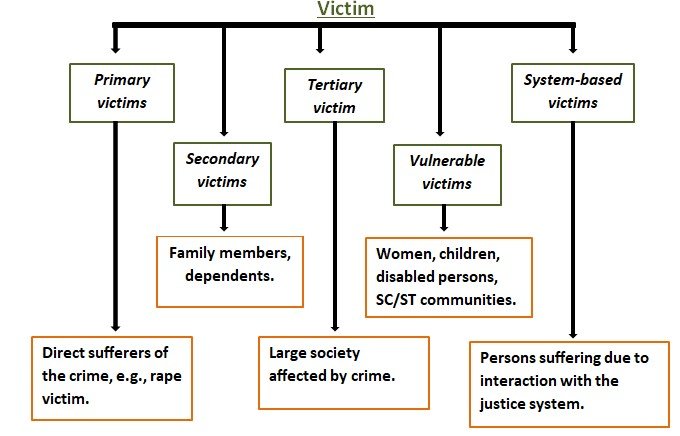
Classification of Victims-
Compensatory Jurisprudence-
Compensatory Jurisprudence in the Indian legal criminal justice system refers to the philosophy and practice whereby monetary or other forms of compensation are awarded to victims of crime for the loss, injury or suffering caused independent of or in addition to the punishment of the offender.
It reflects a shift from a purely offender-centric and punitive system to a victim-centric, restorative, and welfare-oriented approach.
Compensatory jurisprudence is not merely a procedural device; it is grounded in deep moral, ethical, and jurisprudential philosophies that redefine the purpose of criminal justice.
1.Corrective Justice (Aristotle)-
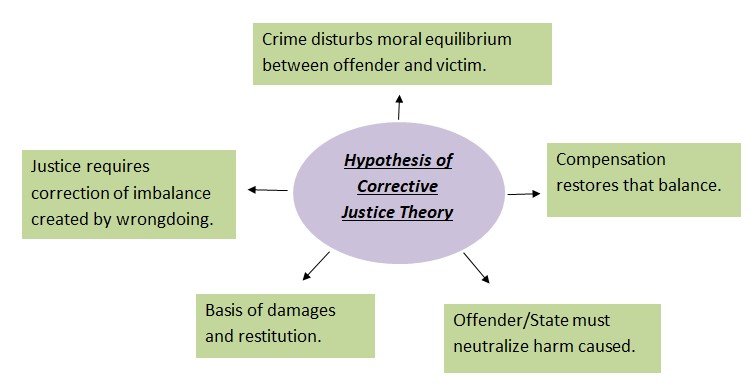
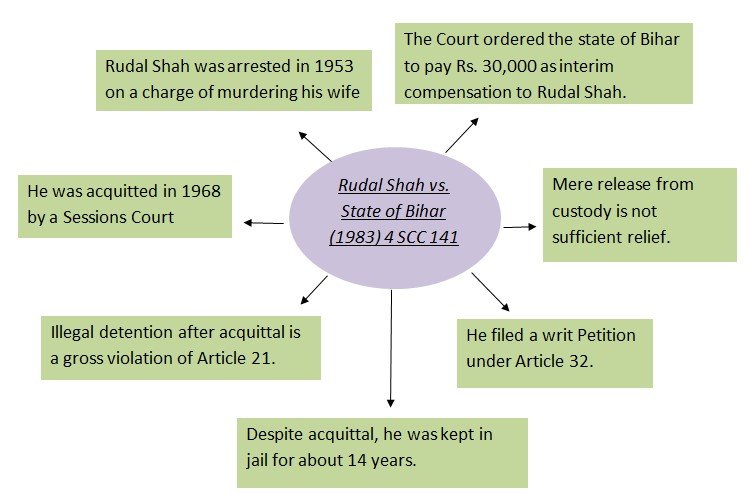
Relevance to Indian law-
Compensation under Section- 395, BNSS, 2023 [Sec. 357, CrPC, 1973]
2. Restorative Justice-
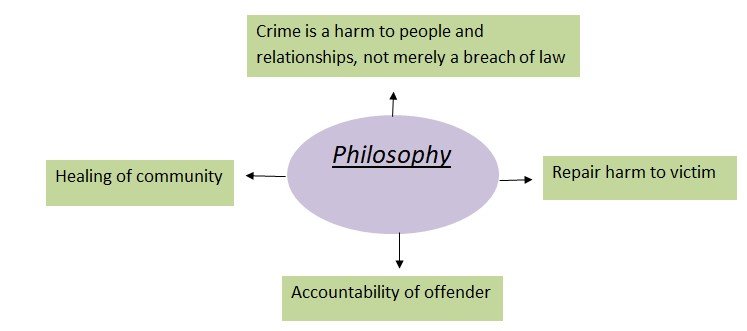
Relevance to Indian law -
-> Victim compensation scheme [Sec. 396, BNSS, 2023 (Sec. 357A, Cr.P.C.)]
->Probation
->Plea Bargaining
->Compensation to rape victim.
3.Utilitarian Theory (Bentham & Mill)-
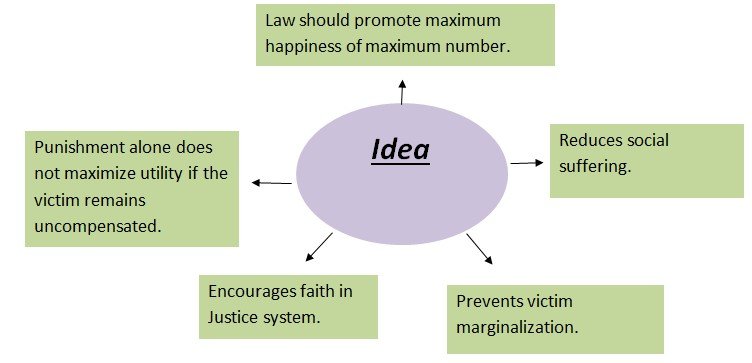
Relevance to Indian Law-
-> Courts stress social Justice and welfare.
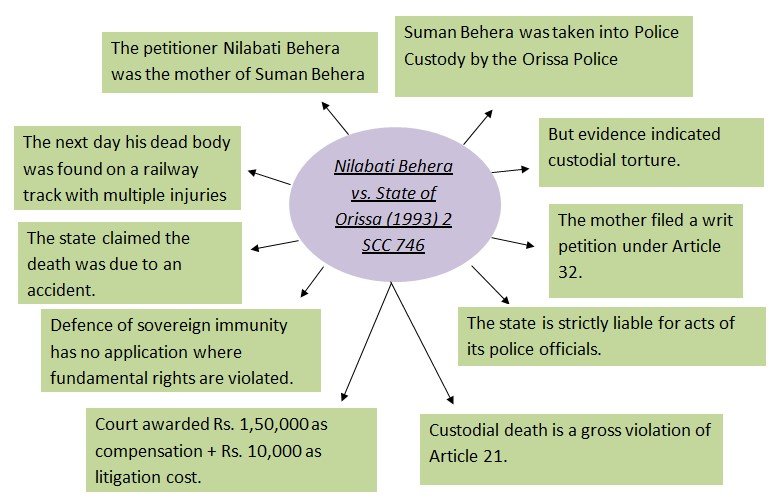
-> State liability for police excesses.
4.Welfare State Theory-
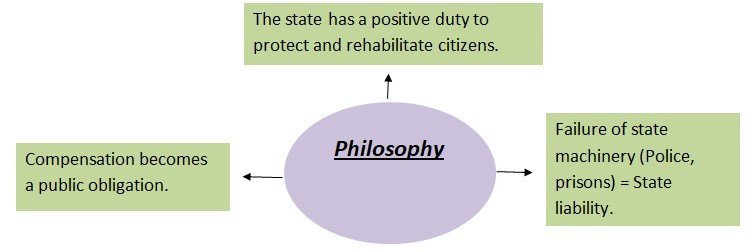
Relevance to Indian Law-
-> Compensation awarded even without offender's conviction.
-> State funded victim compensation scheme.
5.Human Rights Jurisprudence-
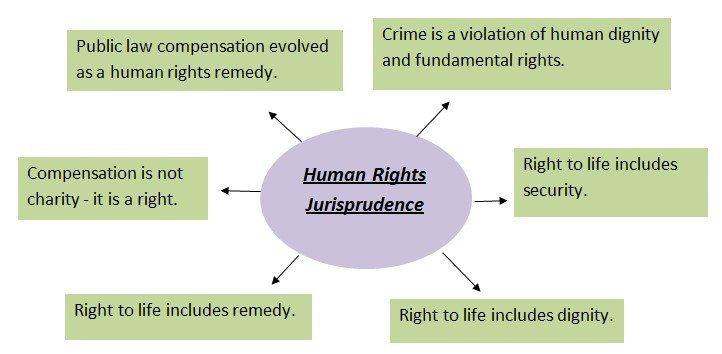
Relevance to Indian Law-
->Article 21
->Article 32
->Article 226.
6.Natural Law Theory-
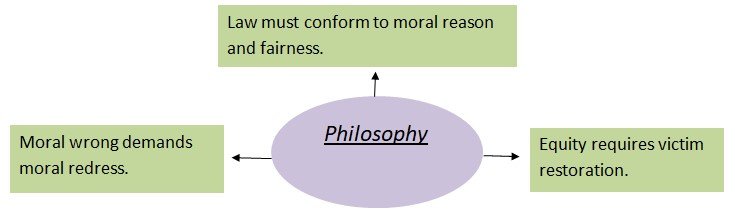
Relevance to Indian Law-
-> Courts award compensation using equity, justice, and good conscience.
->Particularly when statutes are silent.
7.Social Contract Theory (Hobbes, Locke, Rousseau)
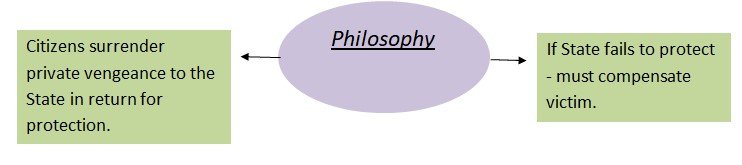
Relevance to Indian Law -
-> Custodial violence cases
-> Illegal arrest
-> Detention compensation
8.Victimology as a Jurisprudential movement-
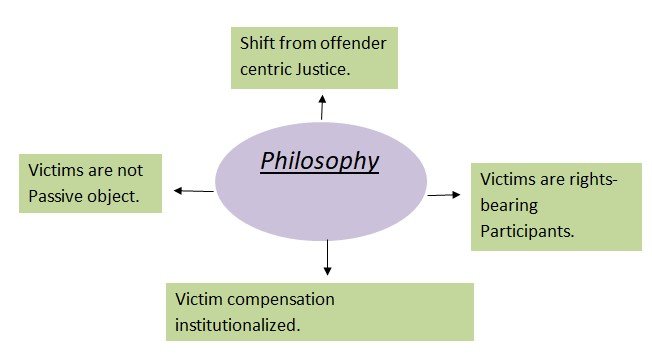
Relevance to Indian Law -
->Section 2(Y) BNSS (Sec. 2(wa) CrPC)
->Right to appeal
->Right to compensation
->Right to Participation.
10.Transformative Constitutionalism –
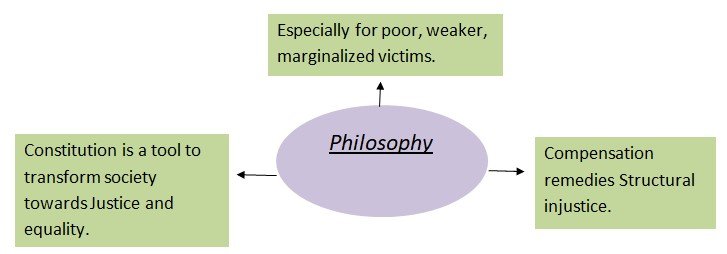
Relevance to Indian Law -
->Liberal interpretation of Article 21
->Compensation as part of substantive Justice.
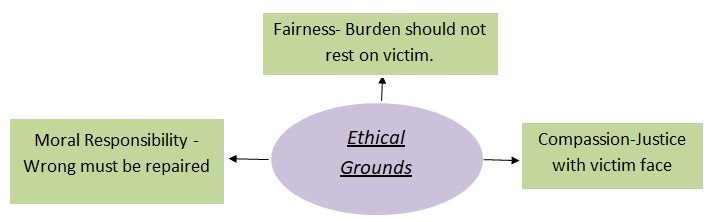
10.Ethical Justification –
Compensation to Victim under BNSS -
The BNSS, 2023 which replaces the Code of Criminal Procedure, 1973, continues and strengthens the victim-centric and compensatory approach developed under Indian Criminal Jurisprudence.
The philosophy and structure of victim compensation under CrPC Sec. 357(A) have been substantially retained under BNSS with greater emphasis on restorative justice and victim welfare.
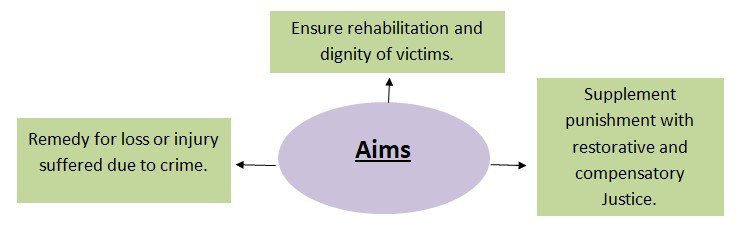
Objectives-
Compensation by Criminal Court -
-> Sec. 395 BNSS
(1) When a Court imposes a sentence of fine or a sentence (including a sentence of death) of which fine forms a part, the Court may, when passing judgment, order the whole or any part of the fine recovered to be applied—
(a) in defraying the expenses properly incurred in the prosecution;
(b) in the payment to any person of compensation for any loss or injury caused by the offence, when compensation is, in the opinion of the Court, recoverable by such person in a Civil Court;
(c) when any person is convicted of any offence for having caused the death of another person or of having abetted the commission of such an offence, in paying compensation to the persons who are, under the Fatal Accidents Act, 1855, entitled to recover damages from the person sentenced for the loss resulting to them from such death;
(d) when any person is convicted of any offence which includes theft, criminal misappropriation, criminal breach of trust, or cheating, or of having dishonestly received or retained, or of having voluntarily assisted in disposing of, stolen property knowing or having reason to believe the same to be stolen, in compensating any bona fide purchaser of such property for the loss of the same if such property is restored to the possession of the person entitled thereto.
(2) If the fine is imposed in a case which is subject to appeal, no such payment shall be made before the period allowed for presenting the appeal has elapsed, or, if an appeal be presented, before the decision of the appeal.
(3) When a Court imposes a sentence, of which fine does not form a part, the Court may, when passing judgment, order the accused person to pay, by way of compensation, such amount as may be specified in the order to the person who has suffered any loss or injury by reason of the act for which the accused person has been so sentenced.
(4) An order under this section may also be made by an Appellate Court or by the High Court or Court of Session when exercising its powers of revision.
(5) At the time of awarding compensation in any subsequent civil suit relating to the same matter, the Court shall take into account any sum paid or recovered as compensation under this section.
-> Victim Compensation Scheme by State Sec. 396 BNSS
(1) Every State Government in co-ordination with the Central Government shall prepare a scheme for providing funds for the purpose of compensation to the victim or his dependents who have suffered loss or injury as a result of the crime and who require rehabilitation.
(2) Whenever a recommendation is made by the Court for compensation, the District Legal Service Authority or the State Legal Service Authority, as the case may be, shall decide the quantum of compensation to be awarded under the scheme referred to in sub-section (1).
(3) If the trial Court, at the conclusion of the trial, is satisfied, that the compensation awarded under section 395 is not adequate for such rehabilitation, or where the cases end in acquittal or discharge and the victim has to be rehabilitated, it may make recommendation for compensation.
(4) Where the offender is not traced or identified, but the victim is identified, and where no trial takes place, the victim or his dependents may make an application to the State or the District Legal Services Authority for award of compensation.
(5) On receipt of such recommendations or on the application under sub-section (4), the State or the District Legal Services Authority shall, after due enquiry award adequate compensation by completing the enquiry within two months.
(6) The State or the District Legal Services Authority, as the case may be, to alleviate the suffering of the victim, may order for immediate first-aid facility or medical benefits to be made available free of cost on the certificate of the police officer not below the rank of the officer in charge of the police station or a Magistrate of the area concerned, or any other interim relief as the appropriate authority deems fit.
(7) The compensation payable by the State Government under this section shall be in addition to the payment of fine to the victim under section 65, section 70 and sub-section (1) of section 124 of the Bharatiya Nyaya Sanhita, 2023.

we believe in a holistic approach to legal education building not just lawyers, but socially conscious leaders of tomorrow.
