Various Professional Regulatory Bodies in India –
Dr. Tanmoy Mukherji
Advocate
Various Professional Regulatory Bodies in India –
Tanmoy Mukherji
Advocate
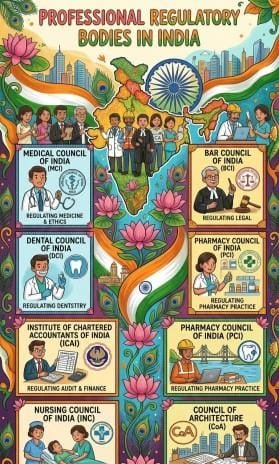
Professional regulatory bodies in India are statutory authorities created by Parliament to regulate professional education, maintain uniform standards, enforce ethical conduct, and supervise licensing of professionals. Their authority flows mainly from Entry 66 of the Union List under the Constitution of India, which empowers Parliament to coordinate and determine standards in higher education.
Constitutional & Federal Framework-
Entry 66, Union List
Gives Parliament power over:
“Coordination and determination of standards in institutions for higher education or research and scientific and technical institutions.”
Entry 25, Concurrent List-
Education is in the Concurrent List (after 42nd Amendment), but standards remain with the Union.
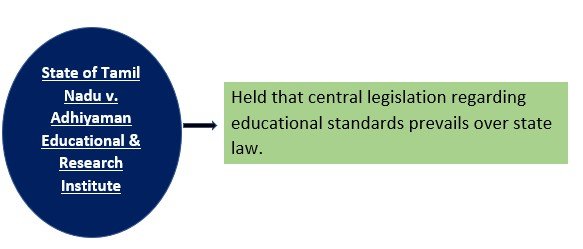
Landmark Case:
Major Professional Regulatory Bodies-
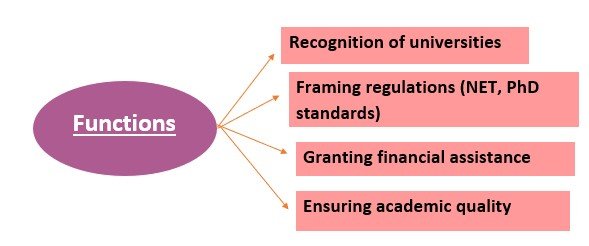
University Grants Commission (UGC)-
Statute:
University Grants Commission Act
Functions:
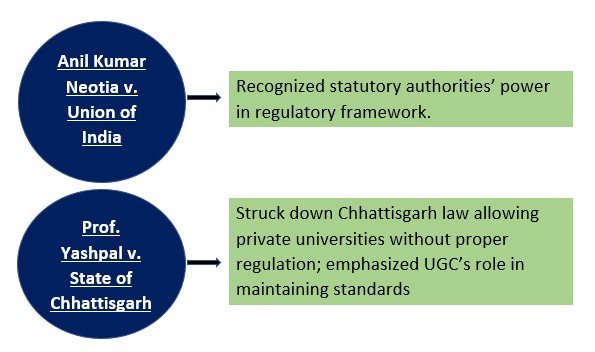
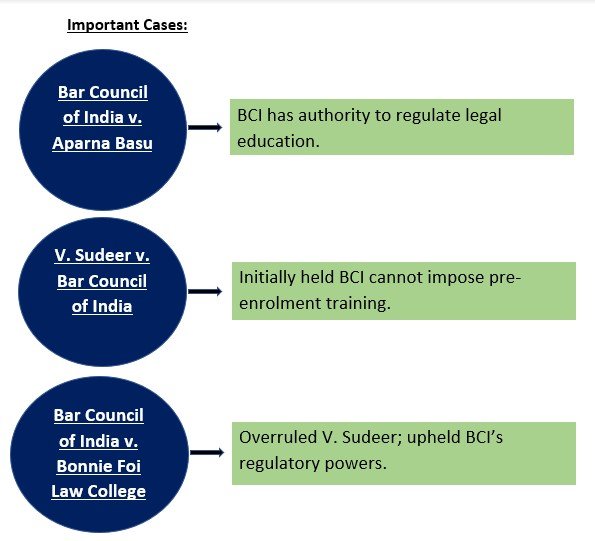
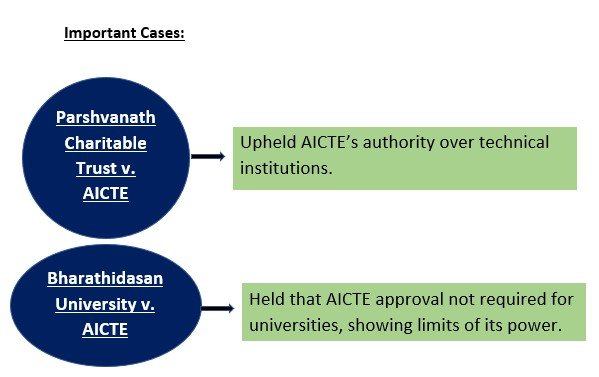
Important Cases:
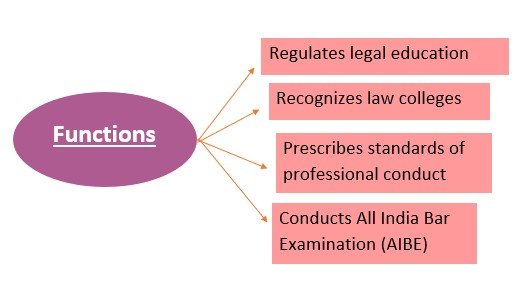
Bar Council of India (BCI)-
Statute:
Advocates Act
Functions:
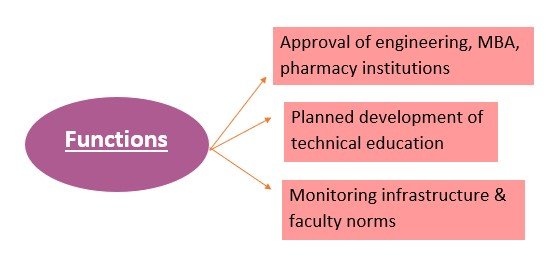
All India Council for Technical Education (AICTE)-
Statute:
AICTE Act
Functions:
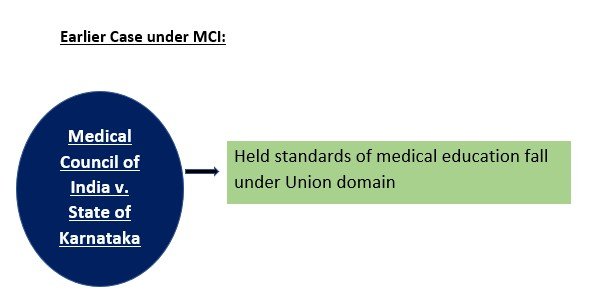
National Medical Commission (NMC)
(Replaced Medical Council of India)
Statute:
National Medical Commission Act
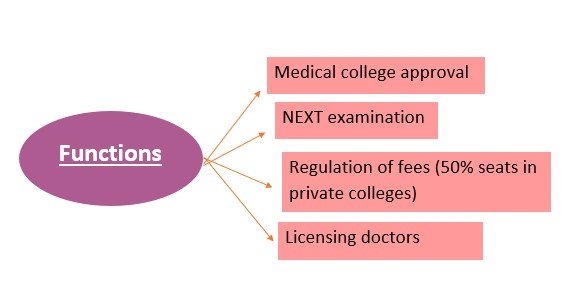
Functions:
National Council for Teacher Education (NCTE)
Statute:
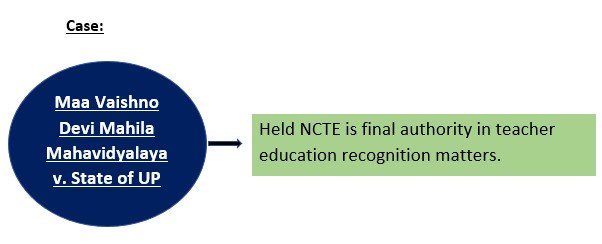
National Council for Teacher Education Act
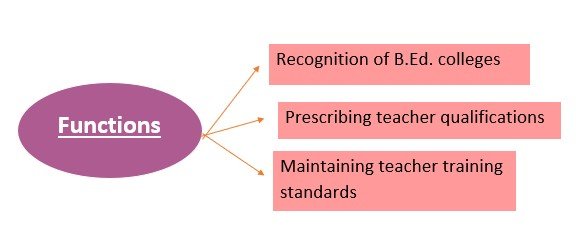
Functions:
Pharmacy Council of India (PCI)-
Statute:
Pharmacy Act
→Regulates pharmacy education and registration of pharmacists
Dental Council of India (DCI)-
Statute:
Dentists Act
→Regulates dental education and standards
Indian Nursing Council (INC)-
Statute:
Indian Nursing Council Act
→Regulates nursing education and curriculum standards
Council of Architecture (COA)
Statute:
Architects Act
→Regulates architectural education and professional practice.
Emerging Reform Structure (NEP 2020 Context)-
The National Education Policy 2020 proposes:
→Higher Education Commission of India (HECI)
→Separation of regulation, accreditation, funding & standard-setting
Aim: Reduce overlapping jurisdiction and corruption.
Constitutional & Judicial Principle-
Doctrine of Occupied Field
→Central law prevails in case of conflict
Uniform National Standards
→Professional education must be consistent across India
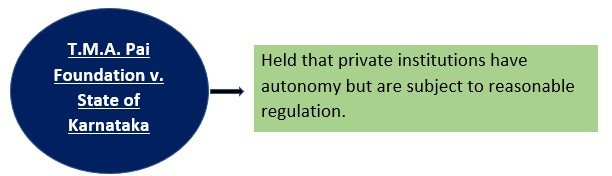
Autonomy vs Regulation Balance
→Courts emphasize autonomy but within statutory control.
Case:
Critical Analysis-
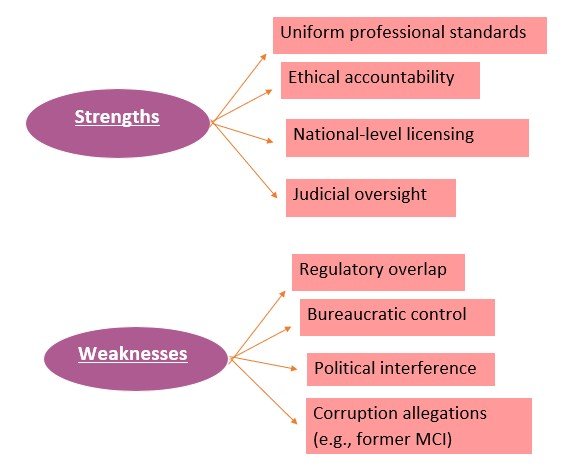
Professional regulatory bodies in India form the backbone of quality control in professional education. Their authority is constitutionally supported and judicially reinforced. However, reforms are necessary to reduce duplication and ensure transparency while preserving academic autonomy.

we believe in a holistic approach to legal education building not just lawyers, but socially conscious leaders of tomorrow.
