Sources of Muslim Law
Dr. Tanmoy Mukherji
Advocate
Sources of Muslim Law-
Tanmoy Mukherji
Advocate

Muslim Law is derived from both divine revelation and human reasoning. Muslim Law (Sharia) means "the path to be followed", and it governs every aspect of Muslim's life - spiritual, moral, social and legal.
The sources are generally divided into-
1. Primary sources and,
2. Secondary sources.
1. Primary Sources-
These are directly based on divine revelation and are universally accepted by Islamic Jurisprudence (Fiqh).
Quran-
Nature of Quran-

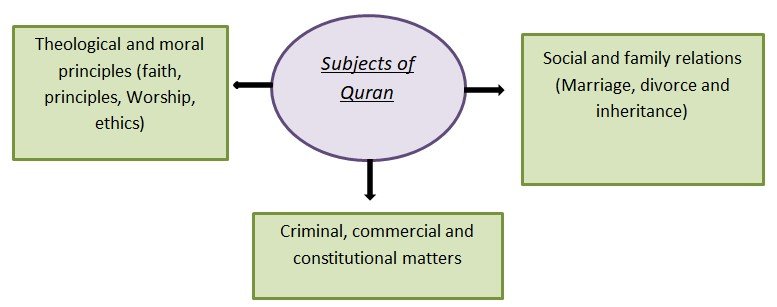
Subjects of Quran-
The Quran provides guidance in three broad areas-
Examples of legal verses-
a. Marriage-
Marry women of your choice, two, three or four [Quran 4:3] (chapter: Ayat).
b. Inheritance-
Allah commands you concerning your children: to the male a portion equal to that of two females [Quran 4:11]
c. Punishment for theft-
As for the thief, male or female, cut off their hands [Quran 5:38]
Importance of Quran-

Hadith and Sunnah
-Hadith refers to reports about what prophet Muhammad (peace be upon him) said, did, or approved.
-Hadith literally means speech narration or report.
-Sunnah means a path, a way or a manner of conduct.
-Sunnah refers to the established practice or example of the prophet.
- Sunnah explains and elaborates and supplements the Quran.
- Sunnah adds new rulings not explicitly found in the Quran.
- Prohibition of marrying an Aunt and Niece together.
- Every Sunnah is known through Hadiths but not every Hadith establishes a binding Sunnah.
Importance of Hadith and Sunnah-

Izma-
Izma is the unanimous agreement of qualified Muslim Jurists (Mujtahids) on a legal issue after the death of Prophet Muhammad.
-It is considered the third primary source of Muslim law after Quran and Hadith.
Importance-

Types of Izma-

Conditions for valid Izma-
a. Only qualified Mujtahids participate.
b. Consensus must be unanimous.
c. Issue must arise after the Prophet's time.
d. Consensus must be on a legal matter.
e. Evidence must be rooted in Quran and Sunnah.
Qiyas-
Qiyas means deriving a legal ruling for a new issue by comparing it with an existing issue whose ruling is already established in the Quran or Hadith because they share the same effective cause.
Need of Qiyas-
Islamic law must address new problems that did not exist during the Prophet's time, such as-
-Banking
-Insurance
-Organ donation
-Artificial Intelligence
-Cyber Crime
-Modern Intoxicants
Types-

Conditions-
a) The ruling of the original case must be based on Quran or Hadith.
b) The new issue must not contradict any text.
c) The Illah must be clearly identified-
-present in both cases,
- rational, and relevant.
d) Only qualified scholars (Mujtahids) can use Qiyas.
Secondary Sources -
Secondary sources are those derived from or based on the primary sources.
Istihsan - Juristic preference-
Used mainly by the Hanafi school.
Meaning: Choosing a ruling that promotes equity, fairness, and public welfare, even if it departs from strict analogy.
Example: Allowing certain business contracts for public benefit.
Purpose: To avoid hardship, rigidity, and injustice.
Maslahah - Public interest-
Favored by the Maliki school.
Meaning: Making laws based on public welfare provided they do not contradict Quran or Hadith.
Example:
-Traffic laws
-Vaccination Policies
-Public health and safety rules
Type (Maslahah):

Urf – Custom-
Meaning: local customs accepted as long as they do not oppose Islamic Principles.
Example:
-local marriage practices
-Business customs
-Social norms/rules
Istishab - Presumption of Continuity-
Meaning: Assuming an existing condition continues until the opposite is proven.
Example: A person is presumed innocent until guilt is proven.
Ijtihad - Independent Reasoning-
Meaning: Reasoning by a qualified Jurist when Quran, Sunnah, Ijma, Qiyas do not give a clear answer.
Use-
-Bioethics
-Technology
-Artificial intelligence
-Finance
-Medical dilemmas
Fatwa - legal opinion-
Meaning: a non-binding legal opinion issued by an Islamic jurist on a specific question.
Features-
a. Based on Quran, Sunnah and other Juristic principles.
b. Becomes binding only when adopted by courts or government.
Modern Sources-
i. Legislation - laws enacted by the Parliament.
ii. Judicial precedents- Decisions of higher courts that become binding on lower courts.
iii. Equity, Justice and good conscience- Courts apply principle of fairness when classical rules are silent or rigid.
iv. Modern Urf- Modern customs and social practices recognized by courts as long as they do not contradict Sharia.
Modern Ijtihad- Fresh reasoning by contemporary scholars to answer modern questions.
Codification: Traditional Sharia rules are converted into written systematic codes by modern states.
Opinion of Modern Jurist-
The opinions of modern jurist are also the source of Muslim law. These opinions guide law makers, judges.
International Treaties and Human Rights instruments- these cannot contradict fundamental Islamic principles.

we believe in a holistic approach to legal education building not just lawyers, but socially conscious leaders of tomorrow.
