RESTORATIVE AND TRANSFORMATIVE JUSTICE APPROACHES-
Dr. Tanmoy Mukherji
Advocate
RESTORATIVE AND TRANSFORMATIVE JUSTICE APPROACHES-
Tanmoy Mukherji
Advocate
Introduction-
→Crime creates harm not only to the State but also to victims, families and the community.
→Traditional criminal justice primarily focuses on punishment.
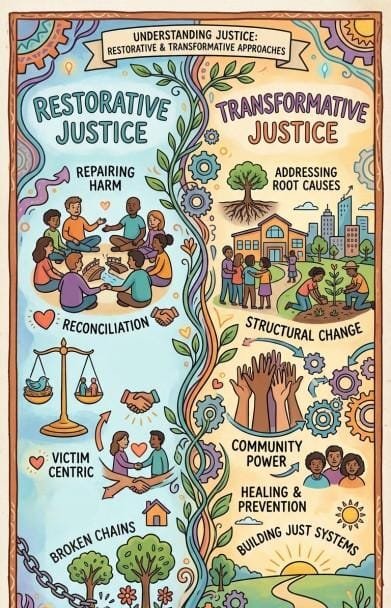
→Restorative and transformative justice are progressive approaches that seek to address the causes and consequences of crime, promote healing, repair harm and bring about long-term social change.
→These approaches are increasingly recognised in criminology and criminal justice, especially for community-based and non-custodial responses.
Meaning-
Restorative Justice-
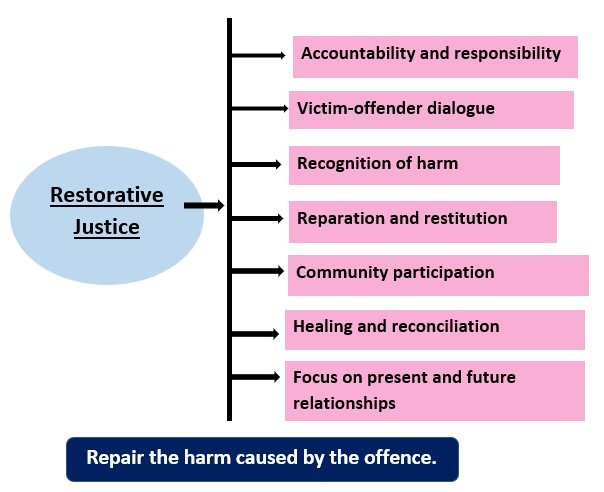
An approach that focuses on repairing the harm caused by crime through active participation of the victim, offender and community, with an emphasis on dialogue, accountability, reparation and reconciliation.
Transformative Justice-
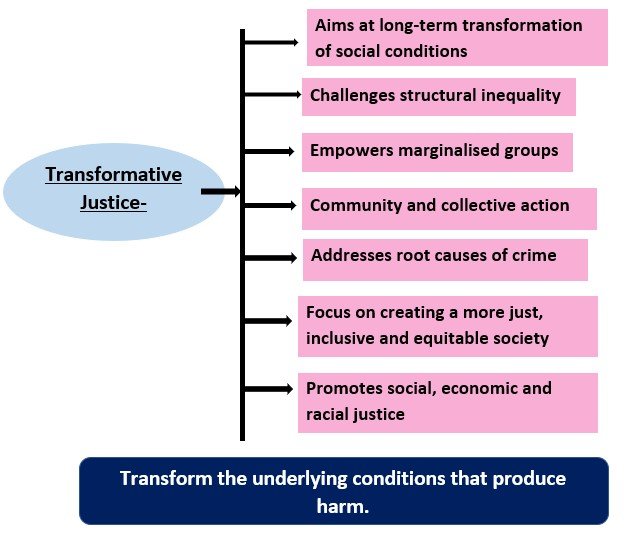
A broader approach that aims to address the structural, social and systemic causes of crime and harm by transforming the underlying conditions of inequality, oppression and marginalisation, along with repairing harm at the individual and community levels.
Philosophical Foundation-
Restorative Justice-
→Based on principles of healing, reconciliation and community participation.
→Focuses on relationships and harm, rather than only legal guilt.
→Views crime as a violation of people and relationships.
→Emphasises accountability, reparation and reintegration.
Transformative Justice-
→Based on principles of social justice, equality, inclusion and human dignity.
→Focuses on transforming the social structures that contribute to crime, such as poverty, discrimination and marginalisation.
→Seeks to empower individuals and communities, especially those who are vulnerable and oppressed.
→Goes beyond individual cases to bring long-term social change.
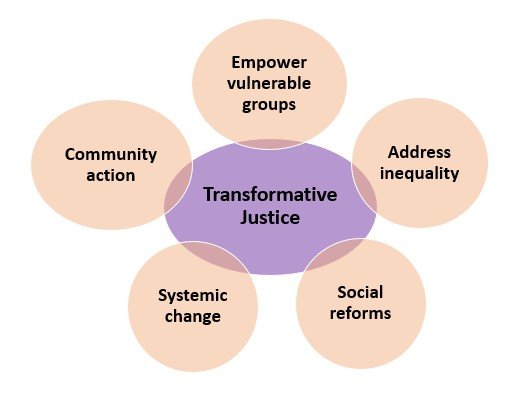
Key Features-
Restorative Justice-
Transformative Justice-
Detailed Comparison-
|
Basis |
Restorative Justice |
Transformative Justice
|
|
Primary focus |
Repairing harm |
Transforming social conditions
|
|
Scope |
Individual, victim, offender and community |
Individual, community and broader social structures
|
|
Main objective |
Reconciliation and restoration |
Social change and justice transformation
|
|
View of crime |
Violation of people and relationships |
Result of social inequality and structural injustice
|
|
Approach |
Dialogue, participation, reparation |
Structural reform, empowerment and collective action
|
|
Outcome |
Healing, accountability, reintegration |
Long-term social transformation and reduced conditions of harm
|
|
Level of intervention |
Case-specific |
Individual, community and systemic level
|
|
Nature of change |
Restorative (repair existing relationships) |
Transformative (change unjust social structures)
|
Process: Restorative Justice-
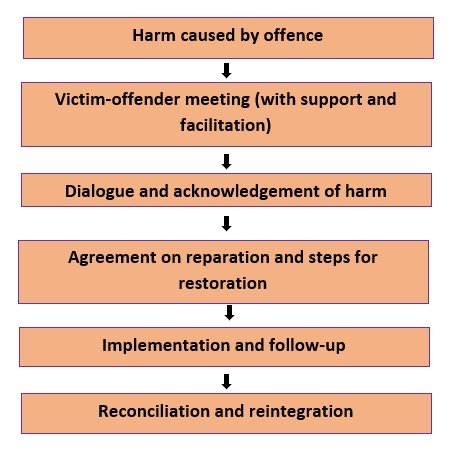
In suitable cases, the process is voluntary, safe and facilitated by trained professionals.
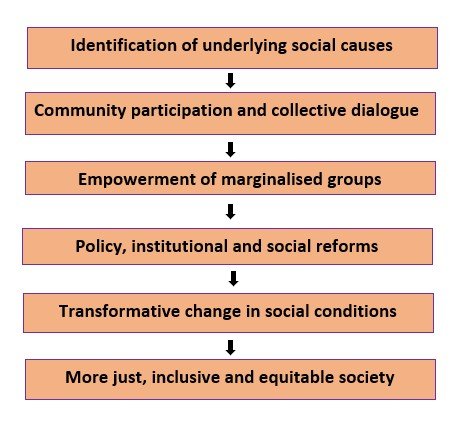
Process: Transformative Justice-
Examples-
|
Restorative Justice
|
Transformative Justice
|
|
→Victim-offender mediation →Family group conferencing →Community service with reparation →Restorative circles in schools →Application in juvenile justice |
→Reforms to reduce poverty and social exclusion →Addressing discrimination and marginalisation →Gender justice and inclusive policies →Community-led initiatives for social change →Reforms in education, housing, healthcare and employment
|
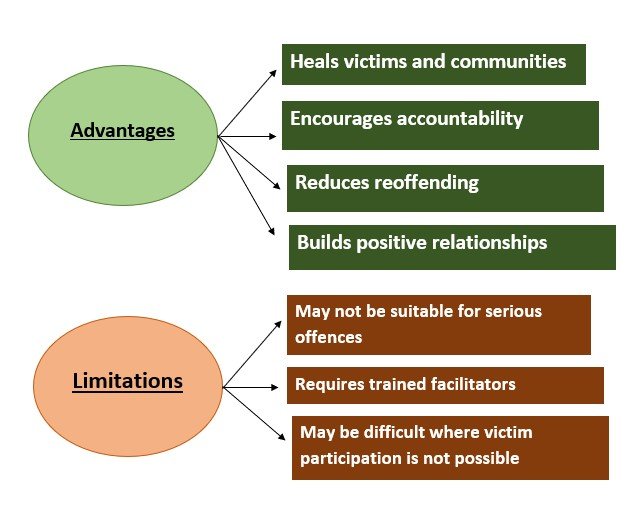
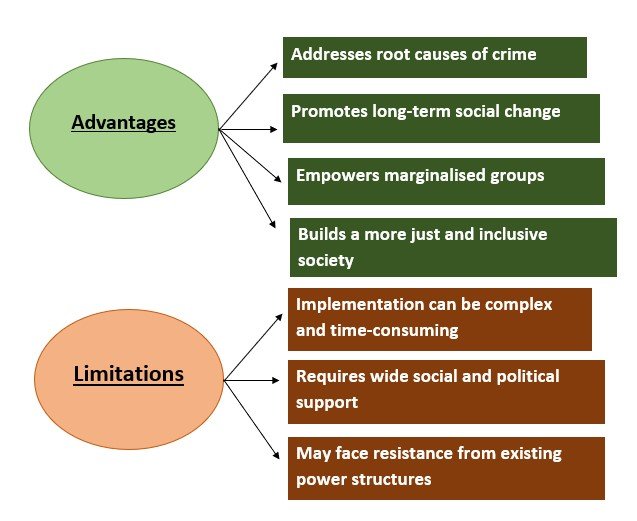
Advantages and Limitations-
Restorative Justice-
Transformative Justice-
Conclusion-
→Restorative justice and transformative justice are important approaches that complement traditional punitive models.
→While restorative justice focuses on repairing the harm caused by crime, transformative justice aims to change the underlying social conditions that lead to harm and marginalisation.
→Together, they contribute to a more humane, inclusive and effective criminal justice system.

we believe in a holistic approach to legal education building not just lawyers, but socially conscious leaders of tomorrow.
