Qualification of Directors
Company Law
Dr. Tanmoy Mukherji
Advocate
Qualification of Directors-
Tanmoy Mukherji
Advocate
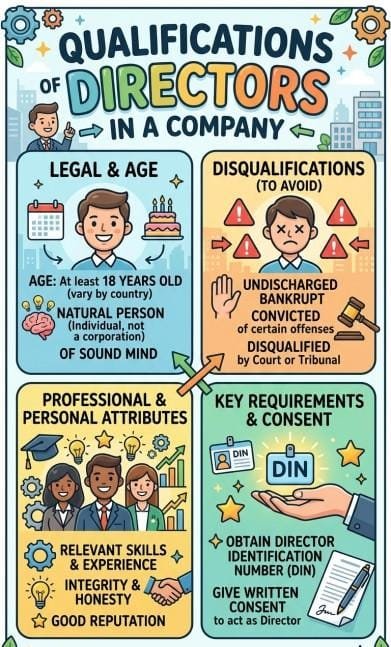
Under the Companies Act, 2013, directors are the persons entrusted with the management and control of the affairs of a company. Since a company is an artificial legal person, it acts through human agency — that agency is the Board of Directors.
→Section 2(34) defines a director as a person appointed to the Board, and Section 2(10) defines the Board of Directors as the collective body of directors.
→The legal position of directors is unique. They are neither purely agents nor purely trustees, but occupy a fiduciary and representative position.
I?. Directors as Agents
→The most important aspect of the legal position of directors is that they act as agents of the company.
→The company is the principal.
→Directors are agents.
→Acts done within authority bind the company.
→If directors act beyond their authority (ultra vires), they may be personally liable.
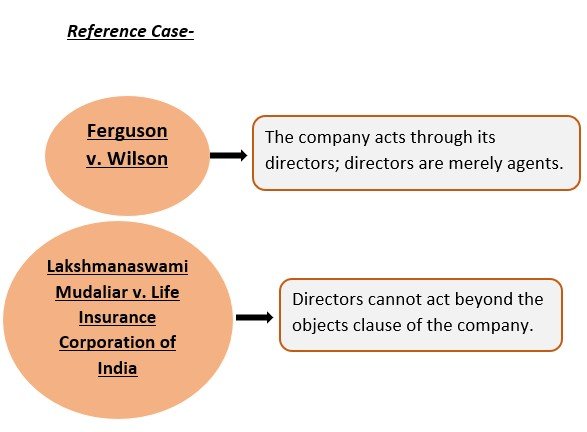
Thus, directors are agents in relation to third parties.
II?. Directors as Trustees
Though not trustees in the strict sense, directors are treated as trustees of:
→Company property
→Company funds
→Powers entrusted to them
→They must not misuse company property or make secret profits.
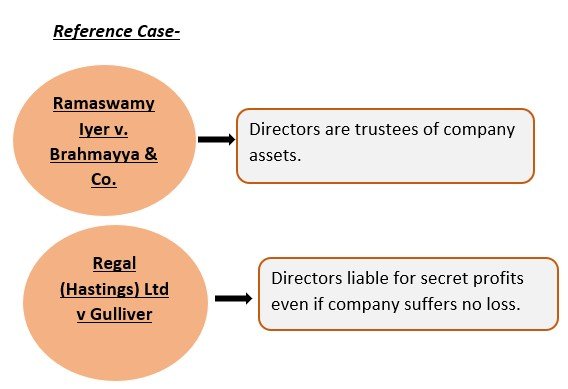
Thus, directors occupy a fiduciary position similar to trustees.
III?. Directors as Officers of the Company
Under the Companies Act, directors are considered “officers in default.”
They may incur:
→Civil liability
→Criminal liability
→Personal liability
For example:
→Fraud (Section 447)
→Misstatements in prospectus
→Failure to file statutory returns
IV?. Directors as Managing Partners (Quasi-Partners Theory)
In small private companies, courts sometimes treat directors like partners.
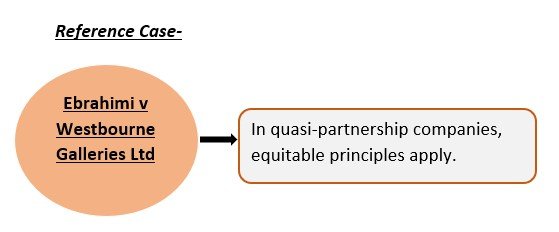
This principle is important in oppression and mismanagement cases.
V?. Directors as Employees (Sometimes)-
A director may also be:
→Managing Director
→Whole-time Director
In such cases, he has a dual capacity:
→Director (fiduciary role)
→Employee (contractual role)
However, an ordinary director is not an employee.
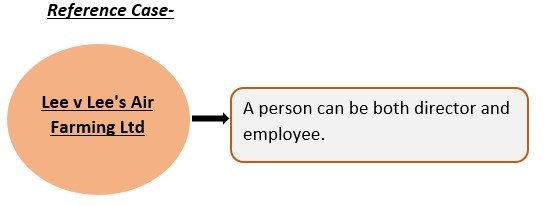
VI? Directors as Organs of the Company
→Modern theory considers directors as the “brain” or “mind” of the company.
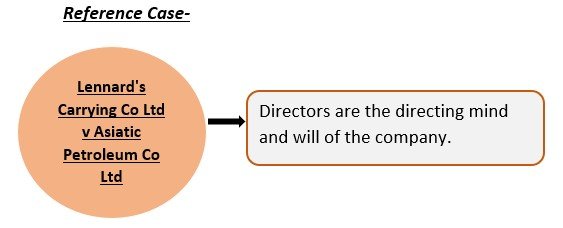
This principle is important in fixing corporate liability.
VII?. Collective Nature of Directors
→Directors act collectively as a Board.
→Individual directors have no power unless authorized.
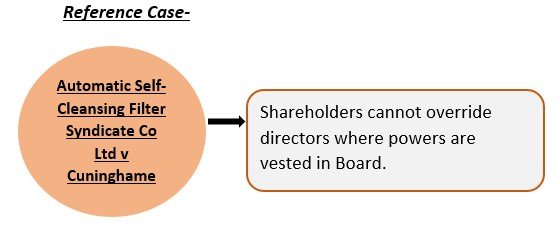
The legal position of directors is a combination of agency, trusteeship, fiduciary obligation, and statutory responsibility. They are the controlling authority of the company but must act within:
→The Companies Act, 2013
→Memorandum and Articles
→Principles of fiduciary law
If they misuse their powers, they can be held personally liable.

we believe in a holistic approach to legal education building not just lawyers, but socially conscious leaders of tomorrow.
