Polluter Pays Principle (PPP)
Dr. Tanmoy Mukherji
Advocate
Polluter Pays Principle (PPP)-
Tanmoy Mukherji
Advocate
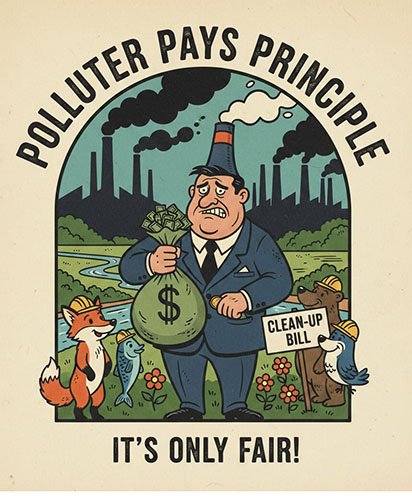
The person who causes pollution must bear the full cost of preventing, controlling, remedying environmental damage.
It ensures that environmental costs are internalised by the polluter, rather than being imposed on-
→Public
→Government
→Future Generations
→Environment
It forms the economic + legal basis of modern environmental governance.
International Development of the Polluter Pays Principle-
-The Polluter Pays Principle evolved globally through international organisations, conventions, declarations, and environmental policies.
-It is now a central part of International Environmental Law.
OECD (1972)-
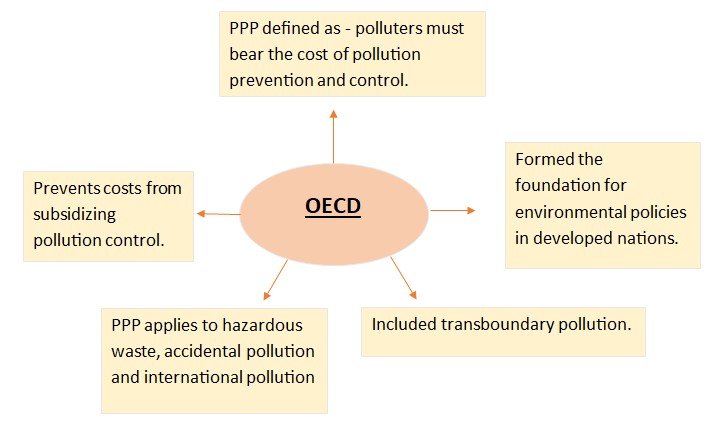
The PPP was first officially recognised by the Organisation for Economic Co-operation and Development (OECD) in 1972.
Stockholm Conference (1972)-
It did not explicitly use "PPP", but emphasized- discharge of toxic substances... must be halted to prevent environmental damage.
Rio Declaration (1992)-
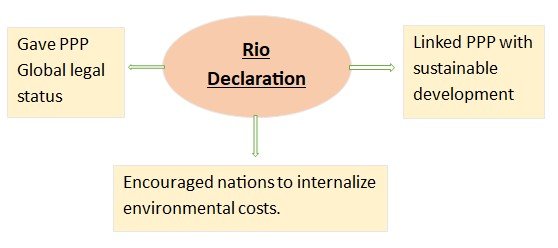
Principle 16 says that the polluter should, in principle, bear the cost of pollution, with due regard to the public interest.
Single European Act, 1984-
PPP included as guiding principle.
Treaty on European Union, 1992-
PPP reaffirmed.
World Trade Organization (WTO)-
WTO recognizes that environmental costs should be internalized by the polluter.
PPP indirectly inferences-
→Trade Policies
→Eco-labelling
→Carbon border adjustment mechanisms
Basel Convention, 1989 -
The convention states-
→Waste exporters and importers must handle and dispose of hazardous waste at their own cost.
→PPP applied to transboundary movement of hazardous waste.
United Nations Framework Convention on Climate Change (UNFCCC) –
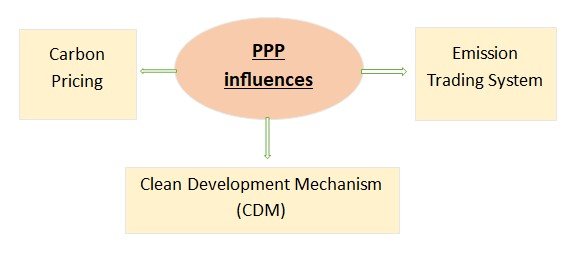
Though not explicitly stated, Climate financial Mechanism reflect PPP.
Convention on Biological Diversity, 1992 -
-It uses PPP to impose costs on activities that harm biodiversity.
-It encourages compensation and eco-system restoration.
Global Practice in National Laws-
Many countries adopted PPP into domestic law-
USA: Superfund Act (CERCLA) - Polluters Pay Cleanup Cost
Canada: Environmental Protection Act
Japan: Water Pollution Control Law.
India: Constitution + Supreme Court Judgements.
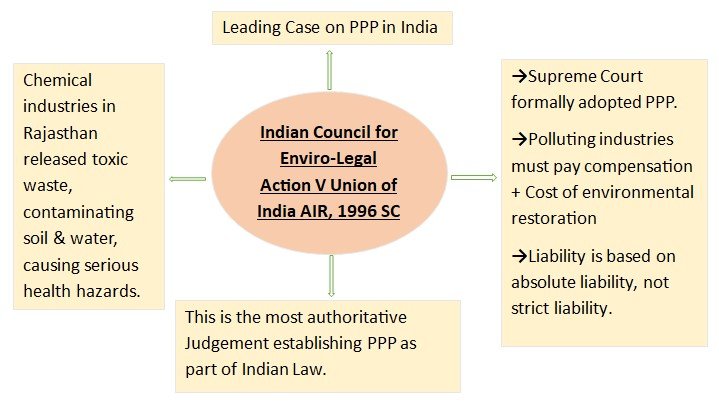
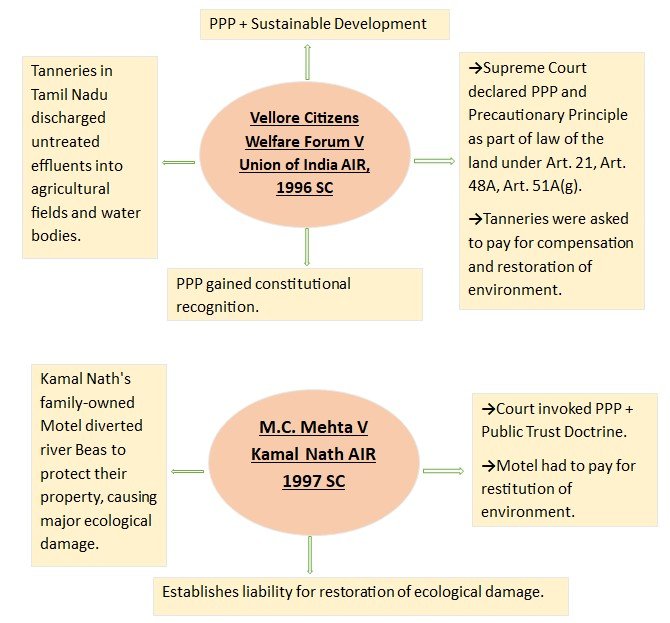
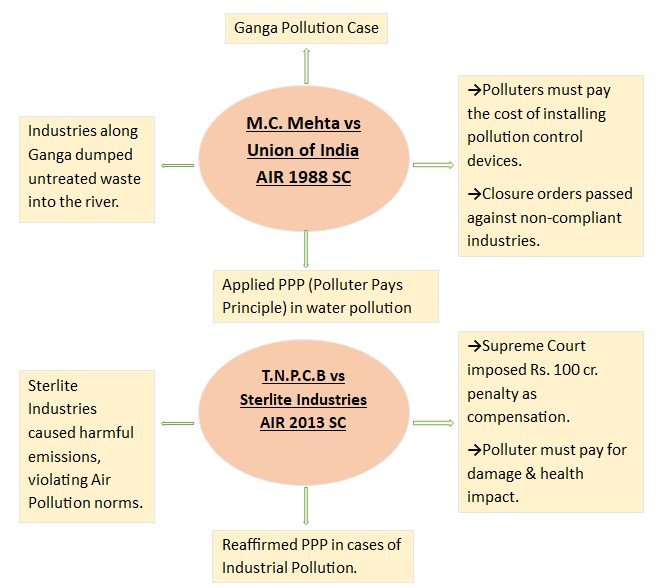
Reference Cases-

we believe in a holistic approach to legal education building not just lawyers, but socially conscious leaders of tomorrow.
