Objectives of BNSS
The Bharatiya Nagarik Suraksha Sanhita (BNSS) 2023
Dr. Tanmoy Mukherji
Advocate
Objectives of BNSS-
Tanmoy Mukherji
Advocate
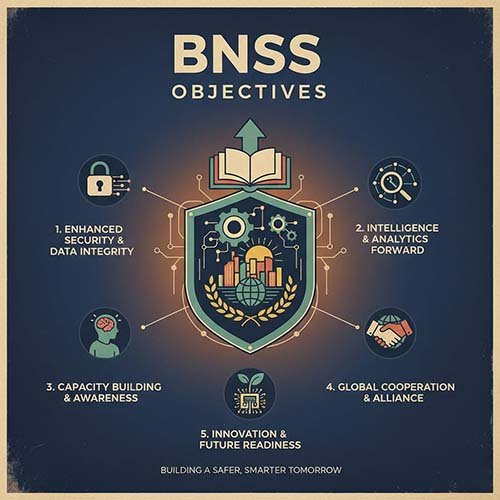
The Bharatiya Nagarik Suraksha Sanhita (BNSS) 2023 is a comprehensive criminal procedural code designed to reform and modernize India’s criminal justice system.
Major Objectives of BNSS-
a) Procedural Reforms-
i) Timelines-
Establishes strict timelines for each stage of the criminal process including investigation, trial, and appeals to expedite proceedings and reduce delays.
ii) Streamlined Process-
Simplifies procedural requirements to reduce complexity and administrative burdens, making the process more efficient for courts, law enforcements and legal practitioners.
b) Technology integration-
i) Digital evidence handling-
Provides detail guideline for the management of digital evidence, including cyber crime investigation, and data privacy.
ii) E-Courts & virtual hearing-
Promotes the use of technology for digital filing, e-courts, & virtual hearing to enhance accessibility and efficiency in the legal process.
c) Victim Rights and support-
i) Active participation:-
Strengthens the role of victim in the legal process allowing them to provide statements & participate in hearings, thereby ensuring their voices are heard.
ii)Compensation & assistance-
Includes provisions for victim compensation, support Services & protection from intimidation aiming to address victim’s needs and improve the experience within the justice system.
d) Accused rights and fairness-
i) Fair trial & protection-
Ensures that the rights of the accused are upheld including the right to a fair trial, legal representation and protection against unlawful detention and or coercion.
ii) Transparency-
Increases transparency in the Judicial Process to prevent judicial abuse and ensure accountability.
e) Specialised Courts-
i) Expertise:
Provides for the establishment of specialised courts to handle specific types of crimes, such as cyber crimes, terrorism, ensuring cases are managed by experts with relevant knowledge.
ii) Efficient handling:
Aims to improve the handling of complex or emerging crimes through specialised procedures & experts adjudication.
f) ADR-
i) Plea bargaining:
Encourages the use of plea bargaining for resolving minor offences, reducing court congestion and expediting case resolution.
ii) Mediation-
Introduces mediation as an alternative to formal trials for certain disputes, facilitating amicable settlements and reducing the burden on the court system.
g) Transitional Provisions-
i) Case management-
Outlines guidelines for transitioning ongoing cases from the CrPC to the BNSS framework, ensuring continuity and consistency in legal proceedings.
ii) Adaptation-
Addresses the challenges of adapting existing cases to the new procedural norms established by the BNSS.

we believe in a holistic approach to legal education building not just lawyers, but socially conscious leaders of tomorrow.
