NOSCITUR A SOCIIS
TANMOY MUKHERJI INSTITUTE OF JURIDICAL SCIENCE
Dr. Tanmoy Mukherji
Advocate
NOSCITUR A SOCIIS-
Tanmoy Mukherji
Advocate
Statutory interpretation aims to discover the true intention of the legislature. Often, individual words in a statute may appear vague or capable of multiple meanings. In such cases, courts apply certain rules of interpretation to ascertain meaning from context. One such important rule is Noscitur a Sociis.
Meaning of the Maxim
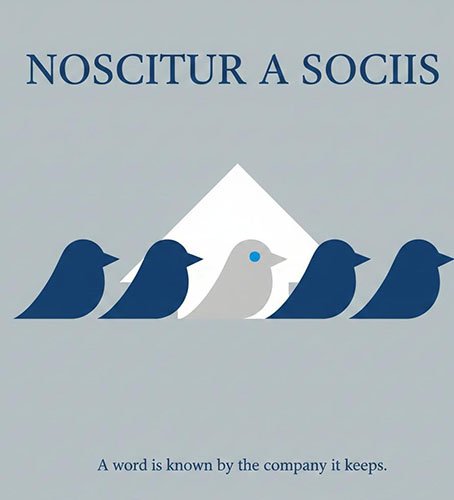
The Latin maxim Noscitur a Sociis means:
“A word is known by the company it keeps.”
According to this rule, the meaning of a word should be determined by reference to the words associated with it in the statute.
Explanation of the Rule
Under this doctrine:
→A word which is ambiguous or unclear
→Derives its meaning from surrounding words
The maxim is based on the principle that words in a statute are not used in isolation but form part of a contextual group.
For example, if a statute mentions “tools, implements, and other articles,” the phrase “other articles” will be interpreted in the context of tools and implements.
Object and Rationale
→Ascertainment of Legislative Intent
→Words are interpreted in harmony with surrounding terms.
→Avoidance of Ambiguity
→Prevents multiple or unintended meanings.
→Contextual Interpretation
→Emphasizes reading the statute as a whole.
→Consistency in Interpretation
→Ensures uniform application of statutory terms.
Scope and Application-
The doctrine is applied when:
→A word is vague or capable of different meanings
→The associated words indicate a common theme or purpose
It is frequently used in:
→Criminal law
→Taxation statutes
→Administrative law
→Labour and industrial laws
→Constitutional interpretation
Illustrations-
If a law refers to:
“Houses, buildings, sheds, or other structures”
The term “other structures” will be interpreted to mean structures similar to houses, buildings, and sheds, not temporary tents or movable objects.
Reference Cases
Inland Revenue Commissioners v. Frere (1965)
The court applied noscitur a sociis to interpret the word “interest” in association with other financial terms.
State of Bombay v. Hospital Mazdoor Sabha (1960)
The Supreme Court used the doctrine to interpret the term “industry” under the Industrial Disputes Act by reading it in the context of associated words.
Foster v. Diphwys Casson Slate Co. (1887)
The House of Lords applied this rule to interpret ambiguous statutory language.
K. Bhagirathi G. Shenoy v. K.P. Ballakuraya (1999)
The Supreme Court held that the meaning of a word must be understood in the context of its associated words.
Alamgir v. State of Bihar (1959)
The Supreme Court applied noscitur a sociis to interpret provisions of the Indian Penal Code.
Relationship with Ejusdem Generis
→Noscitur a Sociis is a broader principle.
→Ejusdem Generis is a specific application of this doctrine.
→While ejusdem generis limits general words to a particular class, noscitur a sociis helps interpret any doubtful word by reference to its companions.
Limitations of the Doctrine-
→Not Applicable When Language Is Clear
→Clear and unambiguous words do not require contextual aid.
→Cannot Defeat Legislative Intent
→The doctrine cannot override the clear purpose of the statute.
→Not a Rule of Law
→It is only a rule of interpretation and not mandatory.
→Inapplicable Where Context Demands Broad Meaning
Critical Evaluation-
The doctrine ensures that interpretation remains contextual and harmonious, but mechanical application may restrict statutory meaning unjustifiably. Therefore, courts apply it cautiously and pragmatically.
The doctrine of Noscitur a Sociis is a valuable tool of statutory interpretation. It ensures that:
→Words are understood in context
→Legislative intent is preserved
→Ambiguity is resolved logically
However, it must always be applied in harmony with the object, scheme, and purpose of the statute.

we believe in a holistic approach to legal education building not just lawyers, but socially conscious leaders of tomorrow.
