Neutrality
Dr. Tanmoy Mukherji
Advocate
Neutrality-
Tanmoy Mukherji
Advocate
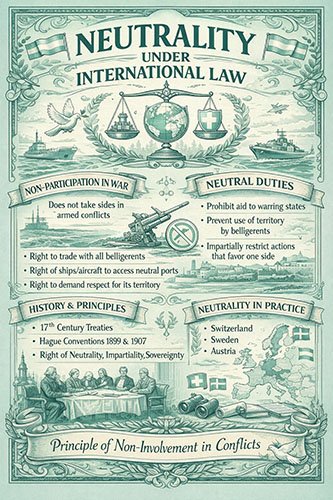
Neutrality in International law refers to the legal status of a State which does not take part in an armed conflict between other states and maintains an attitude of impartiality towards the belligerents. A neutral state abstains from supporting either side and, in return, enjoys certain rights and protections under International Law.
According to Oppenheim - "A neutral state is one which in time of war takes no part in the hostilities and maintains an attitude of impartiality towards the belligerents."
Historical Development-
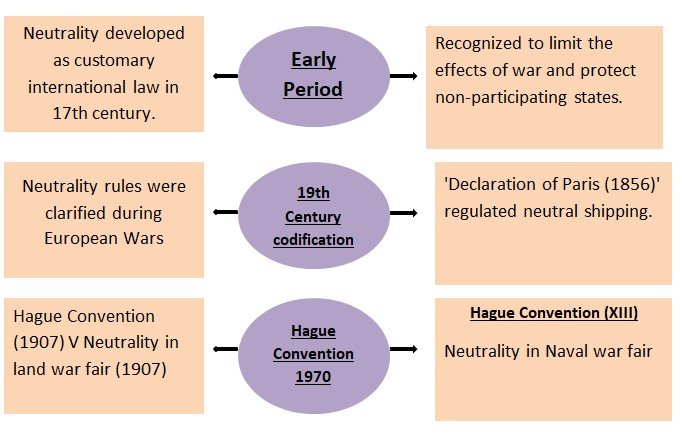
-These conventions remain the core legal source of neutrality.
-The provisions of the UN Charter particularly Art. 2(4) and Art. 39- Art 51 deal with neutrality.
Principles of Neutrality-
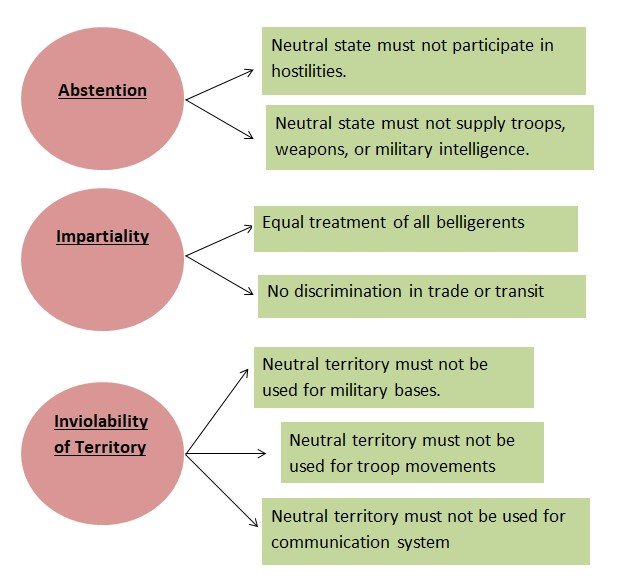
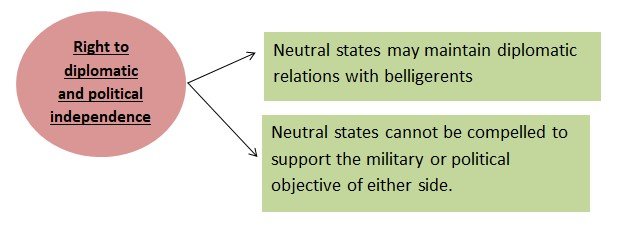
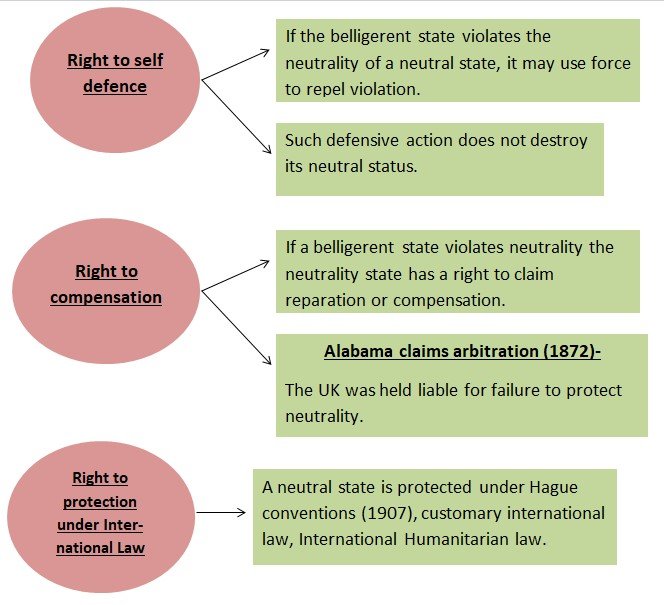
Rights of neutral states-
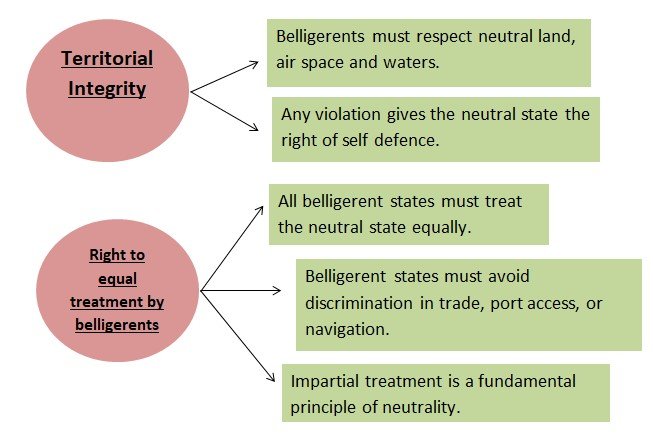
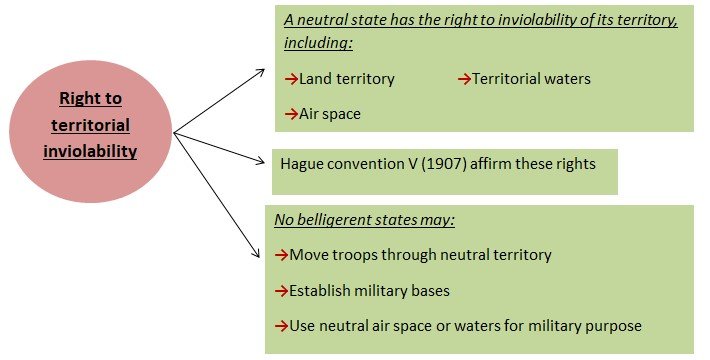
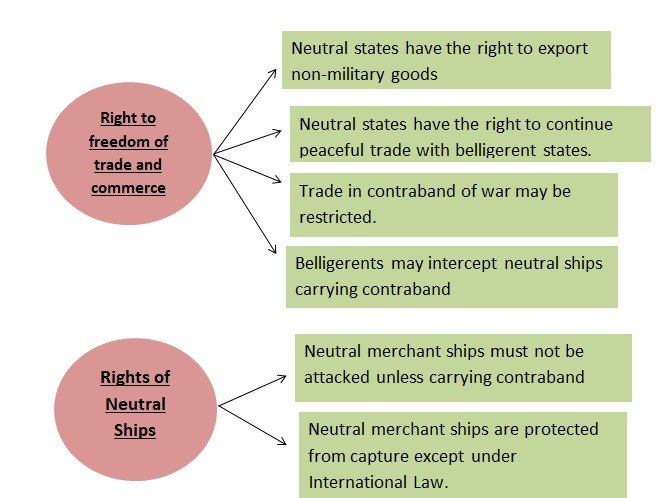
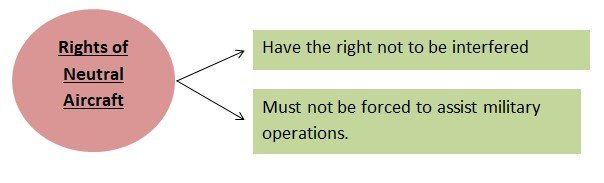
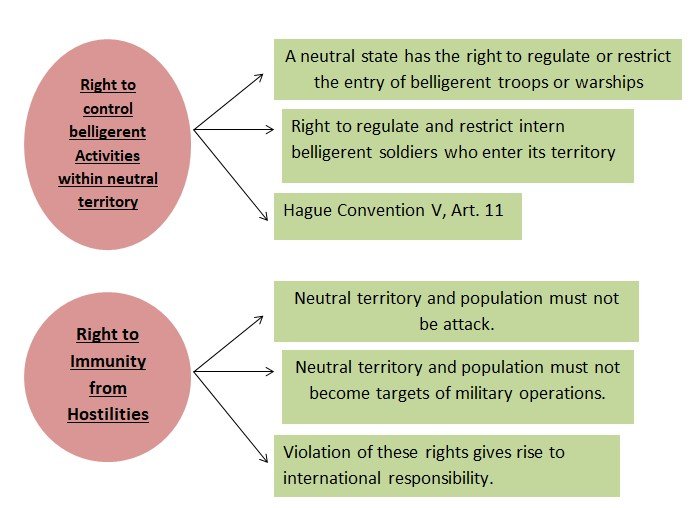
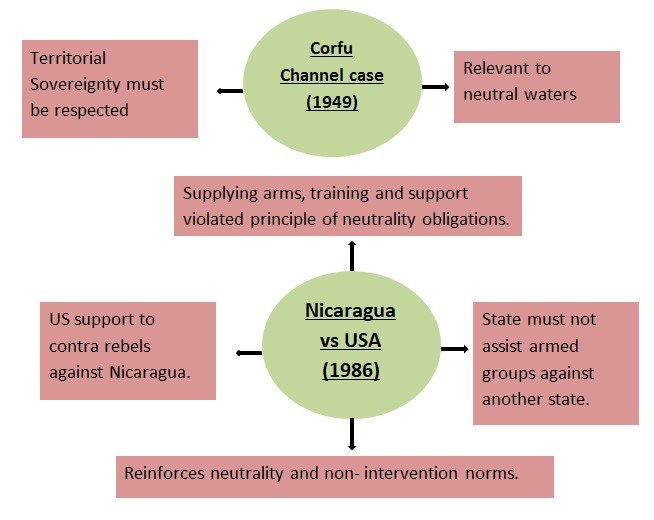
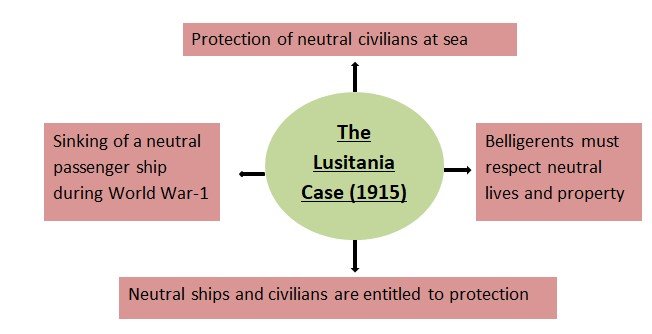
Reference Cases-
Duties of Neutral States-
A neutral state is a state which does not participate in an armed conflict and maintains strict impartiality between belligerents. Neutrality is not merely passive. International law imposes positive duties on neutral states.
The duties of neutral states are mainly governed by-
→Hague Convention V (War on land)
→Hague Convention XIII (Naval war)
→Customary International Law.
|
Duties |
Explanation
|
Basis/leading case
|
|
Duty of impartiality
|
A neutral state must treat all belligerents equally.
|
Hague Convention V (Art-9)
|
|
Duty of non-participation in Hostilities
|
A neutral state must not take part in or in any manner.
|
Nicaragua vs. USA (1986)
|
|
Duty to prevent use of neutral territory
|
Neutral territory must not be used for military purposes by belligerents.
|
→Hague Convention V (Art-2 - Art-5) →Alabama Claims Arbitration (1872). |
|
Duty to Intern belligerent troops
|
If belligerent armed forces enter intern territory- →They must be disarmed
|
Hague Convention V (Art-11)
|
|
Duty to control War Supplies
|
Neutral states must regulate - →Arms exports →Military supplies →Use of Ports & Airports.
|
Caroline case (1837)
|
|
Duty to prevent recruitment and military assistant
|
Neutral state must not allow- →Recruitment of soldiers →Formation of armed group →Training camps for belligerents.
|
Hague convention XIII (Art 4)
|
|
Duty in Naval warfare
|
Neutral ports must not become naval bases |
Hague Convention: 13 (1907) |
|
Duty to enforce neutrality laws
|
Neutrality requires active enforcement not mere declaration. |
Alabama Arbitration |
|
Duty to respect International Humanitarian law
|
→Protect refugees →Allow humanitarian aid →Respect Geneva convention. |
Customary International law |
|
Duty under UN charter
|
Comply with Security Council decisions |
Customary International law. |

we believe in a holistic approach to legal education building not just lawyers, but socially conscious leaders of tomorrow.
