Is the Parliament of India Sovereign in India? Justify your answer with the help of Constitutional provisions and case laws
Dr. Tanmoy Mukherji
Advocate
Is the Parliament of India Sovereign in India? Justify your answer with the help of Constitutional provisions and case laws-
Tanmoy Mukherji
Advocate

The concept of sovereignty of Parliament originates from the British constitutional system, where Parliament enjoys supreme and unlimited law-making power. However, the Indian constitutional framework adopts a different model. In India, sovereignty vests not in Parliament but in the Constitution itself. Hence, the Parliament of India is not absolutely sovereign but exercises limited sovereignty subject to constitutional restrictions.
Concept of Parliamentary Sovereignty: British Position-
According to A.V. Dicey, Parliamentary sovereignty in England means:
→Parliament can make or unmake any law.
→No person or body can question the validity of an Act of Parliament.
→No Parliament can bind its successors.
Contrast with India:
India has a written Constitution, judicial review, and a federal structure, which restrict parliamentary supremacy.
Supremacy of the Constitution in India-
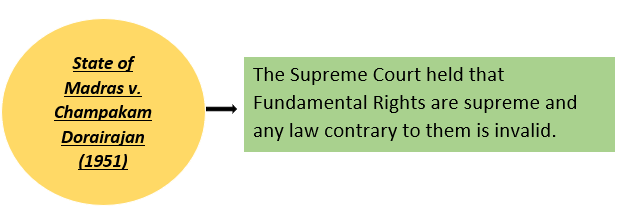
Article 13 – Limitation on Legislative Power
Article 13(2)- Expressly prohibits the State from making any law that abridges Fundamental Rights.
Laws violating Fundamental Rights are void.
Reference Case-
Limited Amending Power under Article 368-
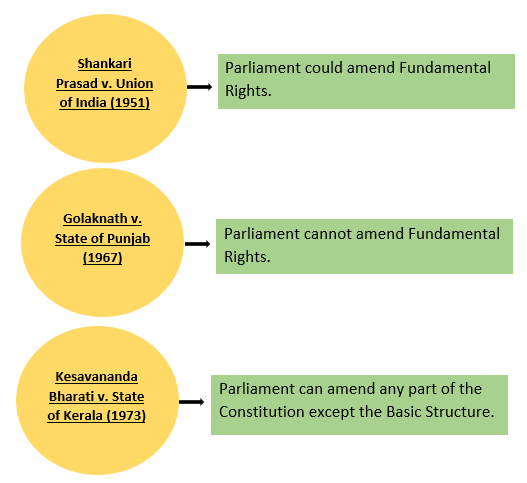
→Although Parliament can amend the Constitution, such power is not absolute.
→Evolution of Judicial Interpretation.
Reference Case-
Basic Structure Doctrine includes-
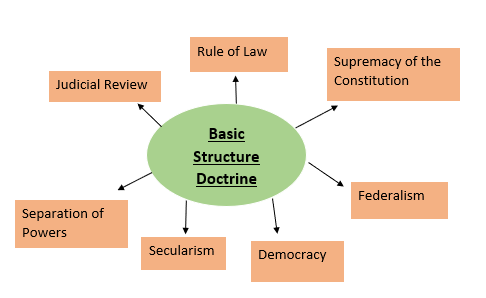
This doctrine firmly establishes that Parliament is not sovereign.
Judicial Review: A Check on Parliamentary Power-
Articles 32 and 226-
→Supreme Court and High Courts can declare laws unconstitutional.
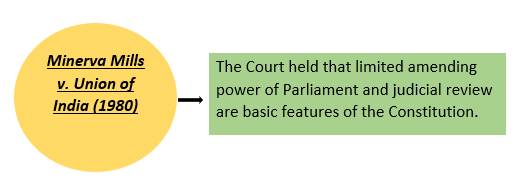
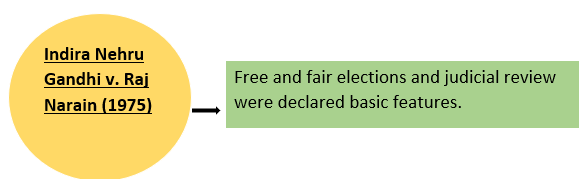
→Judicial review is itself part of the Basic Structure.
Reference Case-
Federal Structure Limits Parliamentary Sovereignty-
Articles 245–246 and Seventh Schedule
Legislative powers are divided into:

Parliament cannot legislate on State subjects except in exceptional circumstances.
Reference Case-
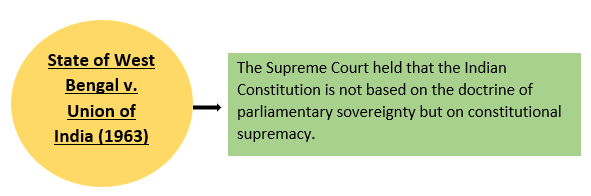
Role of Fundamental Rights-
→Fundamental Rights are enforceable against Parliament.
→Any law violating Part III can be struck down.
Reference Case-

Directive Principles and Their Limitations
→Directive Principles are fundamental in governance but non-justiciable.
→Parliament cannot override Fundamental Rights in the name of Directive Principles.
Reference Case-
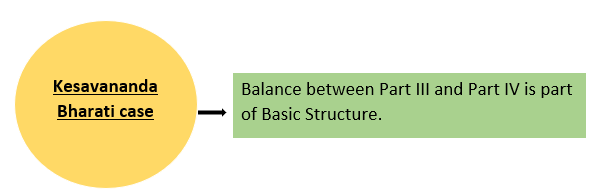
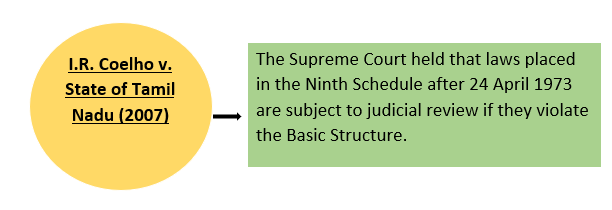
Ninth Schedule and Parliamentary Power-
→Article 31B
→Laws in Ninth Schedule were initially immune from judicial review.
Reference Case-
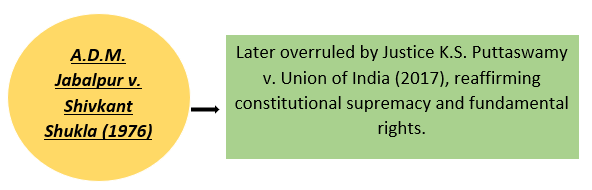
Emergency Provisions and Parliamentary Control-
Even during emergencies, Parliament’s power is not absolute.
Reference Case-
Separation of Powers-
→Parliament cannot encroach upon judicial functions.
→Judiciary can invalidate unconstitutional legislative actions.
Reference Case-
The Parliament of India cannot be regarded as sovereign in the British sense. It is subordinate to the Constitution, which is supreme. Parliamentary powers are limited by:
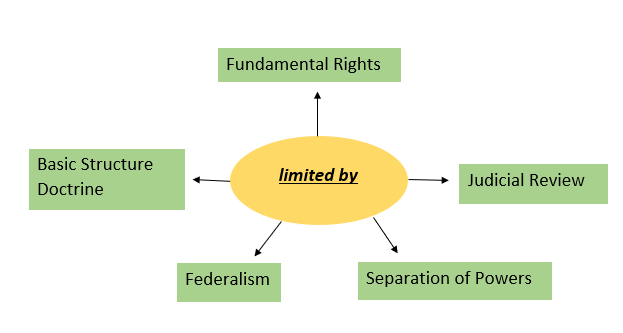
Thus, India follows constitutional supremacy, not parliamentary sovereignty.
Hence, the Parliament of India is powerful but not sovereign.

we believe in a holistic approach to legal education building not just lawyers, but socially conscious leaders of tomorrow.
