Intoxication
Dr. Tanmoy Mukherji
Advocate
Intoxication-
Tanmoy Mukherji
[Advocate]
Section 23 and 24 of BNS, 2023 deals with Intoxication.
Section 23-
Nothing is an offence which is done by a person who at the time of doing it, is by reason of intoxication incapable of knowing the nature of the act, or that he is doing what is either wrong, or contrary to law; provided that the thing which intoxicated him was administered to him without his knowledge or against his will.
Section 24-
In cases where an act done is not an offence unless done with a particular knowledge or intent, a person who does the act in a state of intoxication shall be liable to be dealt with as if he had the same knowledge as he would have had if he had not been intoxicated, unless the thing which intoxicated him was administered to him without his knowledge or against his will.
This difference can downgrade liability.
[e.g, Murder (sec 101 BNS) - CH not amounting to murder (sec 100 BNS)]
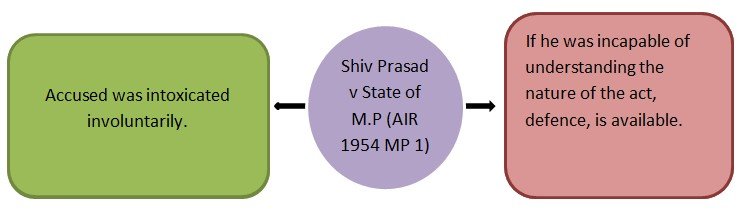
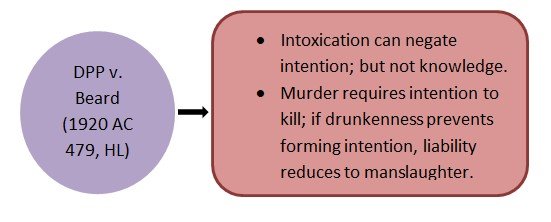
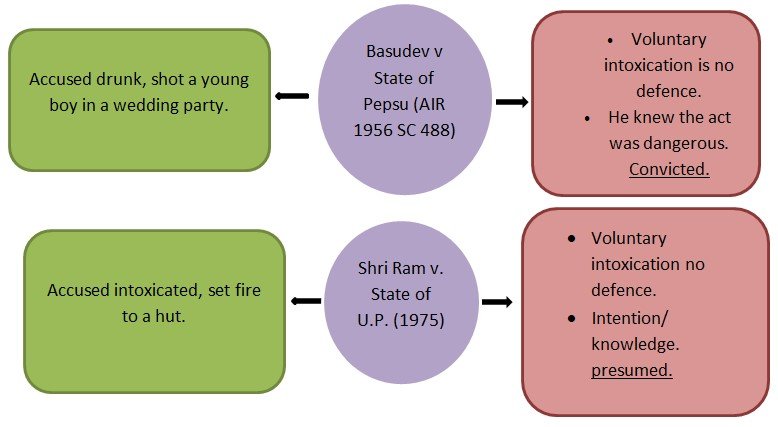
Reference cases-
Essentials-
Involuntary Intoxication → complete defence.
If a person is intoxicated against his will or without his knowledge, and thereby becomes incapable of knowing the nature of his act, he is not liable.
Example: Someone's drink is spiked, leading to an offence.
Voluntary Intoxication → no general defence.
If a person willingly consumes alcohol/drugs, he cannot plead intoxication as a defence.
However, distinction is made between:
Intention-based offences: If drunkenness prevents the formation of intention, liability may reduce.
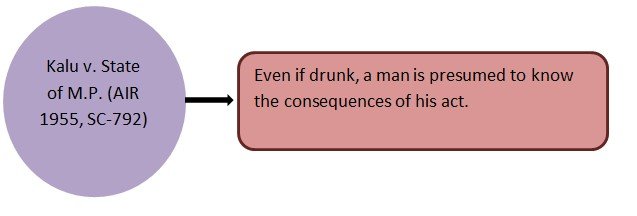
Knowledge-based offences: The law presumes he has the knowledge.
Distinction between Intention and Knowledge
Courts presume intoxicated persons have knowledge but not necessarily intention.

we believe in a holistic approach to legal education building not just lawyers, but socially conscious leaders of tomorrow.
