Internal Aids
TANMOY MUKHERJI INSTITUTE OF JURIDICAL SCIENCE
Dr. Tanmoy Mukherji
Advocate
Internal Aids-
Tanmoy Mukherji
Advocate

Long Title -
The long title is mentioned at the head of the Statute and contains a brief but fairly understandable general description of the purpose of the Statute.
For instance, the long title of the Code of Criminal Procedure, 1973 reads: - "An Act to consolidate and amend the law relating to Criminal Procedure."
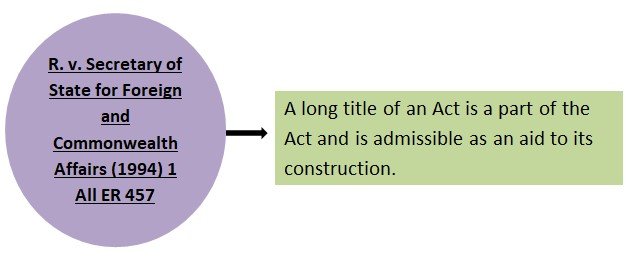
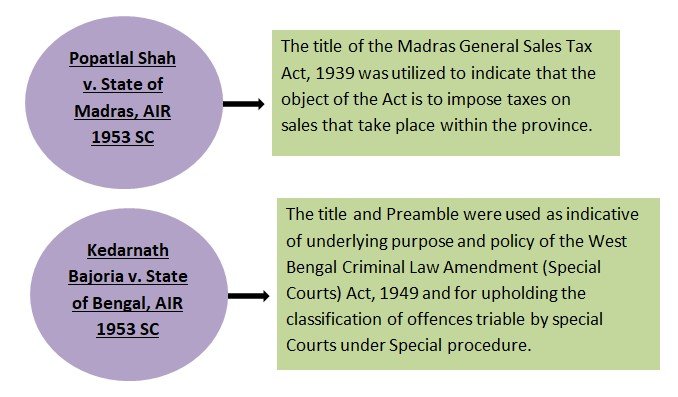
While dealing with the Supreme Court Advocates (Practice in High Courts) Act 1951, in Aswini Kumar Ghosh v. Arabinda Bose, AIR 1952 SC, it was held that although there are observations in earlier English Cases that the Title is not a part of the Statute, and is, therefore, to be excluded from the consideration in construing the Statute, it is now well settled that the title of a Statute is an important part of the Act and may be referred to for the purpose of ascertaining its general scope and of throwing light on its construction, although it cannot clean meaning of the override the clear enactment.
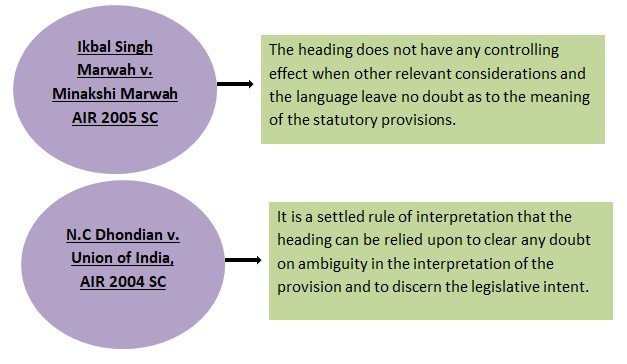
Headings-
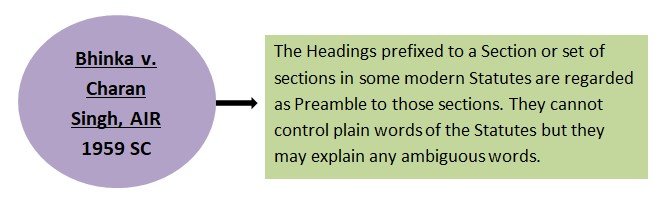
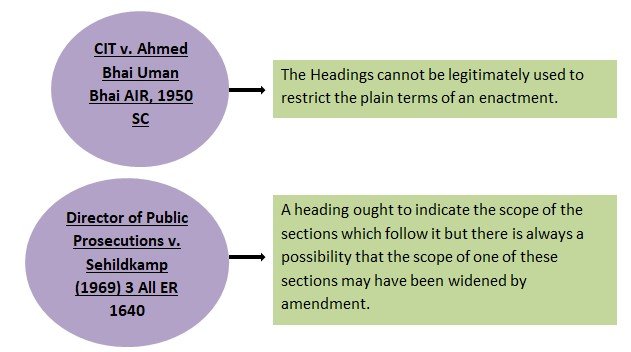
In Hammer Smith and City Ry. v. Brand (1869) LR 4, it was held that the Headings prefixed to Sections on group of sections can be referred to in construing an Act of the Legislature.
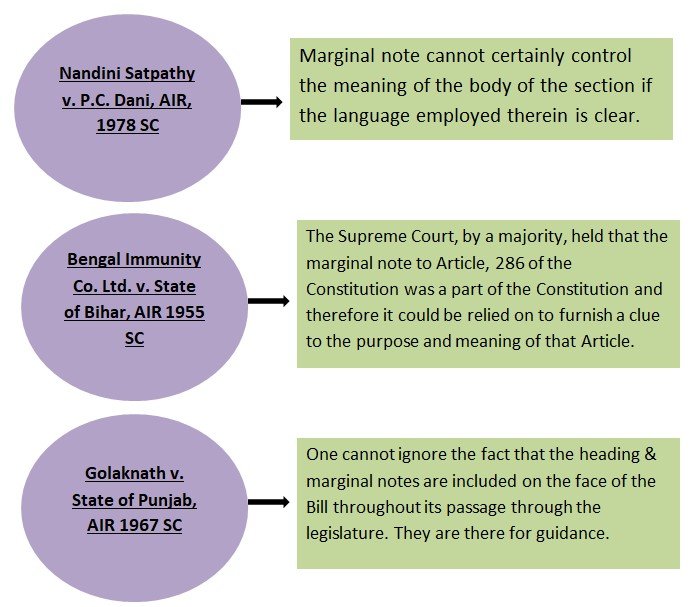
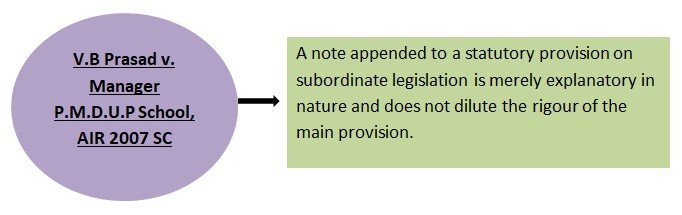
Marginal Notes-
Marginal notes are those notes which are inserted at the side of the sections in an Act and express the effect of the sections.
For instance, the marginal notes of Section. 11 of the Indian Contract Act, 1872 is - "who are competent to contract".
Lord Macnaghten emphatically stated in Balraj kanwar v. Jagat pal singh, TLR 26 ALL 303 "is well settled that marginal notes to sections of an Act of Parliament cannot be referred to for the purpose of construing the Act."
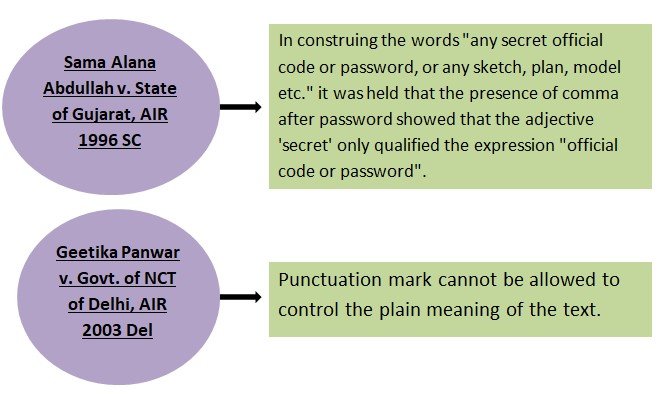
Punctuation-
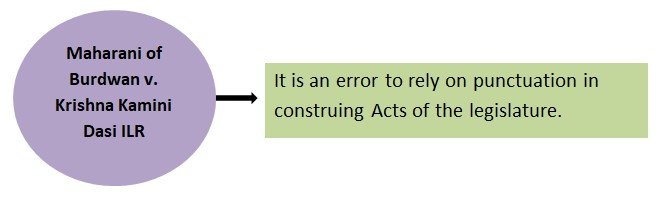
In Director of Public Prosecutions vs. Schildkamp (1963) All ER 1640, it was held that punctuation can be of some assistance in constructions.
In A.K Gopalan v. State of Madras, AIR 1950 SC, Chief Justice Kania of Supreme Court observed that the use of the word "which" twice in the first part of the Article 22(7), read with the comma could after each shows that the framers wanted these to be read as distinctive and not conjunctive. This view, however, was subsequently overruled by a larger bench of the Supreme Court in Sambhunath Sarkar v. State of West Bengal, AIR 1973 SC.
Proviso-
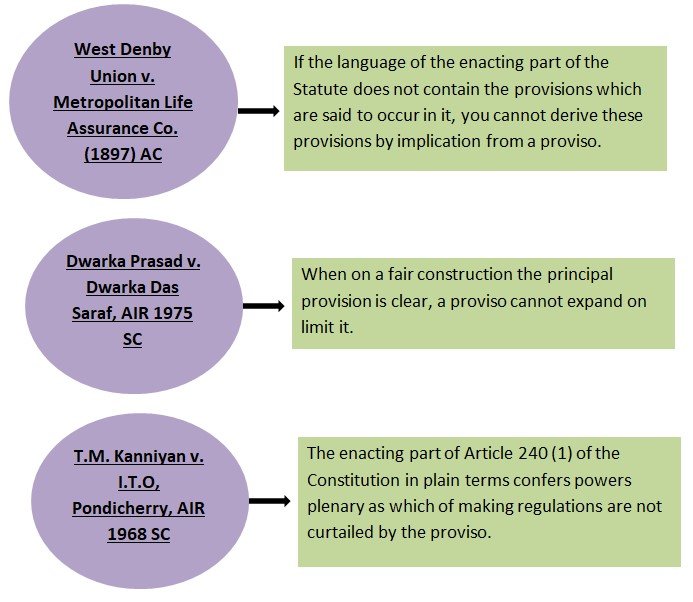
In Kedarnath Jute Manufacturing Company Ltd. v. Commercial Tax officers, AIR 1966 SC, it was held that the normal function of a proviso is to except something out of the enactment or to qualify something enacted therein which but for the proviso would be within the purview of the enactment.

we believe in a holistic approach to legal education building not just lawyers, but socially conscious leaders of tomorrow.
