HINDUS ARE BORN AS WELL AS MADE MEANING, MODES, TESTS AND LEADING CASE LAWS-
Dr. Tanmoy Mukherji
Advocate
HINDUS ARE BORN AS WELL AS MADE
MEANING, MODES, TESTS AND LEADING CASE LAWS-
Tanmoy Mukherji
Advocate
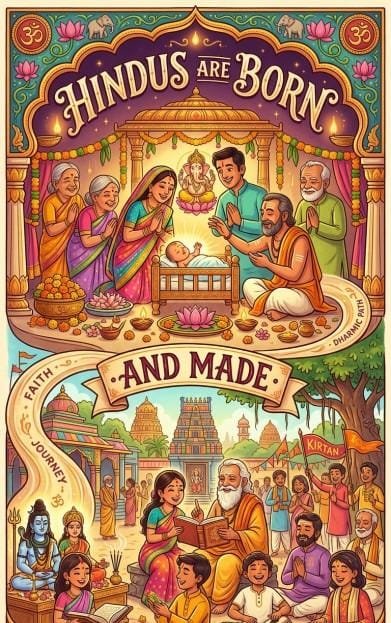
A person may become a Hindu either by birth, or by conversion to Hinduism, or by reconversion to Hinduism. Hindu status is therefore not confined exclusively to persons born to Hindu parents.
CONCEPT-
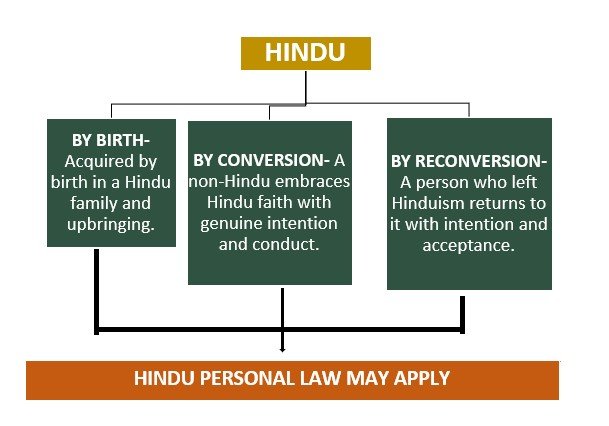
STATUTORY BASIS-
Section 2, Hindu Marriage Act, 1955
This Act applies to any person who is a Hindu by religion in any of its forms or developments, and also to-
→any person who is a convert or reconvert to the Hindu religion.
→a child of such a convert or reconvert.
Similar language is found in other codified Hindu laws (HSA, HUF, Adoption & Maintenance Act).
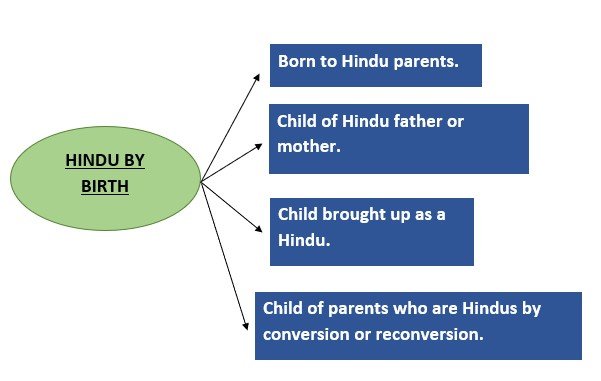
HINDU BY BIRTH-
"Religion and caste are not the same."
HINDU BY CONVERSION ("MADE HINDU")-
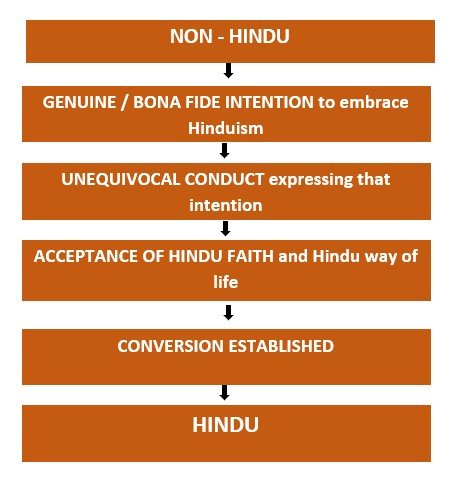
TEST OF CONVERSION-
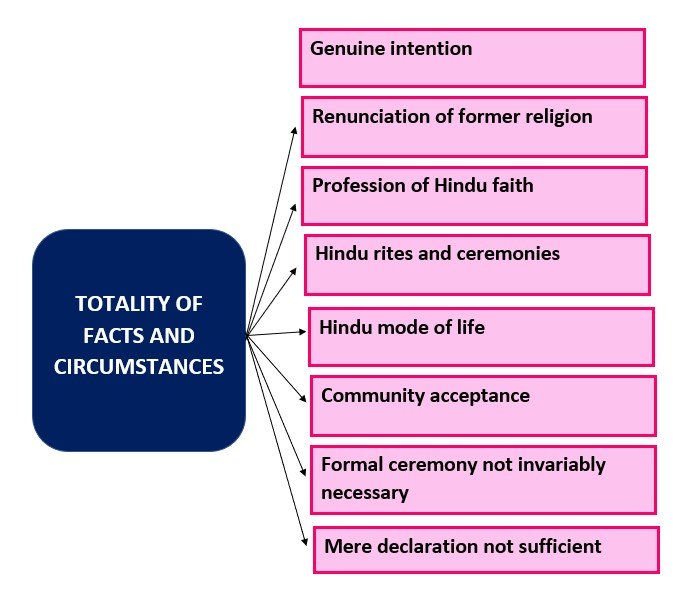
No single test is always conclusive. The Court looks at the totality of facts and circumstances.
✓ Genuine intention
✓ Renunciation of former faith
✓ Profession of Hindu faith
✓ Conduct consistent with Hinduism
✓ Hindu rites and ceremonies
✓ Hindu mode of life
✓ Community acceptance
✓ Formal purification ceremony not invariably necessary
✓ Mere theoretical allegiance is not enough
✓ Bare declaration is not enough.
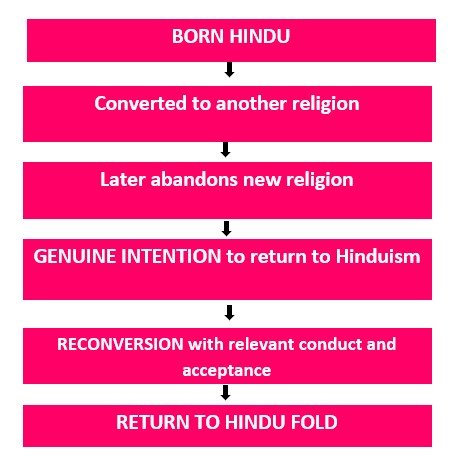
HINDU BY RECONVERSION-
IMPORTANT POINTS-
✓Genuine intention to abandon other religion and return.
✓Conduct showing acceptance of Hinduism.
✓Community acceptance is important, especially in matters of caste status.
✓No universally prescribed ceremony for reconversion.
✓Not every caste may insist on particular rites of purification.
✓Depending on facts, formal ceremony may not be essential.
CONVERSION vs RECONVERSION vs CASTE STATUS-
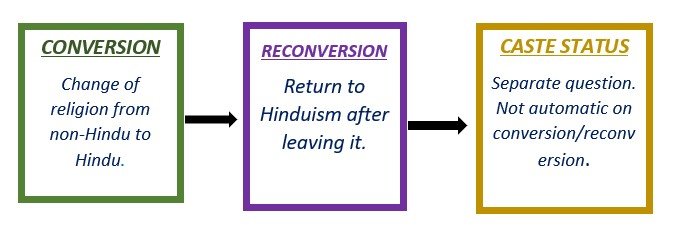
PARTICULARLY IN MATTERS OF SCHEDULED CASTE STATUS-
→Must prove caste ancestry.
→Must prove reconversion.
→Must prove acceptance by the caste/community.
→Merely becoming Hindu is not enough for SC status.
FACTORS CONSIDERED BY COURTS-
LEADING CASE LAWS-
|
Case Name |
Citation |
Key Principle |
Relevance
|
|
Perumal Nadar (Dead) by LRs v. Ponnuswami |
(1970) 1 SCC 605 AIR 1971 SC 2352 |
A person may be Hindu by birth or by conversion. Conversion can be proved by bona fide intention and unequivocal conduct. No particular ceremony of purification is invariably necessary. |
Leading authority for the proposition "Hindus are born as well as made".
|
|
Mohandas v. Devaswom Board |
1975) 3 SCC 246 AIR 1975 SC 1339 |
Acceptance of Hinduism can be inferred from genuine profession of Hindu faith and conduct consistent with Hinduism. |
Supports principle of conversion without rigid formalities.
|
|
Kailash Sonkar v. Maya Devi |
(1984) 2 SCC 91 AIR 1984 SC 1582 |
Reconversion to Hinduism and revival of original caste status discussed. Intention + acceptance by community is significant. |
Important on reconversion and caste restoration.
|
|
S. Anbalagan v. B. Devarajan |
(1984) 2 SCC 112 AIR 1984 SC 600 |
No universally prescribed ceremony for reconversion. Unless caste practice insists, intention + acceptance rites does not defeat reconversion. |
No fixed ritual required for reconversion.
|
|
K.P. Manu v. Chairman, Scrutiny Committee |
(2015) (Constitution Bench) AIR 2024 SC 4309 |
For SC status after reconversion, must establish: caste ancestry + reconversion + community acceptance. |
Distinguishes religion from caste status in constitutional context.
|
ESSENCE-
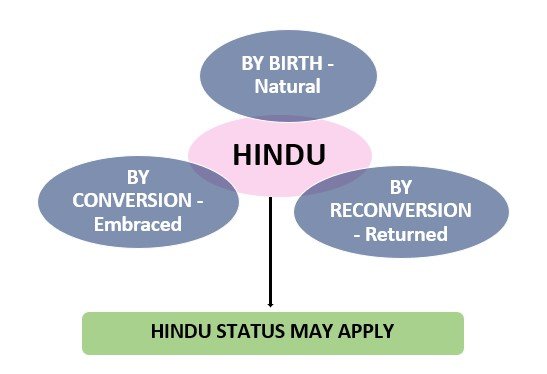
Thus, Hinduism may be acquired by birth as well as by conversion and reconversion.
Hence the proposition: "HINDUS ARE BORN AS WELL AS MADE."

we believe in a holistic approach to legal education building not just lawyers, but socially conscious leaders of tomorrow.
