Features of PCPNDT ACT
Dr. Tanmoy Mukherji
Advocate
Features of PCPNDT ACT-
Tanmoy Mukherji
Advocate

→Pre-natal diagnostic techniques in unauthorized hands.
→Sex selection on a man or woman able to conduct Pre-natal Diagnostics tests for purposes other than those specified in the Act.
→The selling, distribution, supply, renting, etc of ultrasound machines or other equipment capable of detecting the sex of the foetus.
ARE ALL PROHIBITED, under this Act.
OBJECTIVES-
1. To prevent female foeticide-
→The main objective is to end the practice of sex selective abortion, which has led to a decline in the female child sex-ratio.
→The Act forbids sex discrimination both before and after conception.
2. To regulate Pre-natal diagnostic techniques –
→ The Act limits their use to detecting genetic abnormalities, metabolic diseases, chromosomal abnormalities, congenital deformity, hemoglobinopathies, and sex-related illnesses. It also controls the use of pre-natal diagnostics methods including ultrasonography & amniocentesis.
→To prohibit advertisement of sex-selection services.
→To make registration of clinics mandatory.
→To establish regulatory authorities such as CSB.
→To provide for penalties and punishment for not regulating according to the Act.
→To promote gender equality & social justice.
→To promote women empowerment.
Procedures-
1. Prenatal diagnostic practices-
→Such practices are defined under-Sec 2(i) of PCPNDT Act, 1994
→It refers to all medical operations, including-Ultrasonography and foetoscopy.
→Obtaining or removing samples of chorionic villi, amniotic fluid, taking blood samples & tissue samples, or any other bodily fluid.
→Sending it to a genetic laboratory or genetic clinic for carrying out any prenatal diagnosis for sex selection before or after conception.
Prenatal diagnostic procedures are defined under section 2(k)
→It refers to an ultrasound or any examination, a study of a pregnant woman's blood, amniotic fluid, chorionic villi; tissues, fluids to look for chromosomal abnormalities, congenital defects, hemoglobinopathies or sex-related illnesses.
→These procedures and tests are together referred to as prenatal diagnostic methods in section 2(j).
Regulations-
→Regulation of Genetic Laboratory, Genetic Units and Genetic Counseling Centers.
→According to Sec 3, genetic counseling centers, genetic laboratories, and genetic clinics must register with the Act, and employ competent personnel in order to operate i.e. no prenatal diagnosis practices are to be done to any place other than these registered genetic clinics, laboratories, counseling centers.
Techniques for prenatal diagnosis (Sec 4)-
Only patients with the following defects are given prenatal diagnosis-
→Chromosomal abnormality.
→Genetic disorder of metabolism.
→Haemoglobinopathies
→Sex-specific genetic disorders
→Congenital disorder or
→Any more irregularities that C&B deems necessary.
Prenatal diagnostic procedure may not be employed or carried out unless the person qualified to do so is confident that any or all of the following requirements are met-
→The pregnant mother is over 35 years of age.
→The pregnant mother has experienced at least 2 spontaneous abortions or foetal losses.
→The pregnant mother had been exposed to substances, such as drugs, radiations, infections, or toxins.
→Family has a history of genetic disorders.
→Whatever other requirements the C&B may specify.
Except for the purpose specified in Section 5(2), no one should promote the use of prenatal diagnostic methods on her.
Consent (Sec 5)-
→Section 5 of the Act requires written authorization from the expectant mother after the medical personal had described to her all the necessary information about the effect of prenatal diagnosis.
→A ban on discussing the foetus gender is also specified under this section.
→Section 6 states that determination of gender is forbidden.
Registration of Clinics, Counseling Centers, Laboratories (Section 18-20)-
→Any genetic Counseling Centers, genetic laboratory, genetic clinic having ultrasound or imaging machines may register.

The registration certificate is not permanent, after a predetermined amount of time; the registration certificate may be renewed by paying particular costs.
Record Maintenance-

Inspection-
Appropriate authority may-
→Conduct surprise inspection.
→Seal ultrasound machines if used illegally.
→Examine & seize record equipment.
→Suspend or cancel registration.
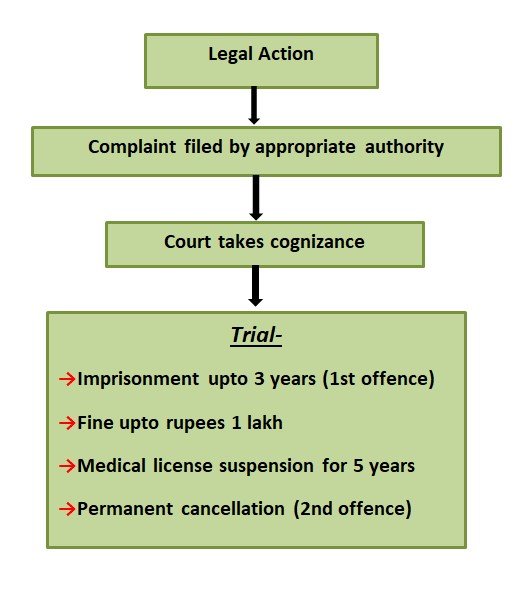
→File complaint in court.
→Recommend action by Medical Counsel.

we believe in a holistic approach to legal education building not just lawyers, but socially conscious leaders of tomorrow.
