Falsus in Uno, Falsus in omnibus
Dr. Tanmoy Mukherji
Advocate
Falsus in Uno, Falsus in omnibus-
Tanmoy Mukherji
[Advocate]
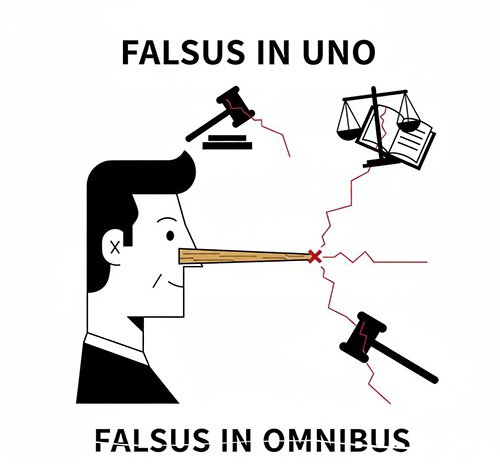
Meaning of the maxim-
Literal meaning- "False in one thing, false in everything."
Essence- If a witness lies about one fact, their entire testimony is unreliable.
Applicability in India-
Under the BSA, this maxim does not have any statutory recognition.
Reason- Section 2(e) of BSA defines evidence, and the court is empowered to assess its credibility.
Section 119 (Illustration g)- Allows the court to presume that evidence which could be and is not produced would, if produced, be unfavorable. But this is only a presumption, not a mandatory rule like the maxim.
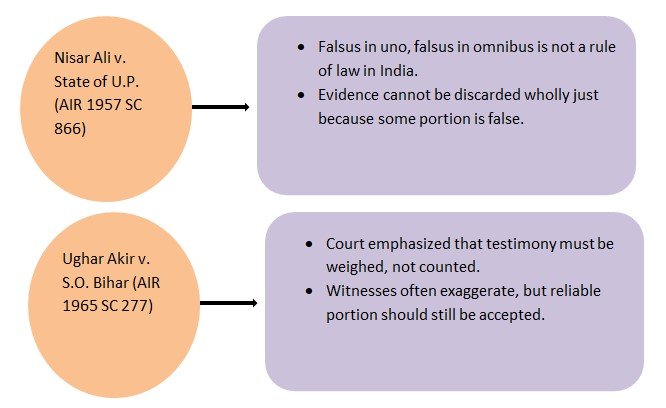
Indian Courts have consistently rejected a strict application of this doctrine because-
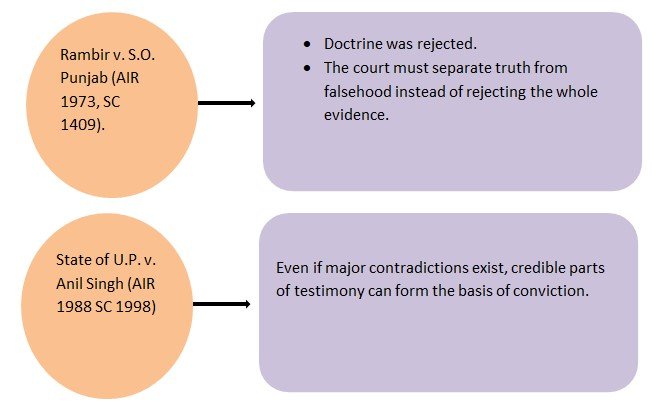
Instead, the courts follow the principle of "shifting the grain from the chaff" – accepting truthful portions and rejecting false ones.
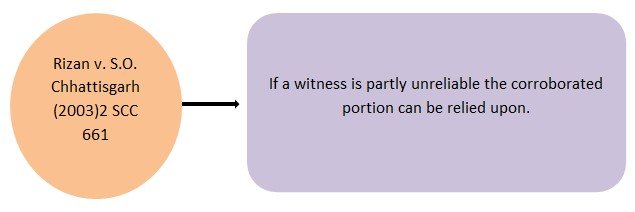
Leading Case-

Bharatiya Nyaya Sakshya Adhiniyam connection-
|
Section 2(e) BSA (Sec. 3 IEA) |
Defines evidence — both oral and documentary. The credibility of a witness is left to the court's judgement. |
|
Section 119 BSA (Sec. 114 IEA)
|
Permits the court to presume facts, but doesn't mandate wholesale rejection of testimony. |
|
Section 158 & 149 BSA (Sec-155 & 146 IEA) |
Provide for impeachment of witness credibility (contradictions, character, etc) but do not compel rejection of the whole testimony. |
Principle Evolved in India -
Falsus in uno, falsus in omnibus-not applicable.
Instead, Indian courts apply:
Doctrine of separation of truth from falsehood. Testimony of witnesses is to be sifted carefully. Conviction can be based on credible parts, even if some parts are false.

we believe in a holistic approach to legal education building not just lawyers, but socially conscious leaders of tomorrow.
