EXTRADITION
Dr. Tanmoy Mukherji
Advocate
EXTRADITION-
Tanmoy Mukherji
Advocate
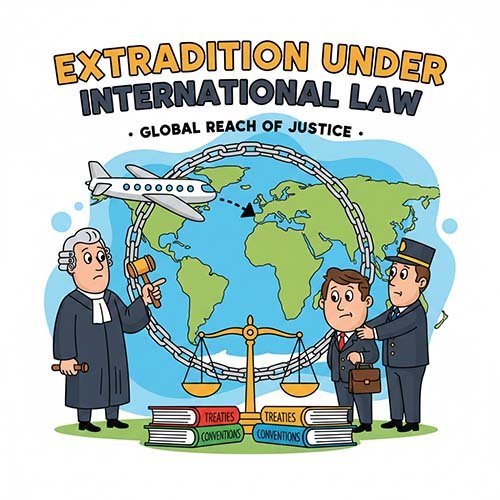
Extradition is the formal process by which one Sovereign State (the requested state) surrenders a person within its jurisdiction to another State (the requesting state) for prosecution of crimes or punishment of crimes committed in the latter's territory.
It represents a classic form of international cooperation in criminal law, balancing State sovereignty with the need to suppress transnational crime.
According to Oppenheim-
Extradition is the delivery of an accused or convicted person by the State in whose territory he happens to be, or to the State where he is accused of having committed, or has been convicted of committing, a crime.
According to Starke-
Extradition is the surrender by one State to another of an individual accused or convicted of an offence outside its own territory and within the territorial jurisdiction of the other, the offence being one which both states recognize as a crime.
According to Black's Law Dictionary-
Extradition is the surrender of a person by one jurisdiction to another for trial or punishment for an offence committed in the requesting jurisdiction.
Principles of Extradition-
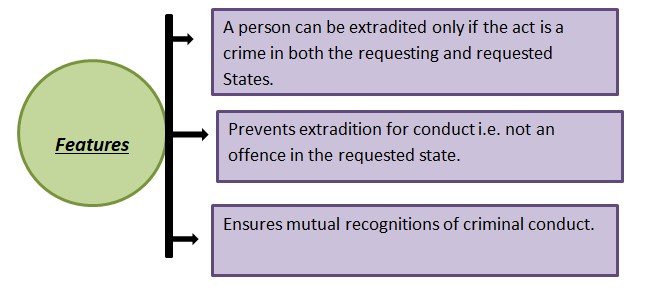
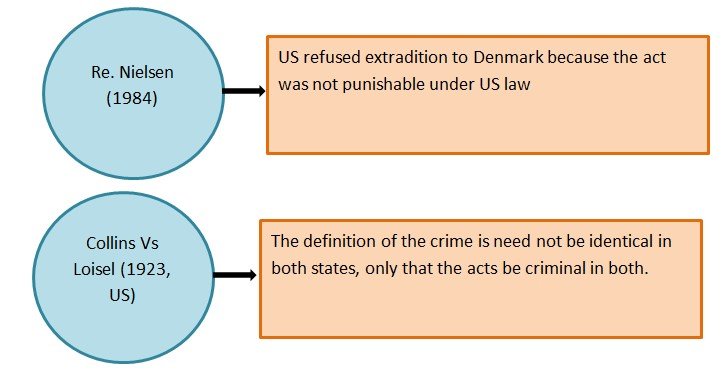
1. Principle of double criminality-
Example-
If theft is a crime in both countries, extradition is possible; if it is not a criminal in one, it is refused.
Reference Cases-
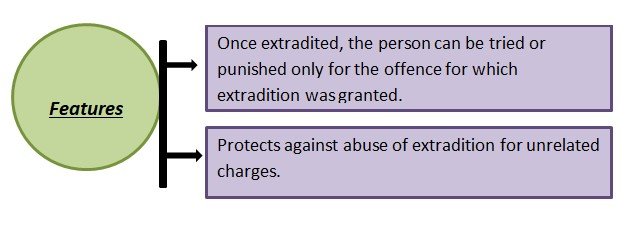
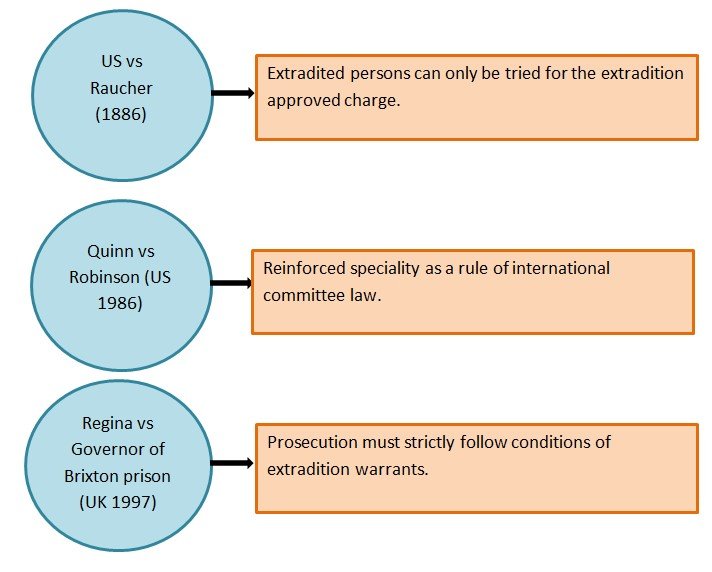
2. Principle of speciality-
Example-
If someone is extradited for money laundering, they cannot later be tried for tax evasion unless the requested state permits it
Reference Cases-
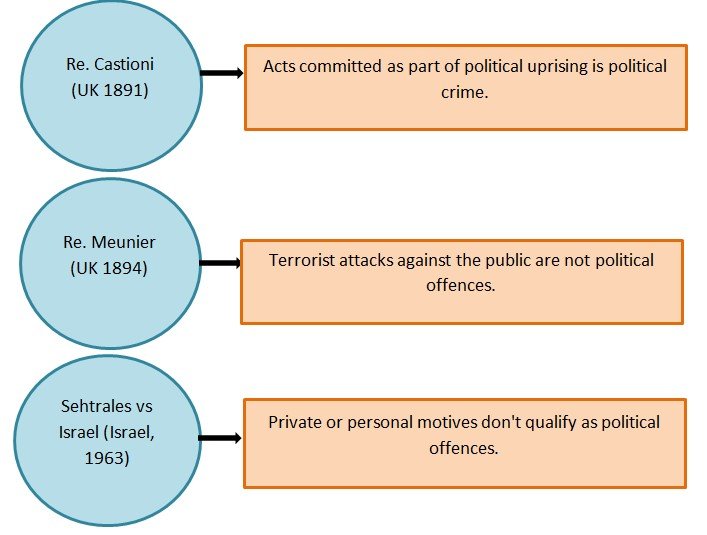
3. Principle of Political offence-
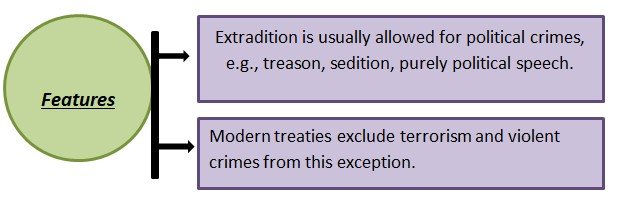
Example:
A political activist involved in peaceful demonstrations cannot be extradited for treason.
Reference Cases-
4. Principle of Non-Extradition of Nationals-
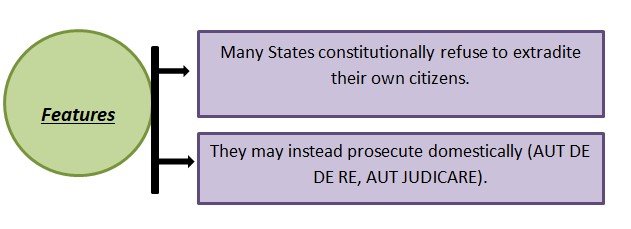
Example-
Brazil cannot extradite Brazilian-born nationals.
Reference Cases-
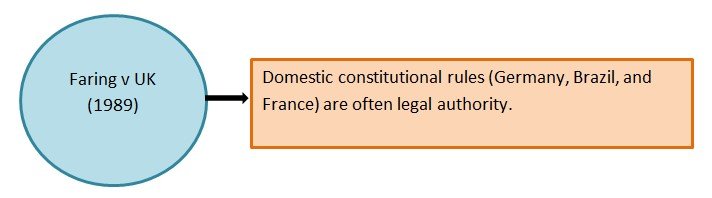
5. Principle of Human Rights-
Features-
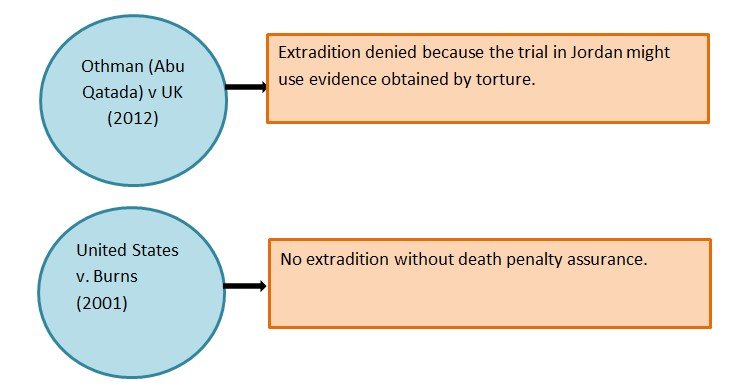
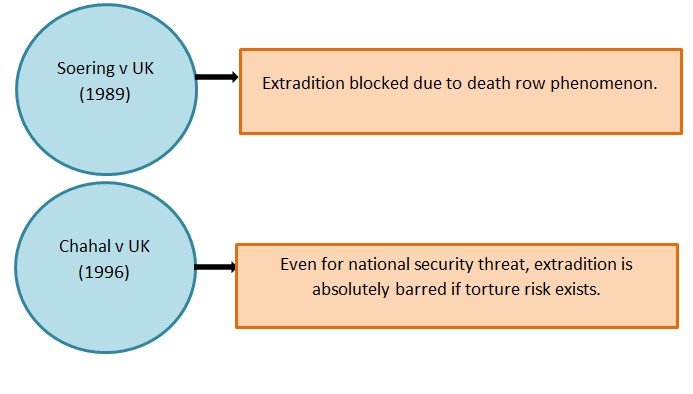
Persons cannot be extradited if they face:
-Torture
-Inhumane treatment
-Unfair trial
-Death penalty
-Persecution
This comes from human rights treaties like: CAT, ICCPR, ECHR. Example-
Persons cannot be extradited to a country where they may risk torture or politically motivated punishment.
Reference Cases-
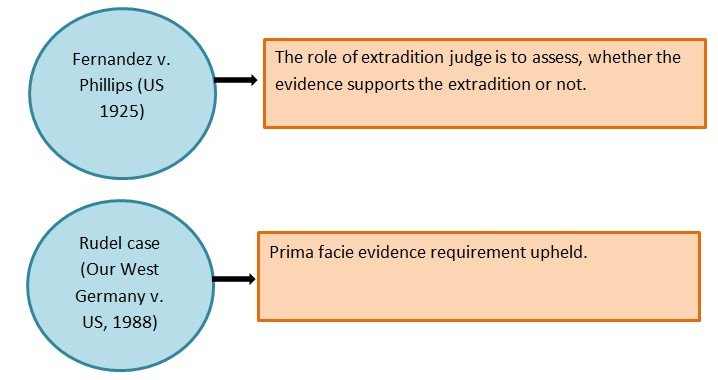
6. Principle of Sufficient Evidence-

Example-
If country 'A' requests extradition for murder, country 'B' must be satisfied that evidence exists linking the suspect to the crime.
Reference Cases-
7. Principle of Double Jeopardy (NON BIS IN IDEM)-

Examples-
If a person was acquitted of theft in Country 'A', Country 'B' cannot seek extradition for the same act.
Reference Cases-
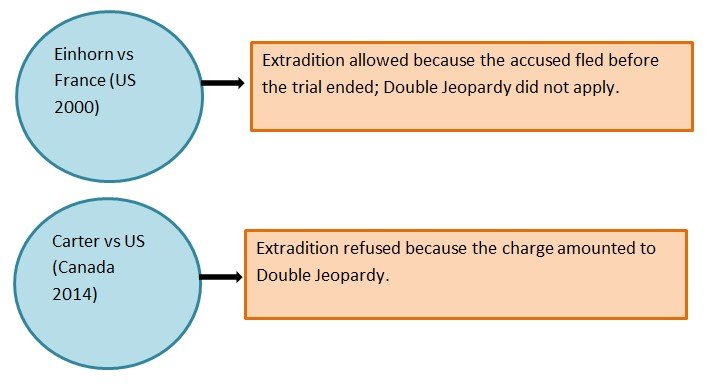
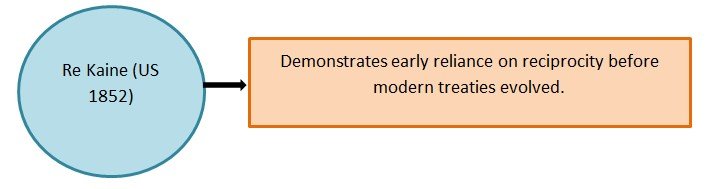
8. Principle of Reciprocity-
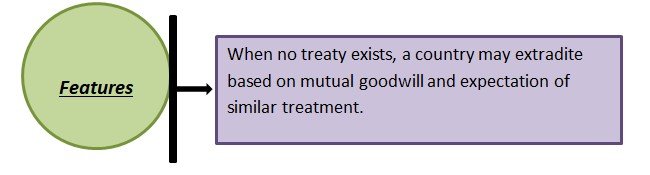
Examples-
India and UAE historically returned fugitives before formal treaties based on reciprocal cooperation.
Reference Cases-
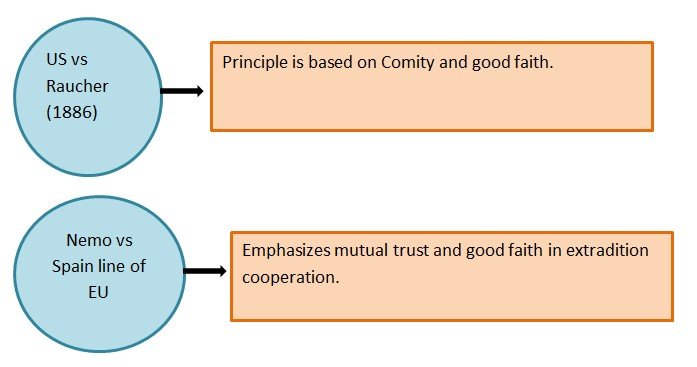
9. Principle of Good faith & Comity-
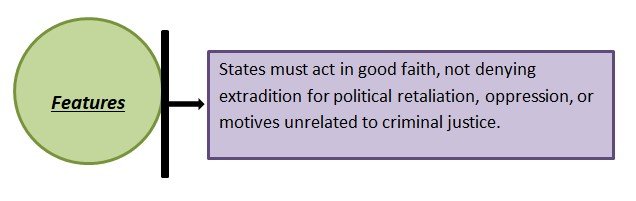
Example-
A country cannot request extradition merely to silence a journalist or political opponent.
Reference Cases-
The Sheikh Hasina Extradition Situation-
→Sheikh Hasina, former prime minister of Bangladesh, fled to India following a mass uprising in Bangladesh in August 2024.
→After her ouster, Bangladesh's interim government (led by Muhammad Yunus) has accused her of serious crimes, including crimes against humanity in connection with a crackdown on student protest.
→Bangladesh has formally asked India to extradite Hasina.
→They have cited the India-Bangladesh Bilateral Extradition Treaty (first signed in 2013, amended in 2016) as a legal basis.
→According to Bangladesh's foreign ministry, the extradition is not optional: They state it is a compulsory responsibility under the treaty.
→According to reports, India has given no official/public commitment to extradite her.
→A special tribunal in Bangladesh, called the International Crimes Tribunal (ICT), has convicted Hasina in absentia.
→According to reports, she was sentenced to death by the tribunal on several counts: "incitement," "order to kill," and "inaction to prevent atrocities."
→Separately, she was given six months' jail by the ICT for contempt of court.
→The contempt case reportedly relates to a leaked audio where she allegedly said, she has a "license to kill 227 people" (because she believed there was 227 cases against her).
Controversial situation for India regarding Sheikh Hasina-

we believe in a holistic approach to legal education building not just lawyers, but socially conscious leaders of tomorrow.
