“The Executing Court Cannot Go Behind the Decree” –
The Code of Civil Procedure, 1908
Dr. Tanmoy Mukherji
Advocate
“The Executing Court Cannot Go Behind the Decree” –
Tanmoy Mukherji
Advocate
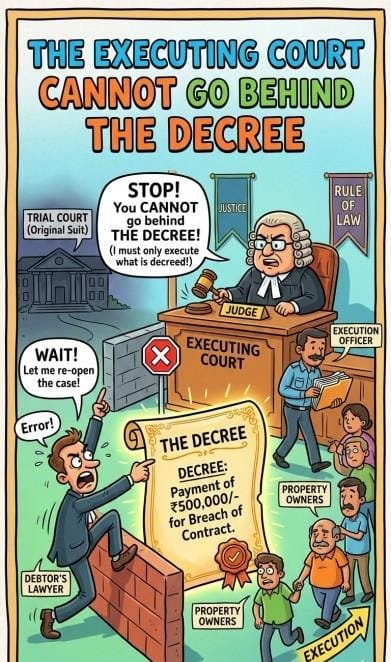
This principle is a settled rule of execution jurisprudence under the Code of Civil Procedure, 1908 (CPC) and is mainly traceable to Section 47 CPC, read with Order XXI CPC.
The expression means that once a decree is passed by a competent court, its correctness or legality cannot be questioned in execution proceedings.
The executing court must:
→Accept the decree as it stands.
→Execute it strictly according to its terms.
→Not examine whether the judgment was right or wrong on facts or law.
Execution proceedings are not a continuation of the suit for reconsideration, but merely a stage for enforcement.
Statutory Basis-
Section 47 CPC
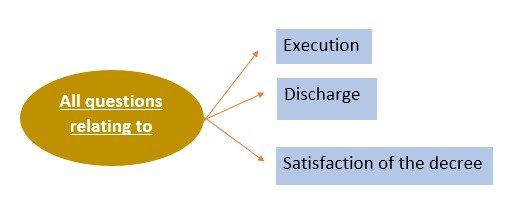
shall be determined by the executing court and not by a separate suit.
However, Section 47 does not empower the executing court to question:
→The legality,
→Correctness, or
→Validity of the decree (except where it is a nullity)
Object of the Rule-
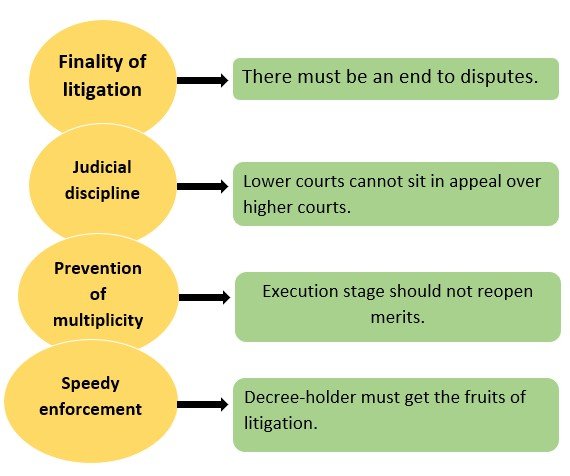
Scope of the Rule-
The executing court:
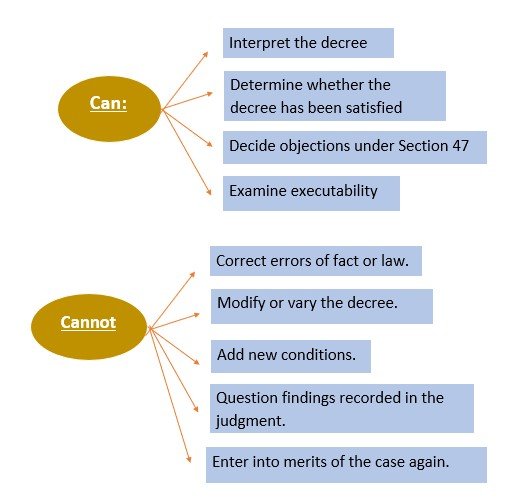
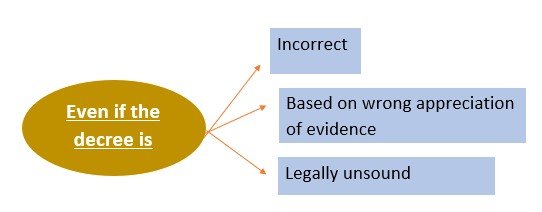
It remains binding unless set aside in appeal, review, or revision
Reference Cases
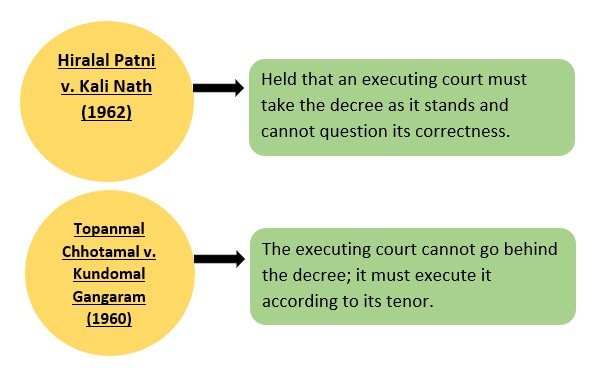
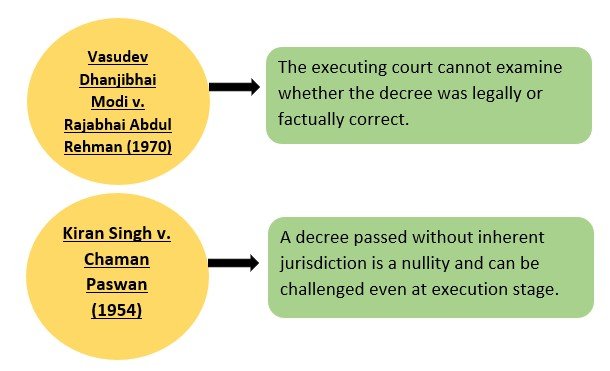
Recognized Exceptions-
Though the rule is strict, courts have carved out limited exceptions:
(A) Decree is a Nullity
→If the decree was passed:
→Without subject-matter jurisdiction,
→Without territorial jurisdiction affecting competence,
→Against a dead person,
→Without service of summons (in certain cases),the executing court may refuse execution.
(B) Fraud
→If the decree was obtained by fraud on the court, it can be challenged even in execution.
(C) Inexecutable Decree
If the decree is:
→Vague,
→Impossible to execute,
→Dependent on a condition not fulfilled,
→execution may be refused.
(D) Subsequent Events
→Events occurring after decree which render execution impossible may be considered
Distinction Between “Illegal Decree” and “Null Decree”-
|
Illegal Decree
|
Null Decree
|
|
Passed with jurisdiction but containing errors
|
Passed without inherent jurisdiction
|
|
Binding unless set aside
|
Void ab initio
|
|
Cannot be questioned in execution
|
Can be challenged even in execution
|
Illustrations-
→If a court wrongly calculates interest – executing court cannot correct it.
→If a decree grants relief not prayed for – executing court cannot question it.
If a Small Causes Court passes decree in a matter beyond its pecuniary jurisdiction – decree is null and can be refused execution
Modern Judicial Approach-
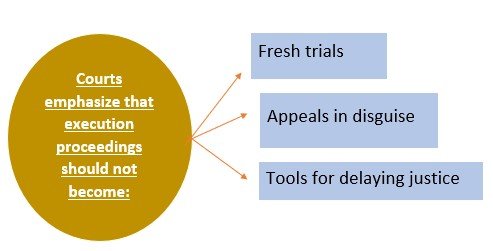
The Supreme Court has repeatedly observed that decree-holders should not be deprived of fruits of litigation due to technical objections.
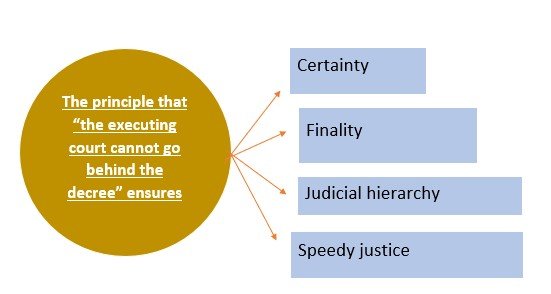
The executing court is bound by the decree and must execute it faithfully unless the decree is a nullity or obtained by fraud.

we believe in a holistic approach to legal education building not just lawyers, but socially conscious leaders of tomorrow.
