Evidentiary Value of Affidavit
Dr. Tanmoy Mukherji
[Advocate]
Evidentiary Value of Affidavit-
Tanmoy Mukherji
[Advocate]
1. Legal Framework-
Section 2, Indian Evidence Act, 1872 - "Evidence" means oral statements of witnesses or documents produced before the court.
Affidavits are not included here.
Order XIX, CPC (1908) - Court may allow evidence by affidavit for certain matters, but if one party insists on cross-examination, court should not rely solely on affidavits.
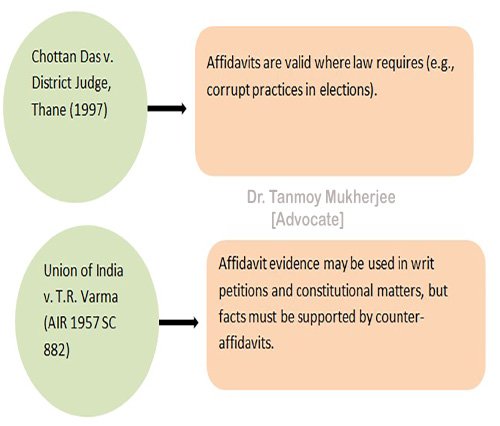
Representation of the People Act, 1951 - Affidavits are mandatory in election petitions (e.g., regarding corrupt practices).
2. Position of Courts-
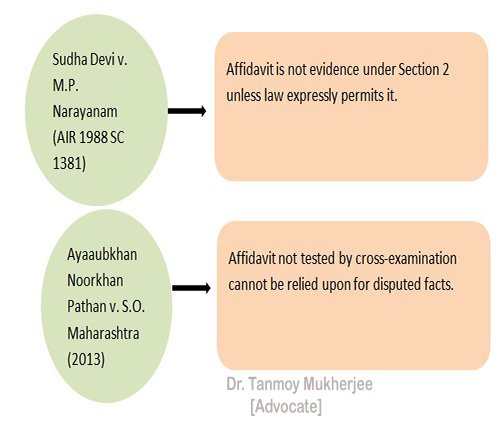
(A) Affidavit is not substantive evidence-
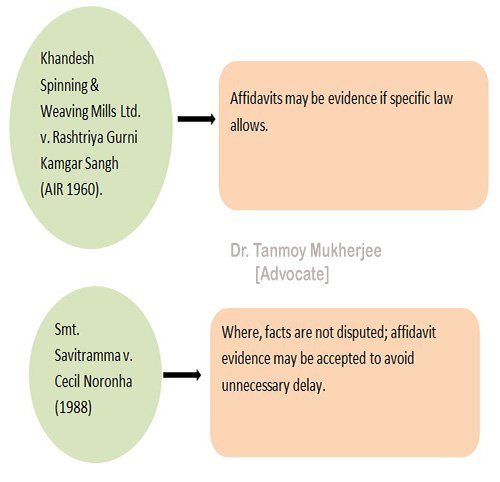
(B) Affidavit can be used when law allows or for interim matters-
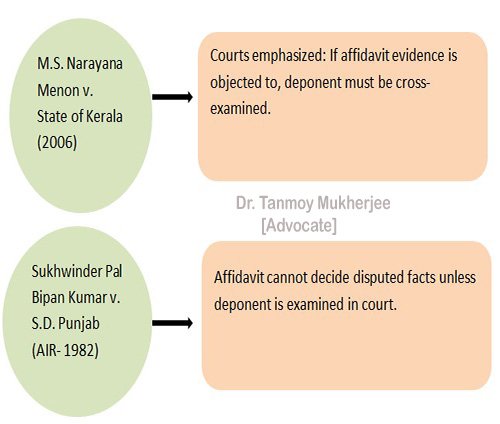
(c) Cross-examination is necessary to give weight-
(D) Affidavits in election and constitutional matters-
3. Practical Use in Courts-
a. Admissible as evidence-
If statute allows (e.g., election petitions, writ jurisdiction).
For interlocutory applications (injunctions, stay orders)
For formal or undisputed facts.
b. Not admissible as substantive evidence-
For deciding disputed rights (title, contract disputes, property claims).
Unless deponent is summoned for cross examination.
Conclusion-
Affidavit is not substantive evidence under BSA, but it has limited evidentiary value when:
-Law expressly permits, or
-It is used for interlocutory or procedural matters.
Cross examination of deponent is essential if disputed facts are based on affidavits.
Courts view affidavits as weak evidence, but useful in speedy disposal of interim matters.

we believe in a holistic approach to legal education building not just lawyers, but socially conscious leaders of tomorrow.