EMERGENCY Provisions in INDIA
Dr. Tanmoy Mukherji
Advocate
EMERGENCY Provisions in INDIA-
Tanmoy Mukherji
[Advocate]
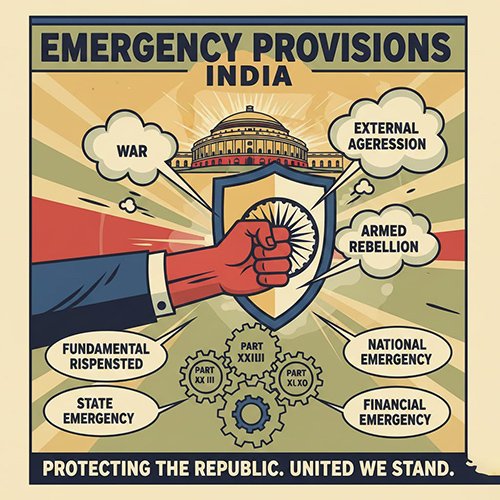
Emergency Provisions in India are covered under Part-XVIII (Article-352 to 360) of the Indian Constitution. These provisions empowered the President of India to take extraordinary measures to safeguard the Sovereignty, integrity and security of the country or any part thereof.
Types-
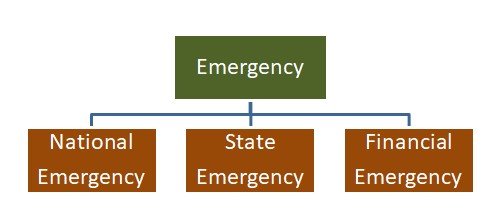
National Emergency - (Art-352)-
Grounds -
Proclamation-
By President (based on written advice of the Cabinet).
Approval-
Must be approved by both houses of Parliament within 1 month.
Duration-
Initially Six months (6 months), can be extended indefinitely with Parliamentary approval every 6 months.
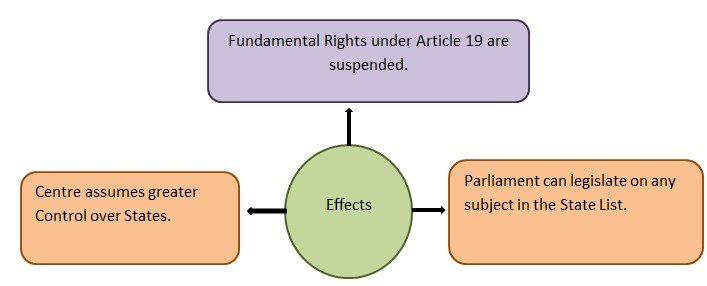
Examples-
i) In 1962 - China War.
ii) In 1971- Pakistan War.
iii) In 1975- Internal Disturbance under Indira Gandhi.
State Emergency - (Art - 356)-
Grounds-
Failure of Constitutional Machinery in a State.
Proclamation-
By President (Based on Governor's report or otherwise).
Approval-
By both houses of Parliament within 2 months.
Duration -
Initially for 6 months, extendable upto 3 years with Parliamentary approval every 6 months.
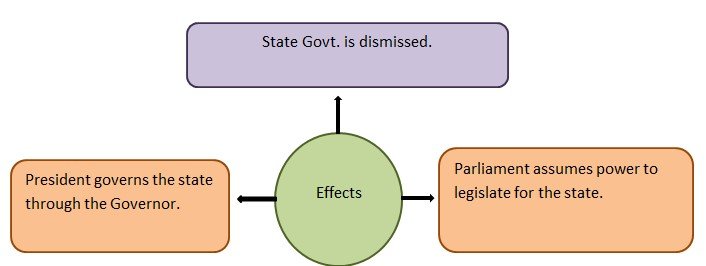
Examples-
(i) In Punjab (1987)
(ii) Jammu & Kashmir (2018)
(iii) Maharashtra (2019)
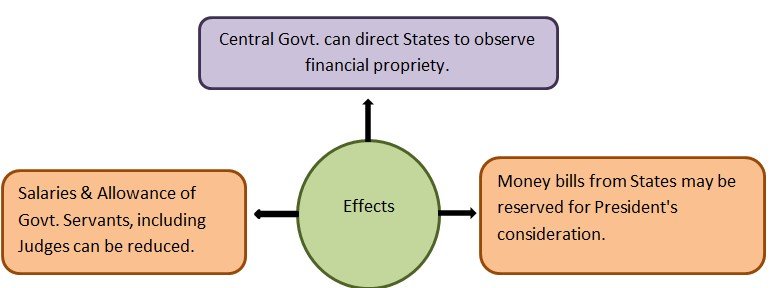
Financial Emergency - (Art 360)-
Grounds-
Threat to financial Stability or Credit of India or any part thereof.
Proclamation-
By President.
Approval-
By Both Houses of Parliament within 2 months.
Duration-
Remains in force until revoked.
Examples-
No financial emergency has ever been declared in India.
Amendments-
42nd Amendment (1976)-
Strengthens central power during emergency.
44th Amendment (1978)-
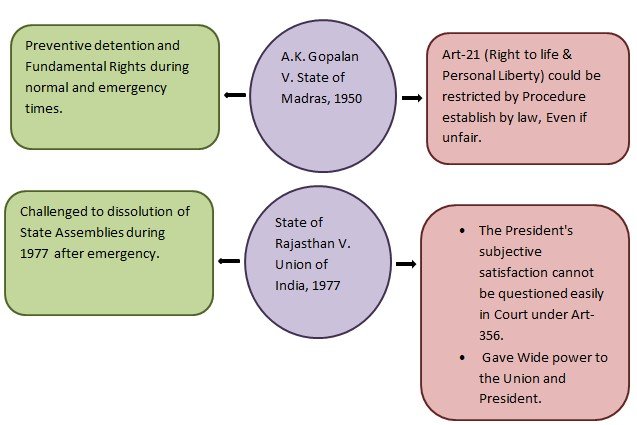
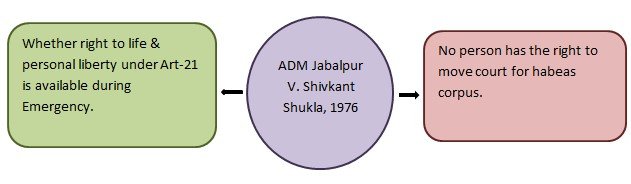
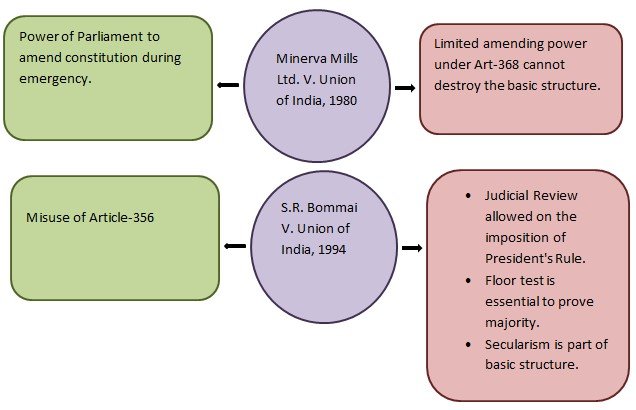
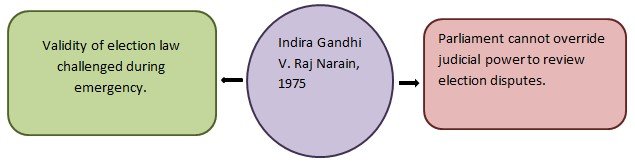
Reference Cases-

we believe in a holistic approach to legal education building not just lawyers, but socially conscious leaders of tomorrow.
