Effect of Recognition of a State
Dr. Tanmoy Mukherji
Advocate
Effect of Recognition of a State-
Tanmoy Mukherji
Advocate

Recognition of a State is a formal acknowledgement by existing States that a political entity fulfills the criteria of statehood under International law (defined territory, permanent population, government, and capacity to enter into relations with other states). Its effects are both legal and political.
Legal Status in International Law-


Reference Cases-

Treaty making power-
Jus Tractatum:
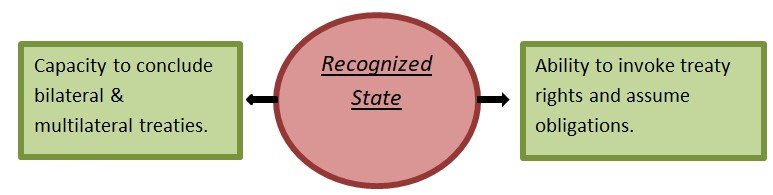
Unrecognized entities cannot generally bind other states through treaties.
Example: Palestine's recognition enabled accession to several international conventions.
Diplomatic & Consular Relations-
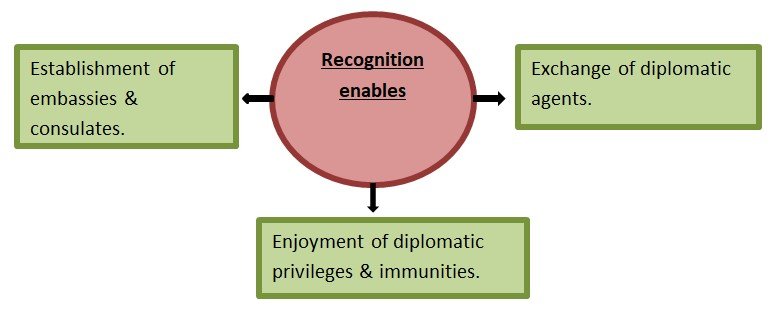
Without recognition, diplomatic interaction remains informal or unofficial.
Example: Vienna Convention on Diplomatic Relations, 1961 (applicable only between recognized States).
Access to International Courts & Tribunals-
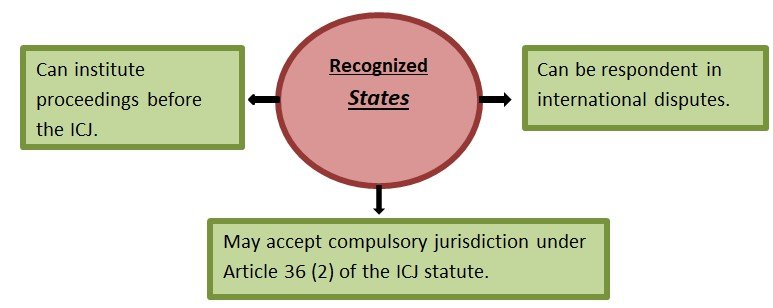
Reference Cases-
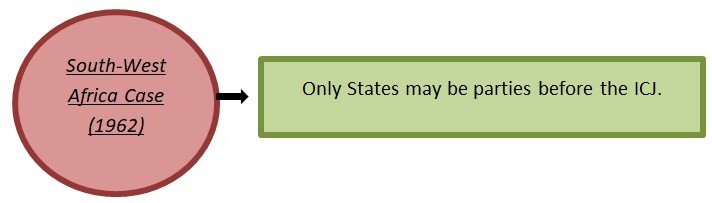
Sovereign Immunity & Act of State doctrine-
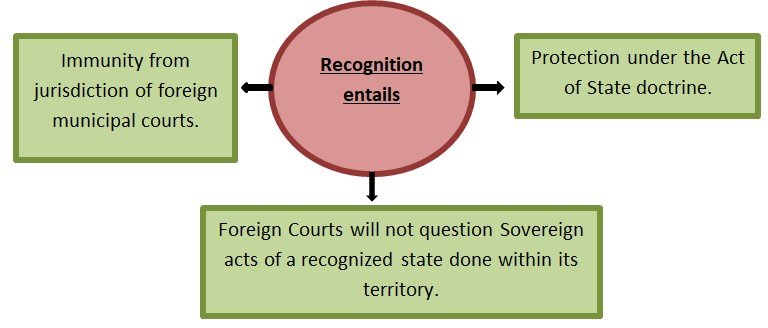
Reference Cases-
→The Schooner Exchange Us McFaddon (1812)
→ Buttes Gas v. Hammer (1982)
Validity of State Acts-
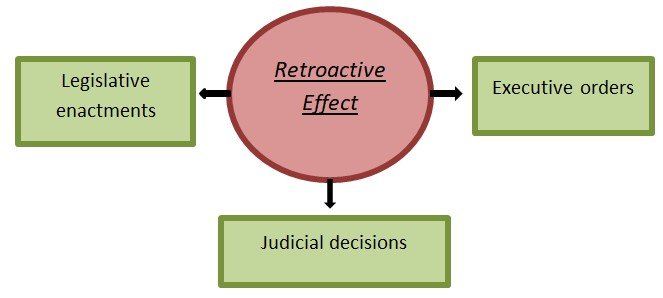
Reference Cases-
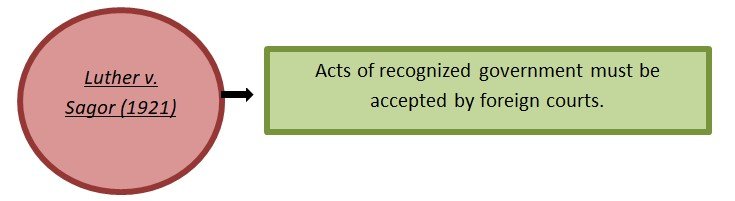
Property Rights and State Assets-
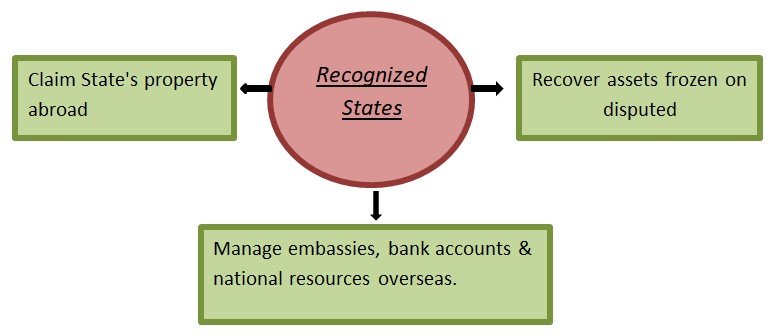
Reference Cases-
→ Russian Commercial & Industrial Bank Vs Comptor d' Escompte (1925).
Membership of International Organization-

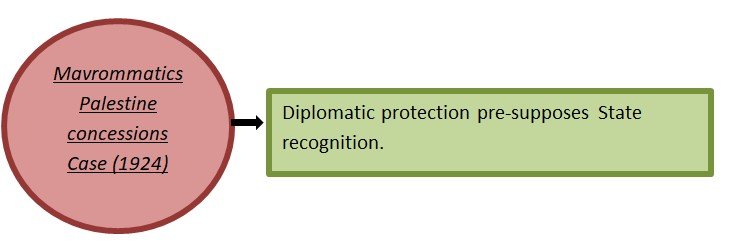
Diplomatic protection of Nationals-
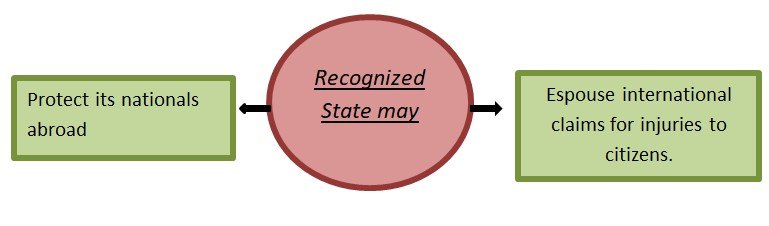
Reference Cases-
Responsibility & liability under International Law-
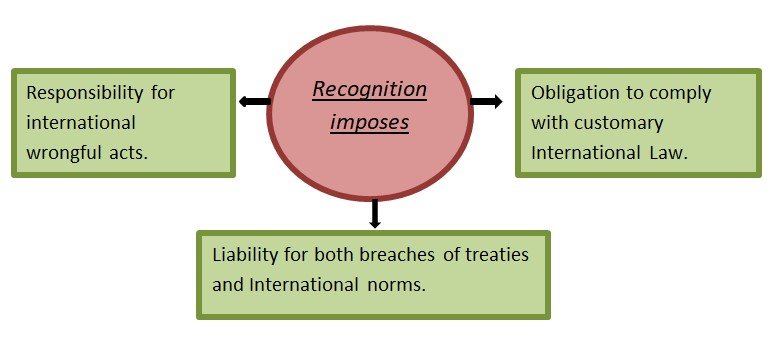
Example: ILC Articles on State Responsibility (2001) apply only to recognize States.
Effects of Non-Recognition-
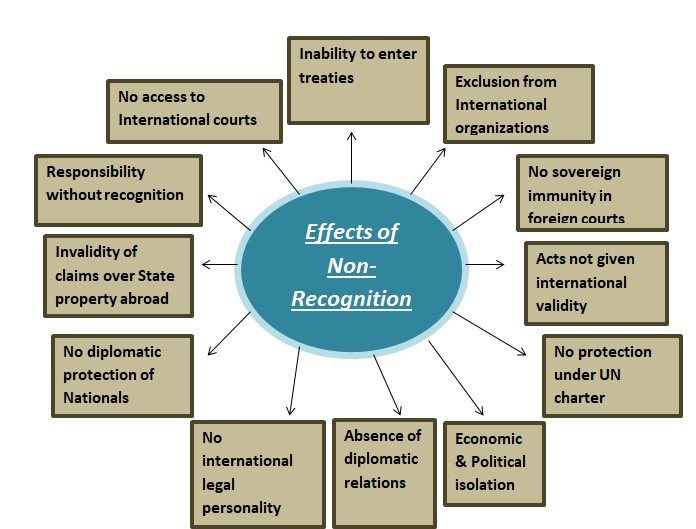
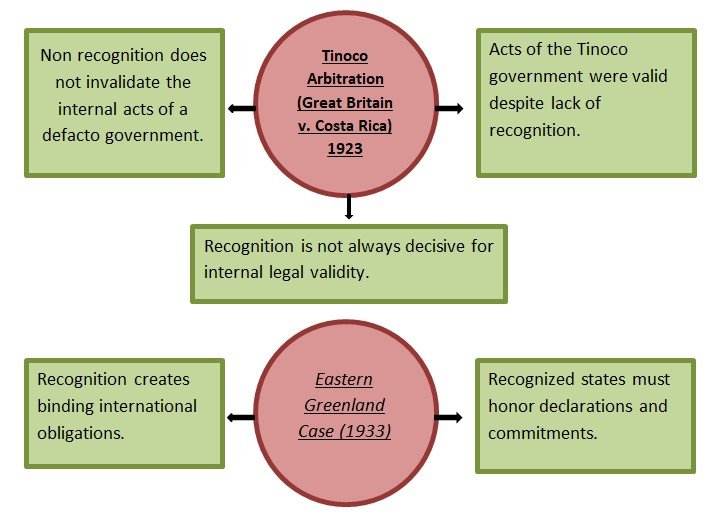
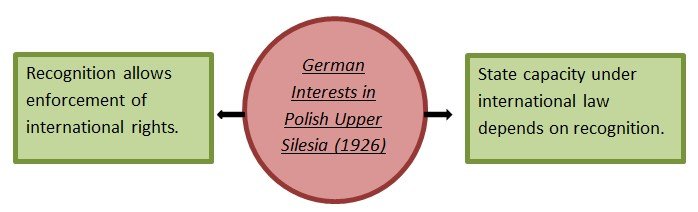
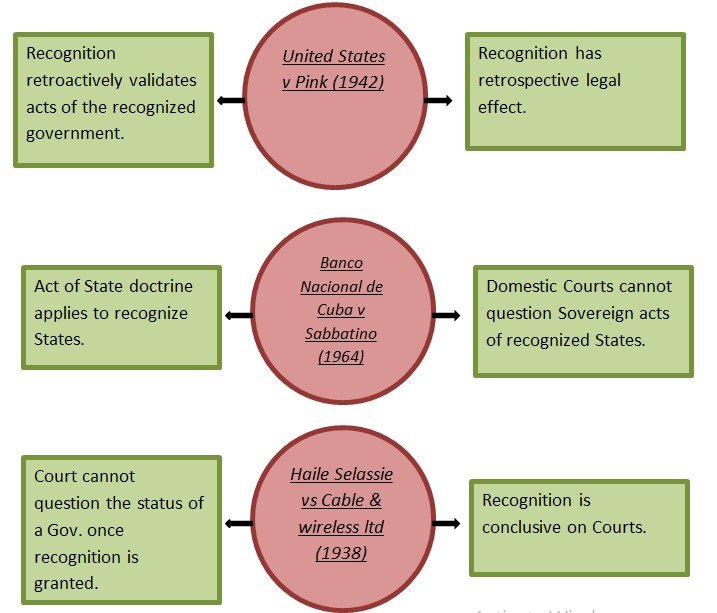
Reference Cases on Effect of Recognition & Non-Recognition-

we believe in a holistic approach to legal education building not just lawyers, but socially conscious leaders of tomorrow.
