Doli Incapax
TANMOY MUKHERJI INSTITUTE OF JURIDICAL SCIENCE
Dr. Tanmoy Mukherji
Advocate
Doli Incapax-
TANMOY MUKHERJI
ADVOCATE

Section 20 of the Bharatiya Nyaya Sanhita, 2023 corresponds to section 82 of Indian Penal Code, 1860.
According to Section 20 of the Bharatiya Nyaya Sanhita, 2023- Nothing is an offence which is done by a child under seven years of age
- Under the age of seven years no infant can be guilty of a crime, for, under that age an infant is, by presumption of law, doli incapax, and cannot be endowed with any discretion.
- If the accused were a child under seven years of age, the proof of that fact would be ipso facto an answer to the prosecution.
- It is therefore desirable to bring some evidence regarding the age of the accused on the record.
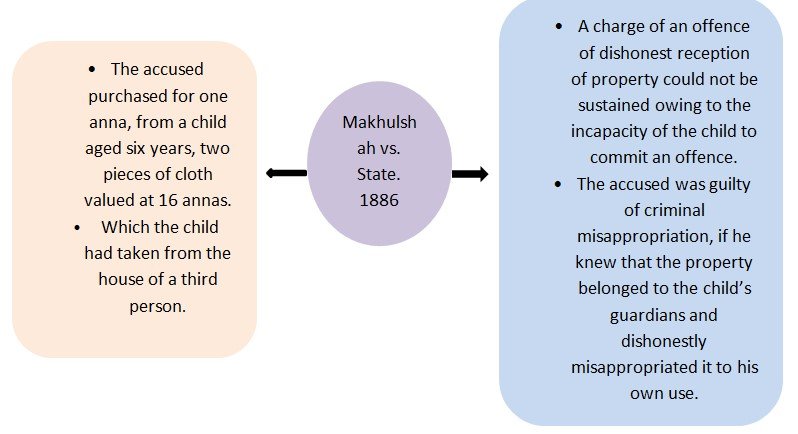
- Act of a child above seven years and under twelve years of age of immature understanding:
Nothing is an offence which is done by a child above seven years of age and less than twelve years of age, who has not attained sufficient maturity of understanding to judge of the nature and consequences of his conduct that occasion.
Section 21 of the Bharatiya Nyaya Sanhita, 2023 corresponds to section 83 of the Indian Penal code, 1860.
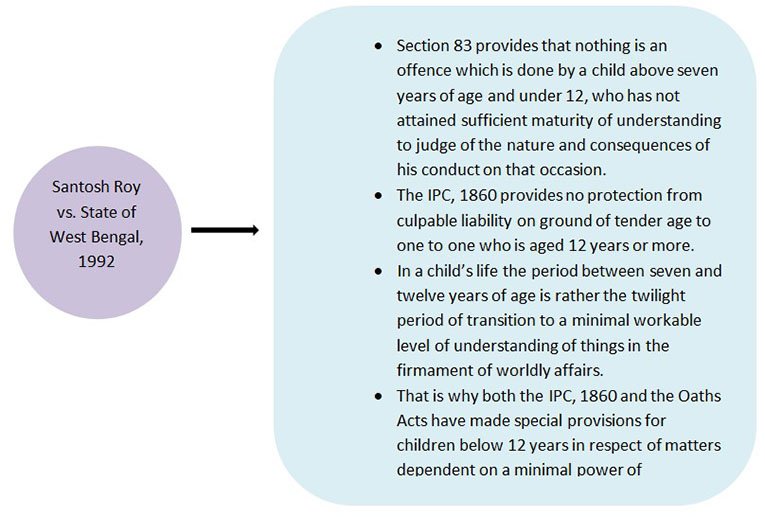
According to section 21 of BNS, 2023- Nothing is an offence which is done by a child above seven years of age and under twelve years of age, who has not attained sufficient maturity of understanding to judge of the nature and consequences of his conduct on that occasion.
- Where the accused is a child above seven years of age and under twelve, the incapacity to commit an offence only arises when the child has not attained sufficient maturity of understanding to judge of the nature and consequences of his conduct.
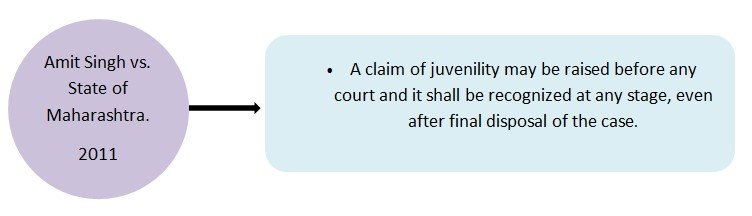
- Such non-attainment would have apparently to be specially pleaded and proved, like the incapacity of a person who, at the time of doing an act charged as an offence, was alleged to have been of unsound mind under this section it has got to be shown that the accused is only under 12 but has not attained sufficient maturity of understanding.
- If no evidence or circumstance is brought to the notice of the court, it will be presumed that the child accused intended to do what he really did.
- Where a child of 12 or so used a sharp sword in killing a person along with his two brothers and no evidence either of age or immaturity of understanding was led on his behalf, it was held that he committed an offence at least under section 326, IPC, 1860.
- The legislature is manifested referring in this section to an exceptional immaturity of intellect.
- What the section contemplates is that the child should not know the nature and physical consequences of his conduct.
- The circumstances of a case may disclose such a degree of malice as to justify the maxim militia supplet octatem.
- Where the accused, a boy over 11 years but below 12 years of age, picked up his knife and advanced towards the deceased with a threatening gesture, saying that he would cut him into bits, and did actually cut him, his entire action can only led to one inference, namely, that he did what he intended to do and that he knew all the time that a blow inflicted with a knife would effectuate his intention.
- In the prosecution of an 11 year old child for throwing a brick at a police vehicle and running away, the Court said that the justices were not entitled to conclude from his appearance that he was normal in respect of incurring criminal influence.
- The test is whether the child knew that what he was doing was seriously wrong and went beyond childlike mischief.
- Running away was not by itself sufficient to rebut the presumption of doli incapax.
- A naughty child would run away from a parent or teacher even if what he had done was not criminal.
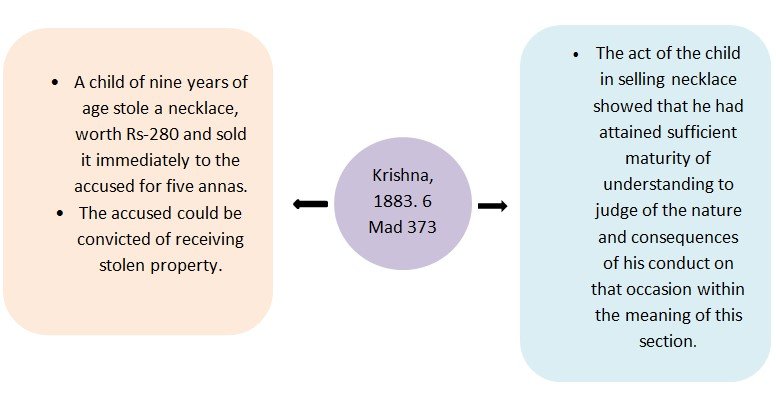
- Theft by Criminal [section 21]:
???????
- Act of a person of unsound mind [ section 22]:
Nothing is an offence which is done by a person who, at the time of doing it, by reason of unsoundness of mind, is incapable of knowing the nature of the act, or that he is doing what is either wrong or contrary to law.
According to Section 22 of BNS,2023- Nothing is an offence which is done by person who, at the time doing it, by reason of unsoundness of mind, is incapable of knowing the nature of the act , or that he is doing what is either wrong or contrary to law.

