DIFFERENCE BETWEEN MITAKSHARA & DAYABHAGA SCHOOL OF HINDU LAW
Dr. Tanmoy Mukherji
Advocate
DIFFERENCE BETWEEN MITAKSHARA & DAYABHAGA SCHOOL OF HINDU LAW-
Tanmoy Mukherji
Advocate
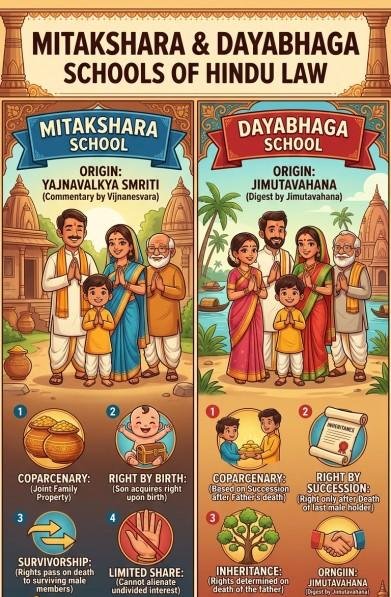
INTRODUCTION-
The two principal schools of Hindu Law are:
→Mitakshara School – based on commentary by Vijnaneshwara.
→Dayabhaga School – based on digest by Jimutavahana.
They differ fundamentally in coparcenary, inheritance, ownership, and rights in property.
FOUNDATIONAL SOURCE-
????????? ???????? ?????????? ? ????????? |
???????? ??????????????????????? ?||
(The Vedas are the root of Dharma; Smritis, conduct of learned persons, and conscience are also sources of law.)
ADDITIONAL VERSES-
????? ?????? ??????? | (Law protects those who protect it.)
??? ????????? ??? | (Where there is Dharma, there is victory.)
?????? ?? ????? | (Justice itself is punishment or law enforcement.)
MASTER COMPARATIVE TABLE – 50+ POINTS OF DIFFERENCE-
|
No |
BASIS |
MITAKSHARA SCHOOL |
DAYABHAGA SCHOOL
|
|
1. |
Founder |
Vijnaneshwara |
Jimutavahana
|
|
2. |
Nature |
Commentary on Yajnavalkya Smriti |
Independent Digest
|
|
3. |
Region |
Whole India except Bengal & Assam |
Bengal & Assam |
|
4. |
Principle |
Right by birth |
Right by death |
|
5. |
Ownership |
Joint ownership |
Individual ownership
|
|
6. |
Coparcenary |
Exists |
Does not exist |
|
7. |
Formation of Coparcenary |
Automatic by birth |
No such concept
|
|
8. |
Members |
4 generations |
No fixed coparcenary
|
|
9. |
Son's Right |
From birth |
After father's death |
|
10. |
Father's Right |
Limited |
Absolute |
|
11. |
Alienation |
Restricted |
Freely allowed |
|
12. |
Partition |
Anytime |
After death
|
|
13. |
Female Rights |
Limited (earlier) |
More liberal
|
|
14. |
Widow Rights |
Limited |
Can inherit
|
|
15. |
Basis of Inheritance |
Survivorship |
Succession
|
|
16. |
Doctrine |
Survivorship |
Spiritual benefit
|
|
17. |
Spiritual Theory |
Secondary |
Primary
|
|
18. |
Property Type |
Ancestral property |
Separate property
|
|
19. |
Control |
Collective |
Individual
|
|
20. |
Consent |
Required |
Not required
|
|
21. |
Family System |
Joint family |
Nuclear tendency
|
|
22. |
Right of Survivors |
Strong |
Weak |
|
23. |
Death Effect |
Passes automatically |
Devolves by succession
|
|
24. |
Son's Status |
Coparcener |
Heir |
|
25. |
Grandson Right |
Yes |
No birth right
|
|
26. |
Great-grandson Right |
Yes |
No |
|
27. |
Notional Partition |
Recognized |
Not required |
|
28. |
Testamentary Power |
Limited |
Broad
|
|
29. |
Father's Debt |
Binding on son |
Not binding
|
|
30. |
Pious Obligation |
Recognized |
Not recognized
|
|
31. |
Karta System |
Exists |
Not strong |
|
32. |
Joint Property |
Main feature |
Absent
|
|
33. |
Division of Shares |
Fluctuating |
Fixed |
|
34. |
Birth right |
Yes |
No |
|
35. |
Ownership Nature |
Community |
Absolute |
|
36. |
Legal Approach |
Conservative |
Liberal
|
|
we believe in a holistic approach to legal education building not just lawyers, but socially conscious leaders of tomorrow. |

