Development of GST Law in India
Dr. Tanmoy Mukherji
Advocate
Development of GST Law in India-
Tanmoy Mukherji
Advocate
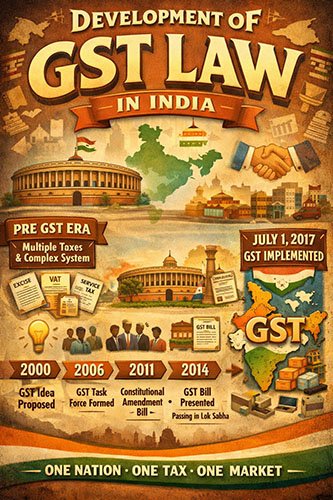
The Goods and services Tax (GST) introduced in India on 1st July, 2017, is a landmark indirect tax reform aimed at creating a unified National Market by subsuming multiple central and state taxes. Since its implementation, GST has been treated as a dynamic and evolving law, undergoing continuous changes to address practical difficulties, revenue concerns and constitutional issues.
Background/History -
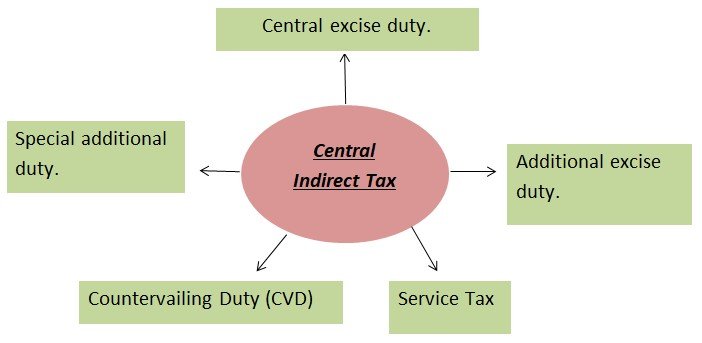
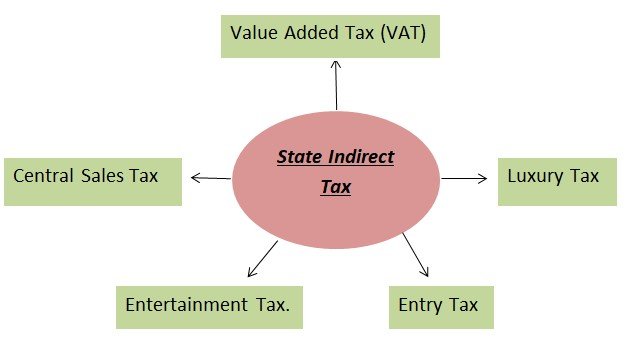
India followed a dual indirect tax system where both Centre and state levied taxes independently.
i) Central Indirect Tax-
ii) State Indirect Tax-
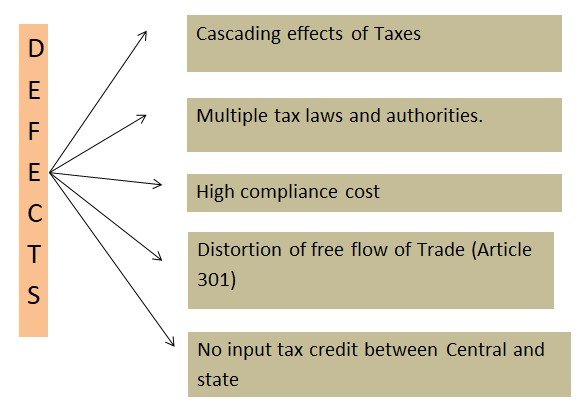
Defects of Pre-GST Regime-
GST Concept-
GST is a destination based, value added, consumption tax levied on supply of Goods and Services.
Features-
1. Single tax replacing multiple indirect taxes.
2. Seamless Input Tax Credit (ITC).
3. Taxation at point of consumption.
4. Technology driven compliance.
5. Dual GST model (Centre + State).
Steps towards GST-
Kelkar Task Force (2003)-
→Recommended integration of goods and services taxation.
→Suggested abolition of cascading taxes.
→Proposed GST as a comprehensive solution.
VAT Implementation-
→Replaced sales Tax.
→Reduced cascading within states only.
→Could not integrate central taxes.
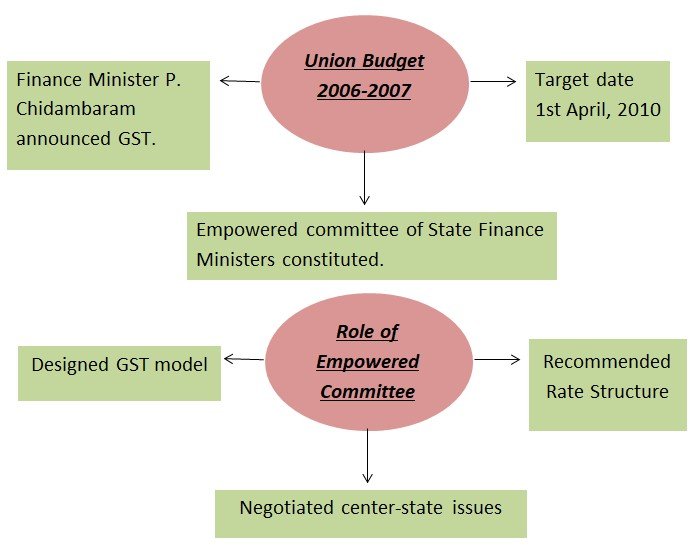
Budget Announcement and Industrial Framework-
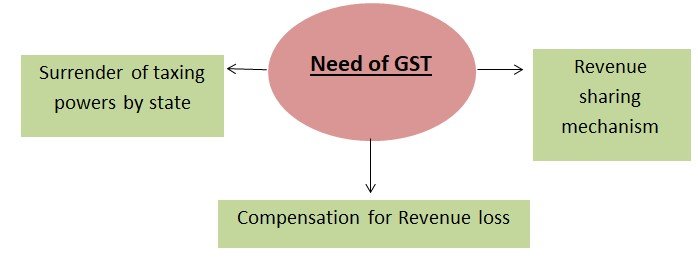
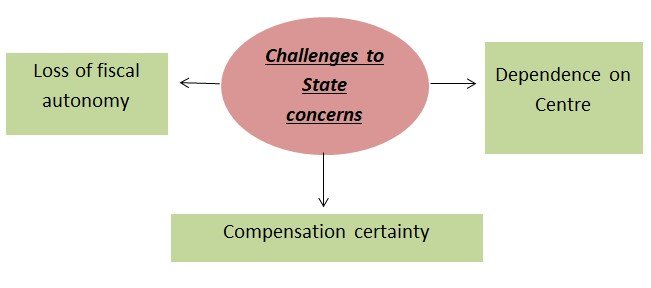
Federal Challenges in implementing GST-
Constitutional Amendment Process-
122nd Constitutional Amendment Bill, 2014-
→ Introduction in Lok Sabha.
→ Passed by Parliament in 2016.
→ Ratified by more than 50% of State.
101st Constitutional Amendment Act, 2016-


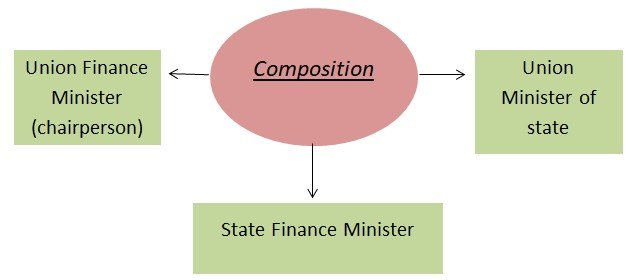
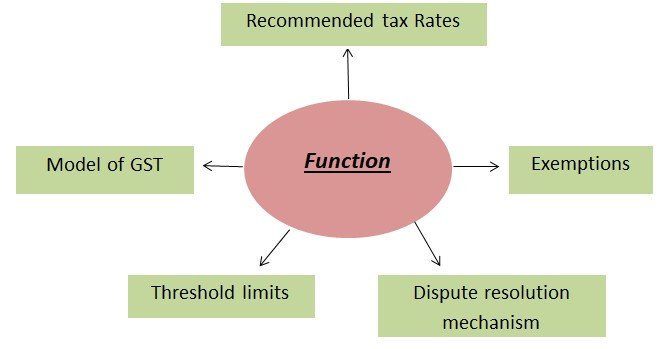
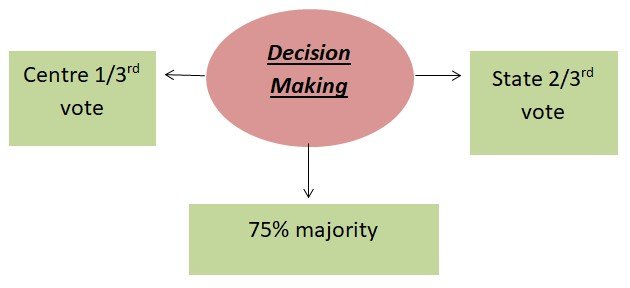
GST Council –
Enactment of GST Legislation (2017)-
→ CGST, 2017
→ IGST, 2017
→ UGST, 2017
→ GST Compensation Act, 2017
State laws-
Individual SGST Acts passed by the states.
Post-GST Reforms and development-
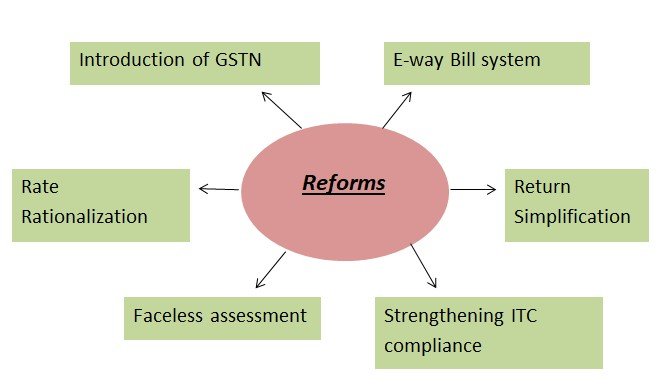
GST 2.0 Majors overhaul of GST Regime (From 22nd September, 2025)-
The most significant recent change in GST law is the launch of "GST 2.0", a wide-ranging reform implemented after 56th GST Council meeting (held on 3rd Sept. 2025).
-This reforms are the largest since GST was introduced in 2017.
Simplification of GST Rate Structure-
The old multi-slab GST rate system (5%, 12%, 18%, and 28%) has been simplified-
5% → Merit/Essential goods
18% → Standard Rate for most goods and Services
40% → Special Luxury Rate on selected goods (Tobacco).
Exemption & Nil / Low Tax -
→Life insurance
→Health insurance
→Life-saving medicine and medical devices have been moved to Nil or 5% GST.
→FMCG and daily use items - 5%
→Electronics - 18%
→Small cars and auto parts - GST lower to 18%.

we believe in a holistic approach to legal education building not just lawyers, but socially conscious leaders of tomorrow.
