Definition & Nature of International Law
Dr. Tanmoy Mukherji
[Advocate]
Definition & Nature of International Law-
Tanmoy Mukherji
[Advocate]
Oppenheim-
International law is the body of customary and conventional rules which are considered legally binding by civilized states in their inter course with each other.
J.L Brierly-
The law of nations on international law may be defined as the body of rules and principles of action which are binding upon civilized states in their relations with one another.
Malcolm N. Shaw-
International law is that body of law in which composed for its greater part of the principles and rules of conduct which states feel themselves bound to observe and commonly observe in their relations with one another.
Ian Brownlie-
International law is the body of rules and principles of religion which are binding upon states in their relation with each other.
J. G Starke-
International law may be defined as that body of law which is composed for its greater part of the principle and rules of conduct which states feel themselves bound to observe and therefore do commonly observe in their relations with one another.
Nature of International Law-
International Law is unique in character due to its decentralized structure and reliance on state behavior.
The following features describe its true nature-
1.International law as a binding legal system-
Despite lacking a centralized authority, international law is legally binding.
It imposes right and obligations on states, and increasing on individuals.
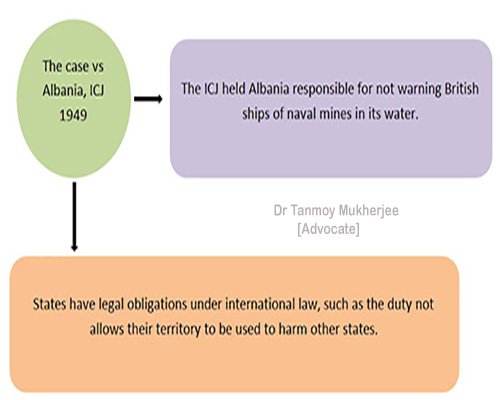
Reference cases-
2.Consent based nature-
International Law is primarily based on state consent, particularly through treaties and customary practice.
States are only bound if they agree, except in case of Jus Cogens norms-
Reference cases-
3.Customary law and Opinio Juris-
Customary International Law forms major part of International Law.
It arises from state practice and a believe that such practice is legally required (opinio juris).
Reference cases-
4.Horizontal legal order (Sovereign Equality)-
International Law offers in a horizontal system, where, on all states are legally equal, regard less of size power.
There is no superior authority over sovereign states.
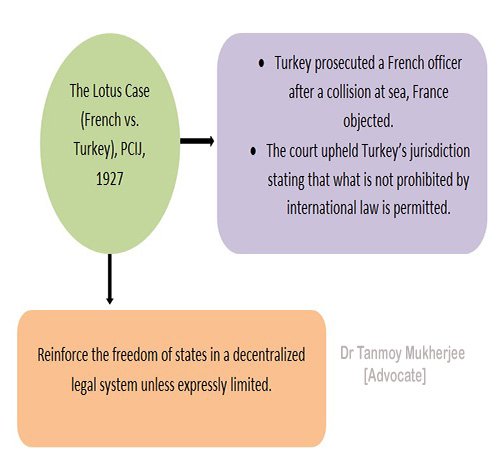
Reference cases-
5.Enforcement mechanisms are limited but evolving-
There is no world police but enforcement can occur through-
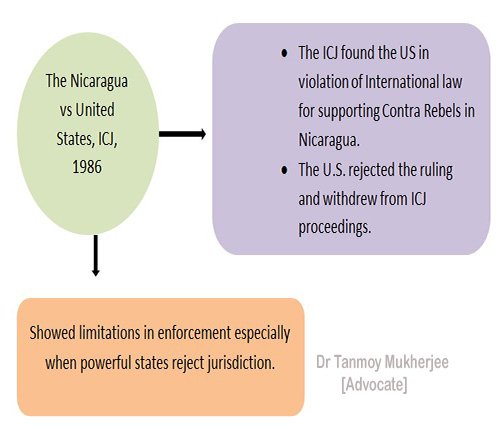
Reference case-
6.Recognition of Individuals as subject of International Law-
Traditionally, only states were subject of Modern International law increasingly holds individuals accountable, especially in human rights and international criminal law.
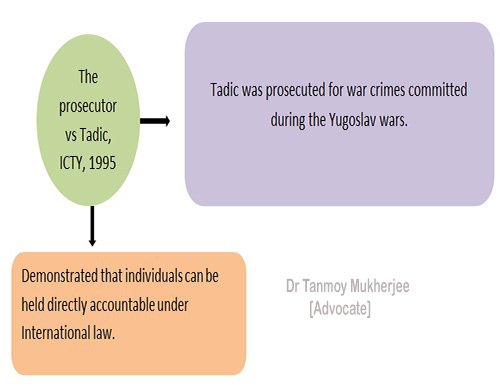
Reference case-
7.Preemptory Norms (Jus Cogens)-
Certain fundamental rules of International law (e.g., prohibition of genocide, slavery, torture) cannot be violated by any state, even with consent.
Reference Case-


we believe in a holistic approach to legal education building not just lawyers, but socially conscious leaders of tomorrow.