Constitutional Provisions regarding languages in India
Dr. Tanmoy Mukherji
Advocate
Constitutional Provisions regarding languages in India-
Tanmoy Mukherji
[Advocate]
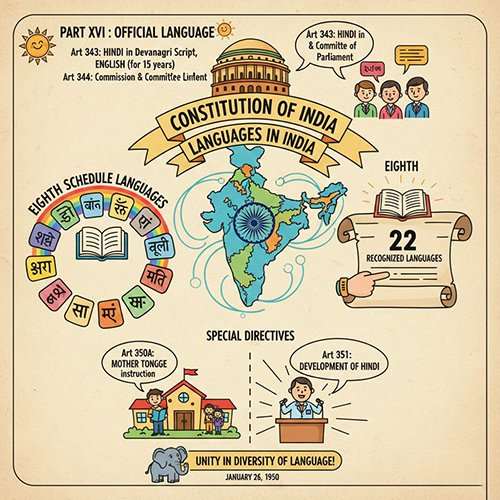
The Constitution of India contains detailed provisions regarding languages, primarily under Part-XVII (Art-343 to Art-351). These provisions cover the official language of the Union, Regional languages and efforts to promote Hindi and protect linguistic diversity.
Constitutional Provisions - (Art-343 to 351 & VIII Schedule), (Art 343 to 344).
Official Language of the Union-
Article - 343(1) - The official language of the Union shall be Hindi in Devanagari Script.
Article - 343(2) - For a period of 15 years from the commencement of the constitution, English could continue to be used alongside Hindi.
Article - 343(3) - Parliament may by law provide for the continued use of English beyond the 15 years period. (The official languages Act, 1963)
Article 344 - It provides for the Constitution of a Commission and the Committee of the Parliament after 5 years to promote the spread of Hindi.
Regional Languages and State Official Languages-
Article 345 - A State may adopt any language used in the State as its official language or continue using English.
Article-346 - Communication between a State and the Union shall be in Hindi or English, unless otherwise authorized.
Article-347 - Provides for recognition of a language spoken by a section of the population of a state if demanded.
Special Language (Art-350 to Art-351):
Article-350- Every person has the right to submit a representation to any authority in any of the languages used in the Union or State.
Article-350 A - States should provide primary education in mother tongue for children belonging to linguistic minority groups.
Article-350 B - Provides for the appointment of a Special Officer for Linguistic Minorities by the President.
Article-351 - Directive to the Union to promote the spread of Hindi developed it to serve as a medium of expression for all Indian cultures, while enriching it by assimilating elements of other Indian languages.
8th Schedule of the Constitution-
Originally included 14 languages, now includes 22 languages.
These languages are recognized for-
22 languages-
Assamese, Bengali, Bodo, Dogri, Gujarati, Hindi, Kannada, Kashmiri, Konkani, Maithili, Malayalam, Manipuri, Marathi, Nepali, Oriya, Punjabi, Sanskrit, Santali, Sindhi, Tamil, Telugu and Urdu.
Present Scenario -
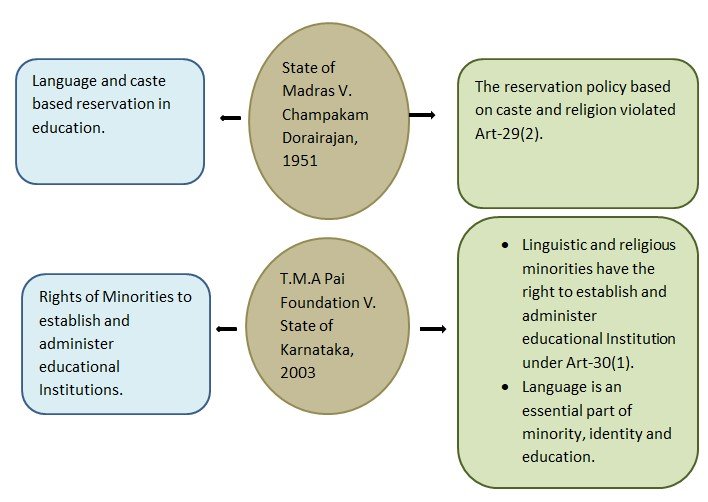
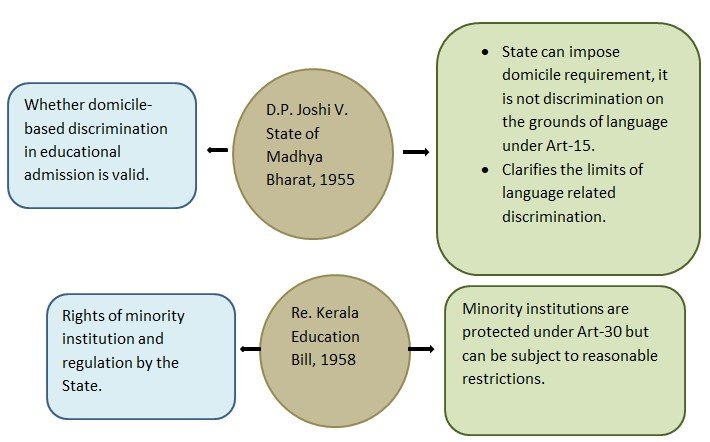
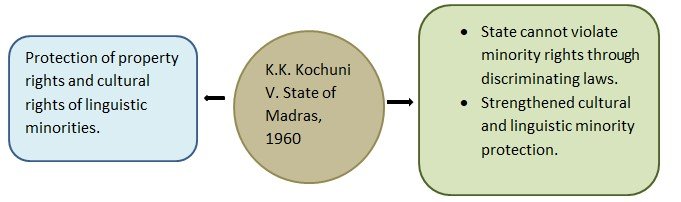
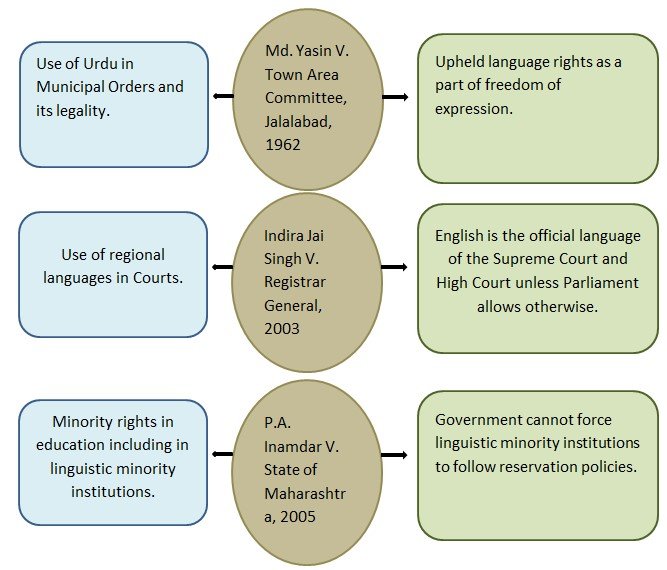
Reference Cases-

we believe in a holistic approach to legal education building not just lawyers, but socially conscious leaders of tomorrow.
