COMPULSORY LICENSE
Dr. Tanmoy Mukherji
Advocate
COMPULSORY LICENSE
TANMOY MUKHERJI
ADVOCATE
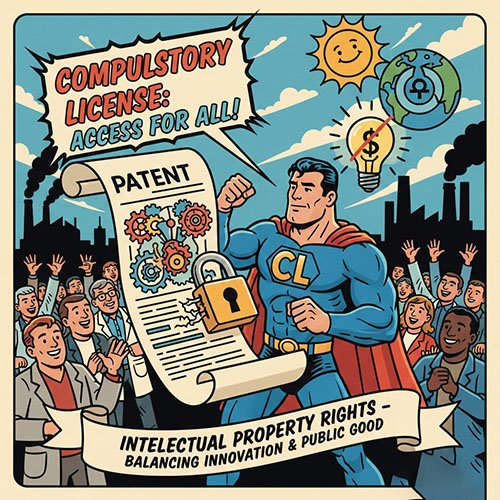
A Compulsory License under the Patent Act is a Legal mechanism that allows a Govt. to authorise a third party (other than Patent holder) to produce a Patented product or process without the consent of the Patent owner under certain conditions:
Compulsory License under the Patent Act, 1970: -
Section 84 to 92 of the Indian Patent Act, 1970 Compulsory Licensing. TRIPS Agreement (Trade Related Aspects of Intellectual Property Rights) also allows for Compulsory Licensing under Article 31.
Grounds for granting Compulsory License (Section 84): -
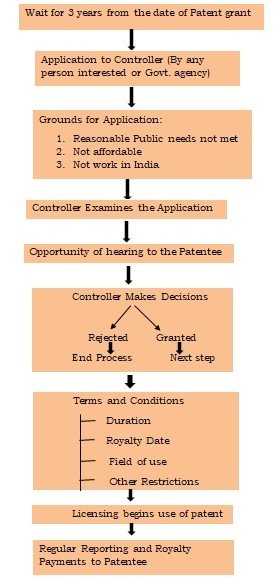
After 3 years from the date of a grant of Patent any person can apply for a Compulsory License on any of the following grounds-
Types of Compulsory License: -
Section 91: -
For related Patent (if use of one Patent is not possible without infringing another).
Section 92: -
In case of National Emergency, extreme urgency or public non-commercial use, the Govt. can issued Compulsory License without waiting 3 years.
Section 92 A: -
For export of Patent pharmaceutical products 2 countries with insufficient manufacturing capacity (especially under the DOHA Declaration of TRIPS).
Procedure: -
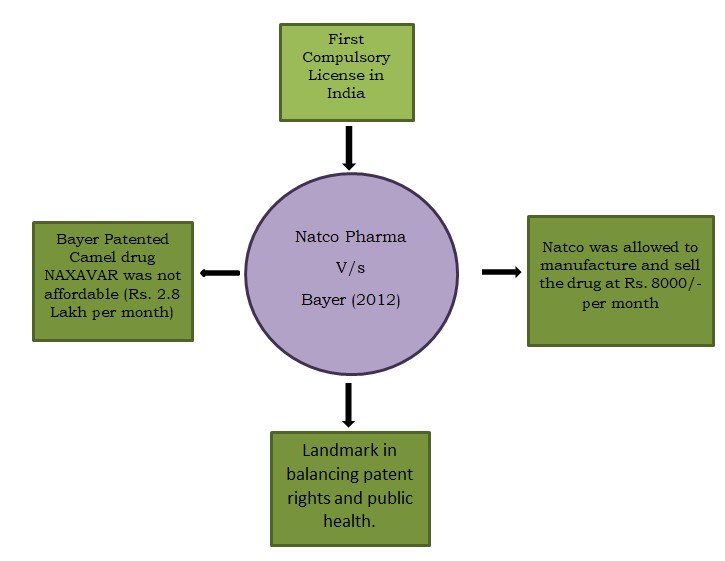
Aim Compulsory License: -
Judicial Affirmation of Natcos Compulsory License
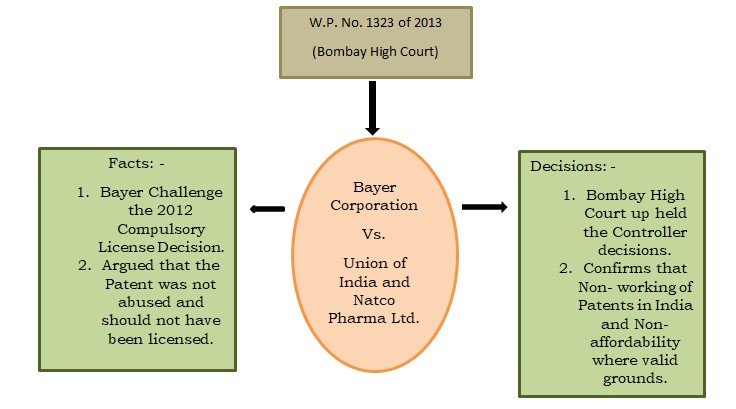
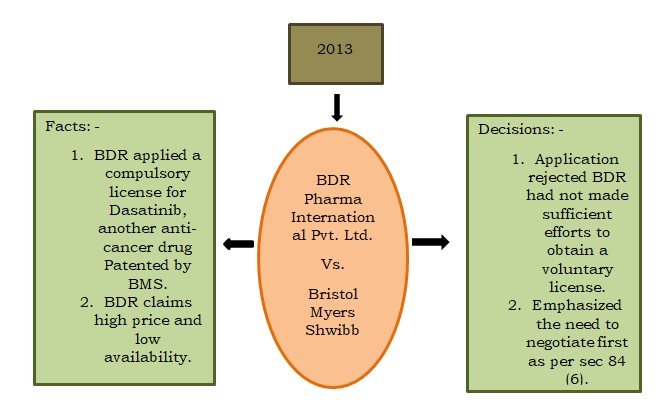
Clarified the need to show good faith efforts before seeking a Compulsory License-

we believe in a holistic approach to legal education building not just lawyers, but socially conscious leaders of tomorrow.
