Burden of Proof and Onus of Proof-
Dr.Tanmoy Mukherji
Advocate
Burden of Proof and Onus of Proof-
Tanmoy Mukherji
Advocate
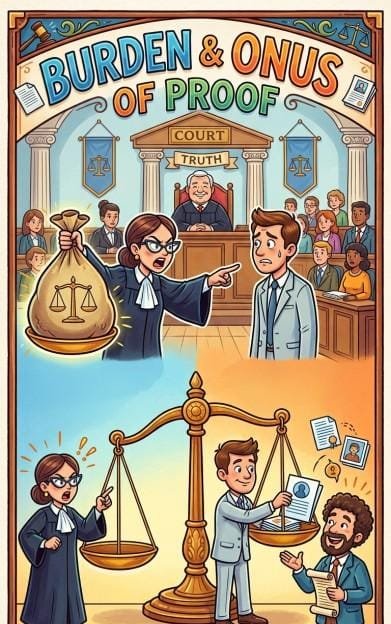
The expressions "Burden of Proof" and "Onus of Proof" are sometimes loosely used interchangeably, but legally they have an important distinction.
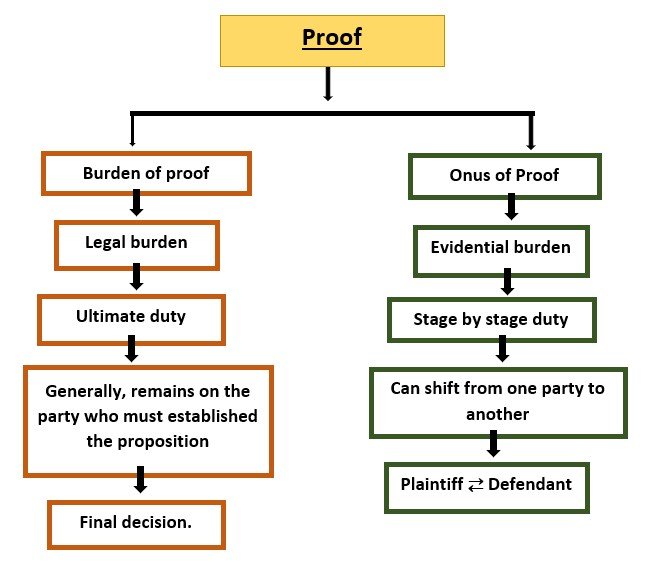
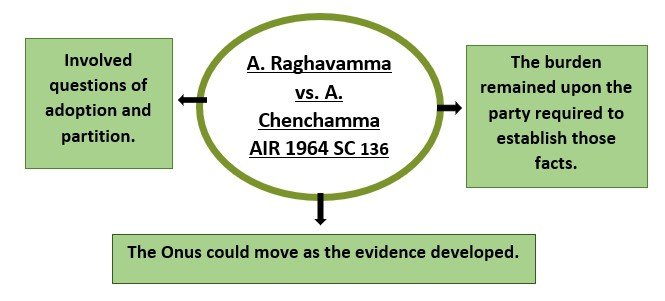
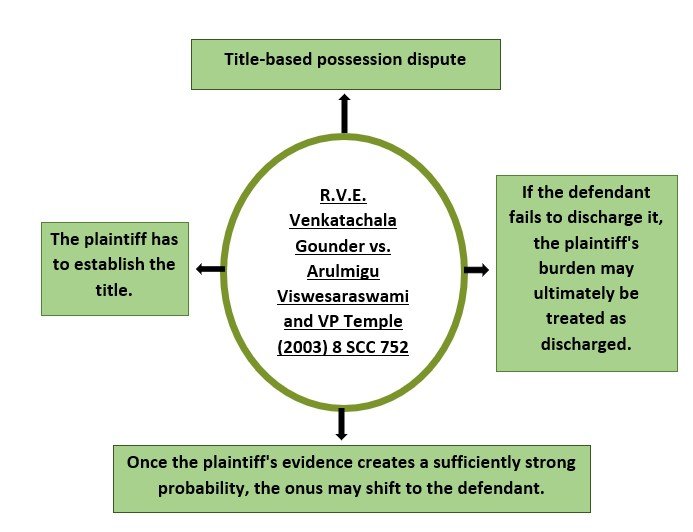
❖The Supreme Court has repeatedly explained that the burden of proof is the ultimate legal responsibility of proving of fact, whereas the onus of proof is the evidential responsibility at a particular stage and can shift as evidence develops.
Distinction between Burden of Proof and Onus of Proof-
|
Basis |
Burden of Proof |
Onus of Proof
|
|
Meaning |
Legal obligation to establish a fact or proposition. |
Evidential obligation to produce sufficient evidence at a particular stage.
|
|
Character |
Ultimate/legal burden. |
Evidential/provisional burden.
|
|
On whom? |
Ordinarily on the party asserting the material fact. |
On the party who must presently answered or rebut the evidence.
|
|
Does it shift? |
Ultimate burden ordinarily does not shift. |
Can shift repeatedly.
|
|
When determined? |
Primarily from law, pleadings and nature of the issue. |
From the state of evidence at each stage.
|
|
Main question on the issue |
Who must ultimately prove this fact? |
Who must produce/rebut evidence now?
|
|
Failure |
Party bearing the burden may ultimately lose on that issue. |
Failure to discharge onus may allow the court to accept the opposing evidential position.
|
|
Nature |
Comparatively permanent. |
Temporary and shifting.
|
|
Relevant stage |
Throughout adjudication |
Changes during presentation and e-valuation of evidence.
|
|
Practical expression |
'Burden of persuasion'. |
Evidential burden/ 'onus probandi'.
|
Reference Case-
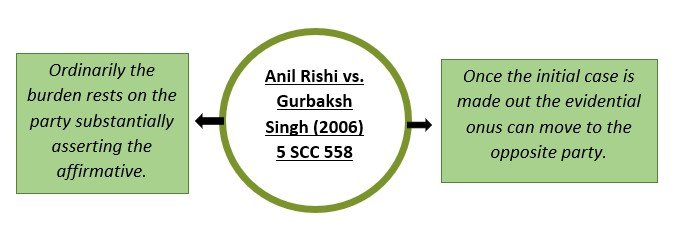
Diagram-
The Essential Formula-
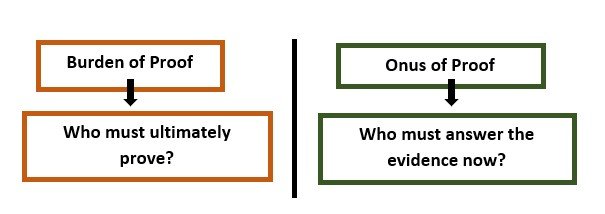
Burden= Comparatively fixed legal responsibility.
Onus = Shifting evidential responsibility.
Reference Case-

we believe in a holistic approach to legal education building not just lawyers, but socially conscious leaders of tomorrow.
