Analytical School of Jurisprudence
Dr. Tanmoy Mukherji
Advocate
Analytical School of Jurisprudence-
Tanmoy Mukherji
Advocate
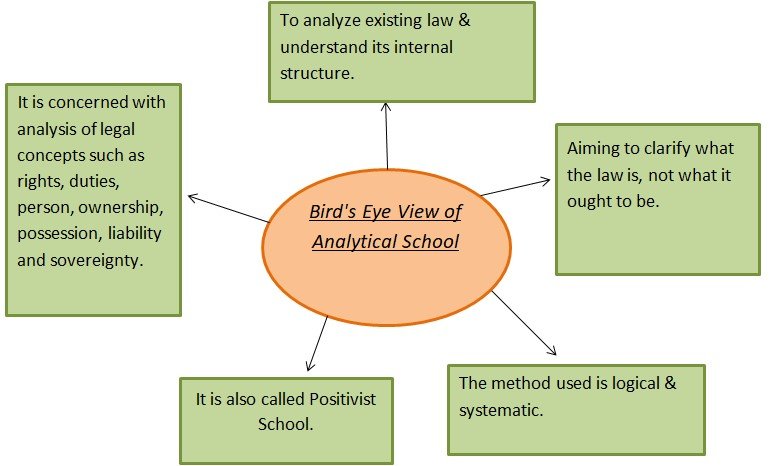
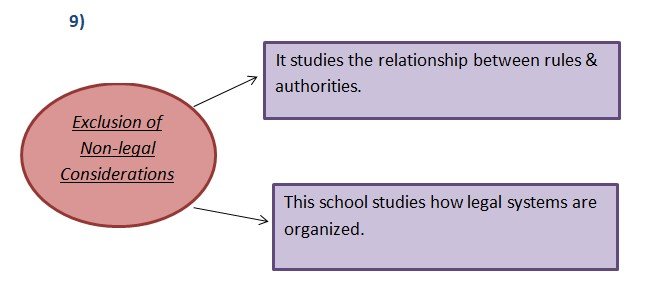
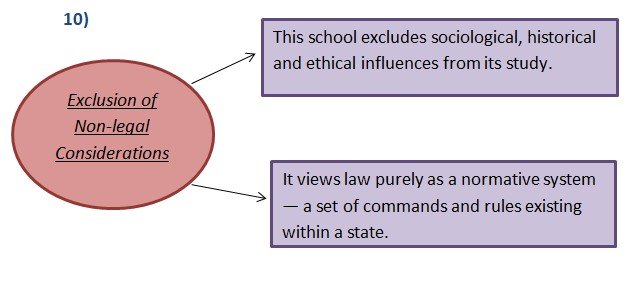
The Analytical school studies law as it exists in a given legal system- Its form, structure and logical organization - without reference to moral, social or historical consideration.
Major Exponents-
Jeremy Bentham (1748-1832):
Founder of the Analytical School.
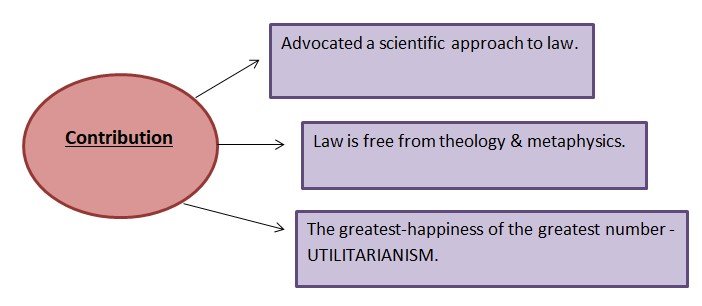
Contribution-
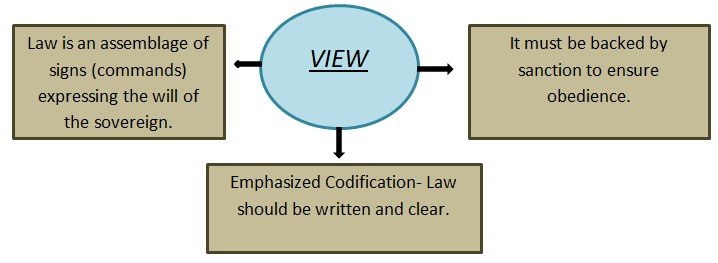
Bentham's View of Law-
John Austin (1790-1859)-
Systematized Bentham's idea into a clear framework — Austin's Command Theory of Law. According to him, law is the command of sovereign backed by sanctions.
H.L.A. Hart (1907-1992)-
Modern reformer of the Analytical School. Hart sought to modernize legal positivism and correct Austin's weaknesses.
Features-
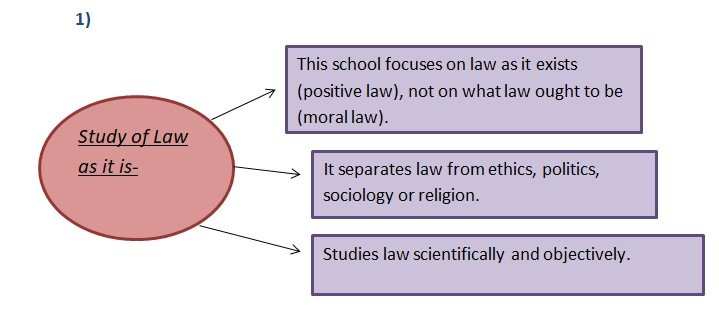
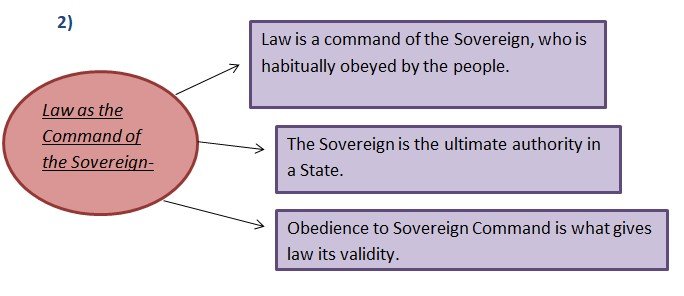
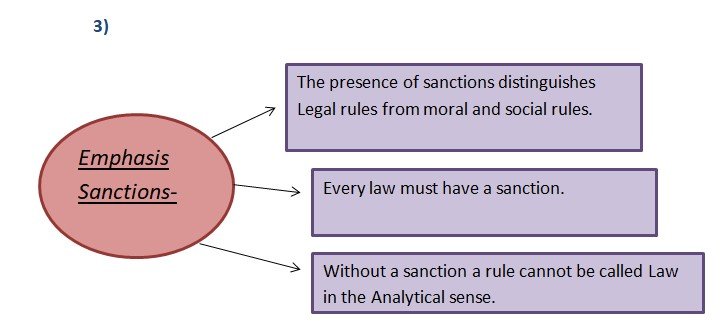
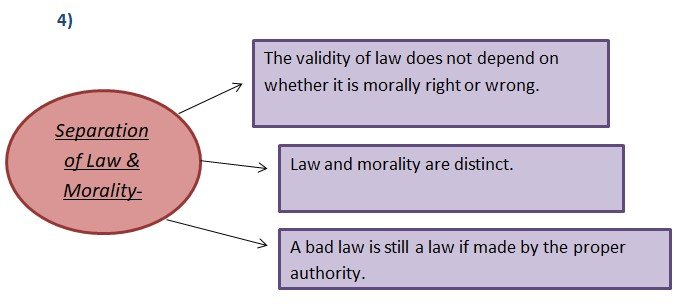
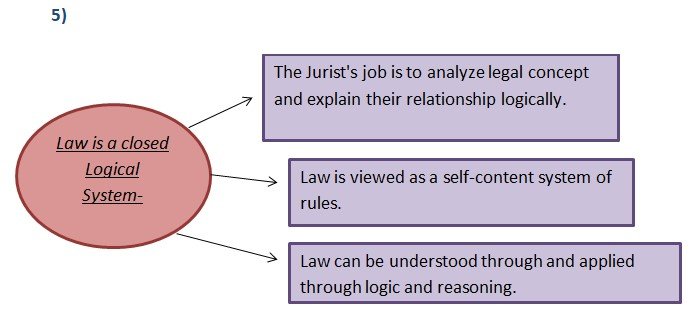
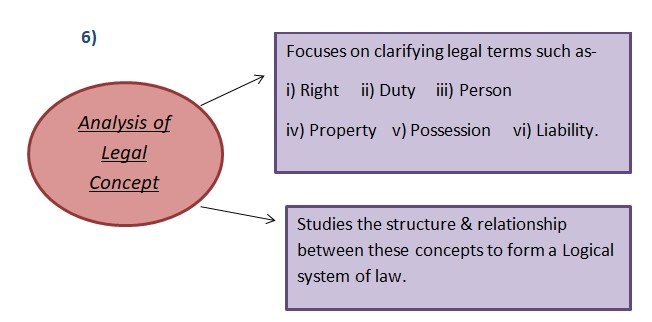
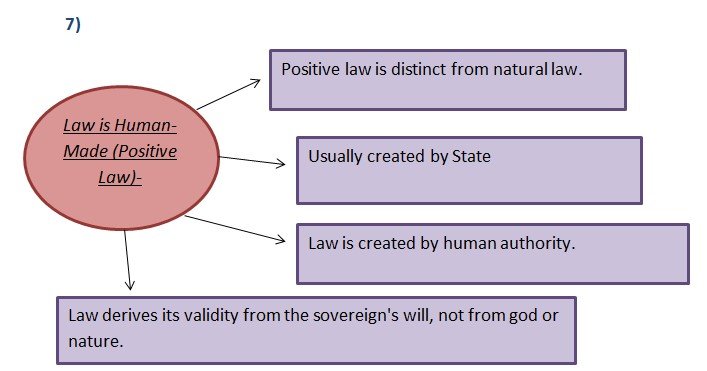
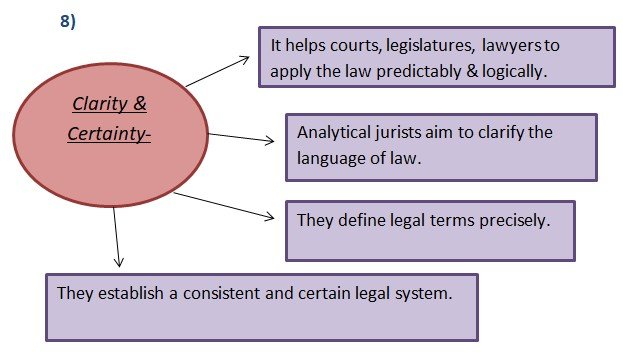
Law is the Command of the Sovereign, Backed by Sanctions-
John Austin (1790-1859) was an English jurist and one of the founders of legal positivism. His theory is called "The Command Theory of Law".
Austin defined law as, "A law is command of the sovereign backed by sanctions".
Command-
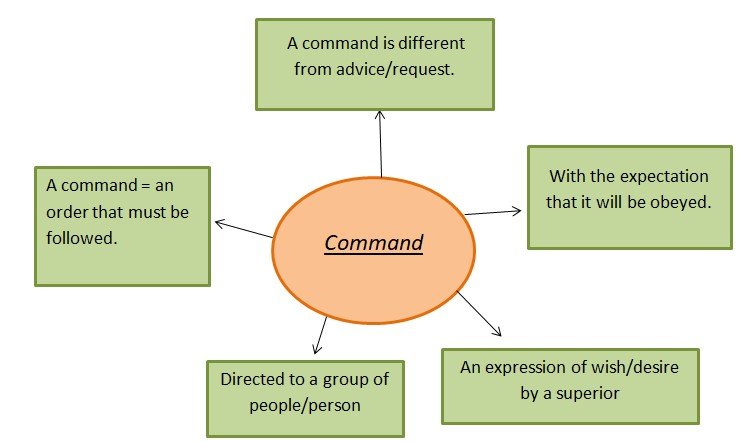
Example- The Government orders all citizens to pay taxes.
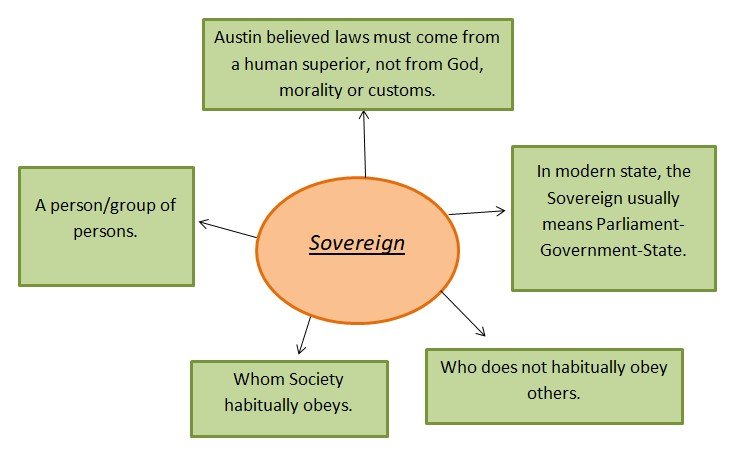
Sovereign-
Sanctions-
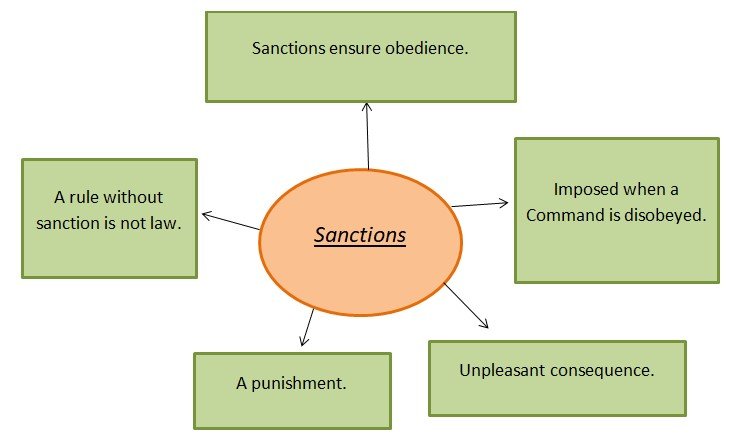
Example- If a person doesn't pay taxes-penalty/fine may be imposed.
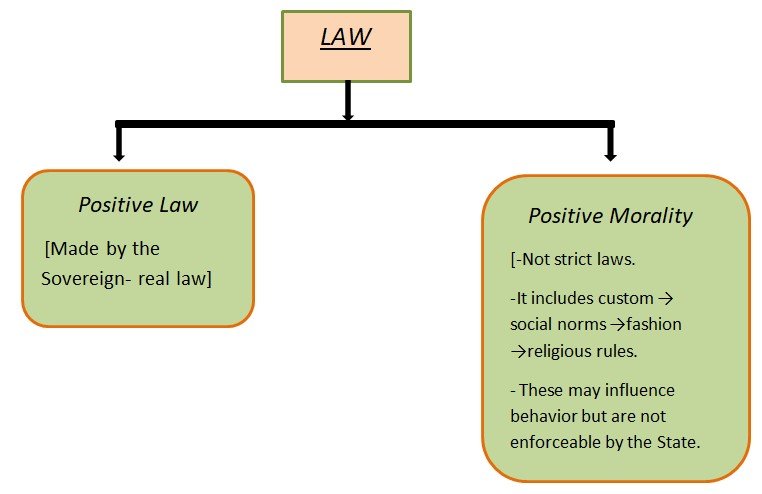
Types of Law in Austin's Theory-
Application of Austin's Command Theory in India-
Although Austin's theory was created for a simple monarchy, many aspects of this theory still apply in the Indian Legal System, especially because India follows a positivist Sovereign-based legal structure inherited from British law.
1. Indian Law is Mostly Command-Based-
Most Indian Laws created by:
Parliament →State Legislatures →Executive Authorities
-These laws operate as commands backed by sanctions, which fit Austin's idea.
Example:
-Bharatiya Nyaya Sanhita (BNS) - Commands like 'Do Not murder' with punishment.
-Motor Vehicles Act - Commands regarding driving rules & fines.
-Income Tax Act - Pay tax or face penalty.
These directly reflect Austin's model- Command + Sovereign + Sanction = Law.
2. Sovereign Power in India-
Austin Says, Sovereign = One 'who is habitually obeyed.'
In India, Sovereignty lies in-
-The Constitution.
-Parliament & State Legislature.
-People as ultimate Sovereign (Preamble: "We the people of India......").
Even though India has distributed Sovereignty the laws made by the State Authority are still binding, showing a modified form of Austin's sovereignty.
3. Sovereign Sanctions for Most Legal Rules-
Indian laws have clear sanctions, fulfilling Austin's requirement.
Example:
→Section-103, BNS - Life Imprisonment or death for Murder.
→Sec-138, NI Act - Punishment for cheque bounce.
→ RTO- Fines for traffic violations.
Presence of sanctions in the Indian Legal System shows that it is compatible with Austin's framework.
4. Customary Laws are Recognized Only When Sanctioned & by the State:
Austin Said, Customs become law only when recognized by the sovereign. This is exactly how Indian Law treats customs.
Example:
→ Hindu Marriage Act recognizes certain Hindu customs.
→ Muslim personal laws operate because the Indian State allows them.
→ Tribal customs are valid only when accepted by Courts.
Custom- Not law unless backed by the State = Austin's Idea.
5. Separation of Law & Morality-
Austin said- Law is what the Sovereign commands, not what is moral.
- India follows this positivist idea → Homosexuality was decriminalized in law because the Court changed its interpretation, not based on moral opinion.
-India treats law as law, not as morality = Austin's Idea.
6. Delegated Legislation-
-Executive Authorities make rules on behalf of Parliament.
-Austin supported the idea that the Sovereign can command through subordinates. In India Parliament delegates rule-making powers. Those rules are still law because they come from the Sovereign Authority.
In A.K. Gopalan vs. State of Madras, AIR 1950-
The Supreme Court interpreted 'Procedure established by law' (ART-21) to mean any law passed by the legislature even if unfair, as long as it is duly enacted. This approach of Supreme Court = Austin's idea.
In State of West Bengal vs. Union of India, AIR 1963-
- Supreme Court said that Parliament derives sovereignty from the Constitution.
-This reflects Austin's model of a single Political Superior whose commands bind all others.
In ADM Jabbalpur vs. Shirkant Shukla, AIR 1976 –
-The Supreme Court held, even if life & liberty were taken away unlawfully, courts cannot question the law as long as it is authorized by the sovereign.
-This reflects Austin's strict positivist view- 'If the sovereign has commanded, it is law!'
This case was later overruled by the Puttuswamy Case (2017), but it shows clear Austinian influence.
In Kesavananda Bharati vs. State of Kerala 1973-
The Supreme Court rejected the Austinian theory. It held that Parliament is not absolute sovereign; it is limited by the Basic Structure Doctrine.
Criticism-
CRITICISMS OF AUSTIN’S COMMAND THEORY-
John Austin defined law as:
“A command of the sovereign backed by a sanction.”
But modern jurisprudence considers his theory too narrow and outdated.
Let’s examine the major criticisms in more depth-
1.The definition of law as a “command” is too narrow-
Austin treats all laws as orders plus threats. But in reality, laws are of different types:
(a) Permissive laws-
Contract Act allows parties to enter into agreements. Trusts, wills, marriage laws provide options. These are not commands but enabling rules.
(b) Declaratory laws-
Courts often declare what the law already is. No command or sanction involved.
(c) Regulatory/Administrative rules-
Example: GST registration rules, income tax return dates. These are procedural, not commands.
Law cannot be reduced to threats, commands, or punishments.
2.The concept of Sovereign is unrealistic in modern states-Austin’s sovereign must be-
→habitually obeyed
→not subject to any earthly superior
But modern democracies show-
→Power is divided among legislature, executive, judiciary.
→Government is bound by the Constitution.
→Rules like basic structure doctrine restrict Parliament.
→Even the President/PM is subject to judicial review.
Example:
Indian Supreme Court struck down unconstitutional laws in Kesavananda Bharati and Minerva Mills.
Sovereign does not exist in Austin’s absolute sense.
3. Austin ignores morality—criticized by Hart, Fuller, and Natural Law-
Austin strictly separates: Law (what it is) and Morality (what it ought to be). But many modern laws depend on moral principles:
→Equality (Art. 14)
→Right to life (Art. 21)
→Justice & fairness
→Human rights law
Fuller says law must satisfy principles of internal morality, such as clarity, consistency, publicity.
Counter-example-
If a sovereign passed an unjust law (e.g., apartheid), Austin would still call it law. Many scholars reject this notion.
4. Excessive emphasis on “sanctions”-
Austin claims: Law = command + duty + sanction.
But in practice:
→Constitutional law has no sanctions
→Family law often has no threats
→Tax benefits work through incentives, not punishment
→Civil wrongs involve compensation, not sanctions
→Judges often use discretion instead of strict punishment
Hart’s criticism-
Laws are not only coercive; they also facilitate cooperation.
5. Failure to explain Constitutional Law-
Constitutional rules:
→create government
→limit government
→control sovereign power
Example: Indian Parliament cannot pass laws violating basic structure.
This contradicts Austin, because:
→Constitutional law binds the sovereign
→Sovereign is not above the law
→Sovereign cannot change Constitution freely
→Constitutionalism contradicts Austin’s absolute sovereign concept.
6. Customary Law cannot be explained adequately-
Customs evolve from society, not from sovereign commands. Austin calls them: “tacit commands of the sovereign”
But this explanation fails because:
→Custom existed before the state.
→Custom applies even when sovereign is silent.
→Indigenous, tribal, or village-level customs work independently.
→Courts recognizes custom based on usage, not commands.
Example: Hindu customary law existed centuries before modern state. Austin’s theory artificially labels customs as commands.
7. International Law excluded from the definition of Law-
→Austin denies that international law is “true law.”
→He calls it “positive morality.”
But this is clearly wrong because:
→International treaties bind states.
→There are established institutions (ICJ, ICC, and WTO).
→States follow rules of war, diplomacy, territorial boundaries.
→Violations lead to sanctions like trade embargoes.
→UN Charter is binding on all member states
→Even without a world sovereign, international law functions as real law.
This is a major weakness in Austin’s theory.
8. Austin ignores judge-made law-
Courts create law through:
→interpretation
→precedents
→filling gaps
→reading constitutional principles into statutes
Examples:
Article 21 expanded through judicial creativity. Privacy declared a fundamental right (Puttaswamy Case).
Vishaka Guidelines created law where no legislation existed.
Judicial law-making contradicts Austin’s idea that only sovereign commands create law.
9. Static and mechanical view of law-
Austin reduces law to a mechanical formula: Command → Duty → Sanction
But modern law involves-
→Rights
→Principles
→Values
→Interpretation
→Public policy
→Social welfare
→Economic regulation
His theory cannot handle this complexity.
10. Functional inadequacy-
Austin’s theory fits only:
→19th-century monarchy
→authoritarian states
→military regimes
But it fails in:
→democracies
→constitutional governments
→welfare states
→federal structures
For example: In India, US, UK-
→Laws emerge from multiple sources
→No single authority is supreme
→Accountability exists at every level
Austin’s theory has limited practical value today.
11. Hart’s modern criticism-
H.L.A. Hart attacked Austin on three main grounds:
(a) Not all laws impose duties-
Many laws confer powers (e.g., contracts, courts, corporations).
(b) Habitual obedience cannot explain continuity
When a new government replaces the old one, people follow the office, not the individual.
Austin cannot explain this.
(c) Sanction-based theory ignores internal point of view
People follow law not only out of fear but because:
-they believe it is right
-it defines standards of behavior.

we believe in a holistic approach to legal education building not just lawyers, but socially conscious leaders of tomorrow.