Agreements in Restraint of Trade
Dr. Tanmoy Mukherji
Advocate
Agreements in Restraint of Trade:
TANMOY MUKHERJI
[ADVOCATE]
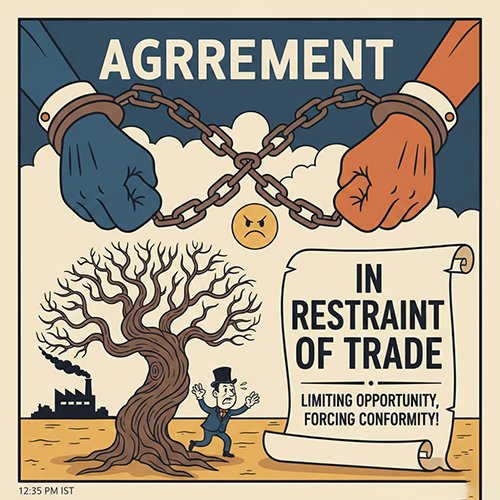
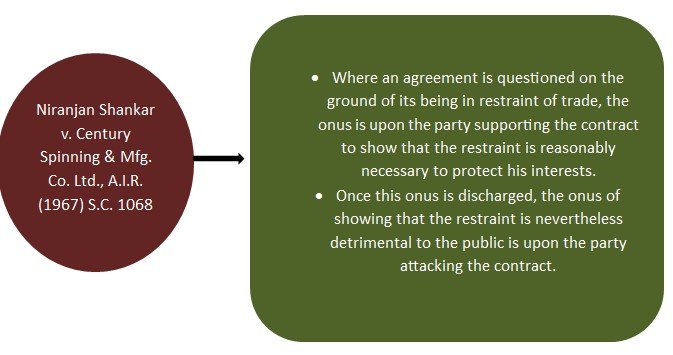
An agreement which hinders the liberty of a person to engage himself in any lawful trade, profession or vocation is called an ‘agreement in restraint of trade’. Public policy requires that every man should be at liberty to work for himself and should not be at liberty to deprive himself of the fruit of his labour, skill or talent by any contract that he enters into [S.B. Fraser & Co. V. The Bombay Ice Mfg. Co., (1904). It is also in the interest of the community that every man should be at liberty to engage himself in any trade, profession or business and use his skill to the best of his capacity consistent with the good of the community.
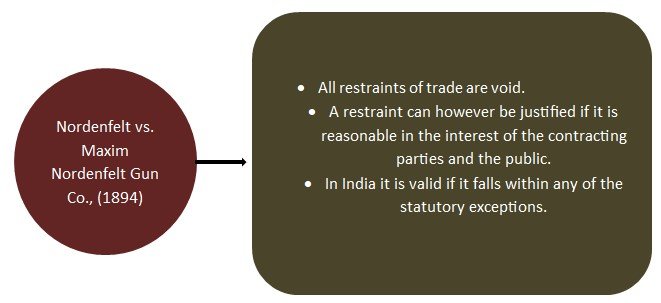
As such, every agreement, by which anyone is restrained from exercising a lawful profession, trade or business of any kind, is to that extent void. (Sec. 27)
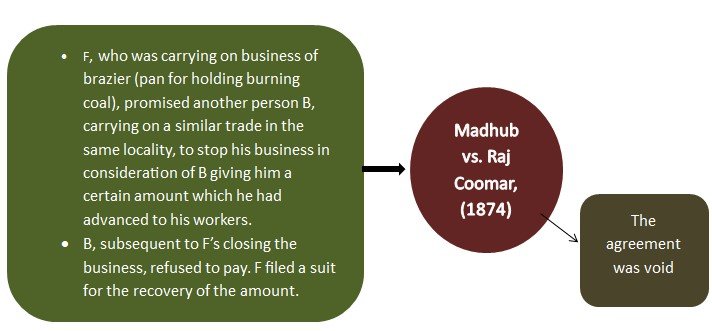
Examples
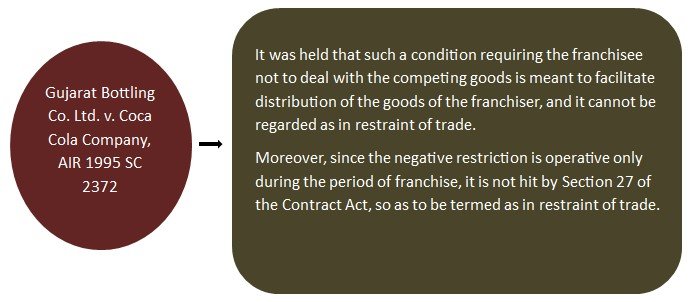
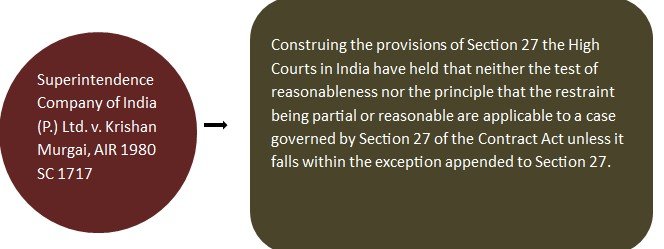
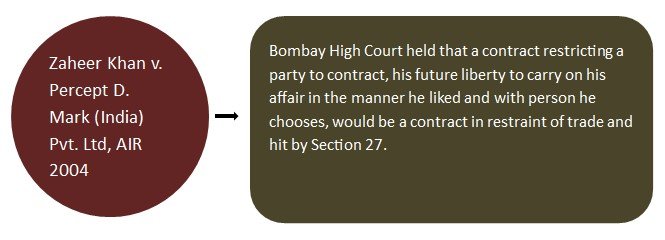
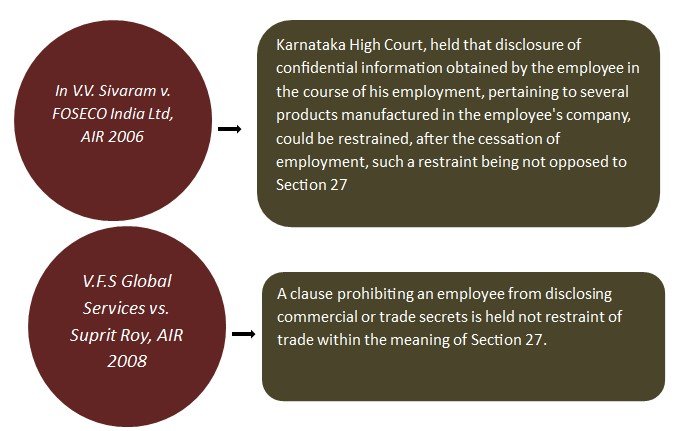
Exceptions:
The following are the exceptions to the rule that “an agreement in restraint of trade is void”:
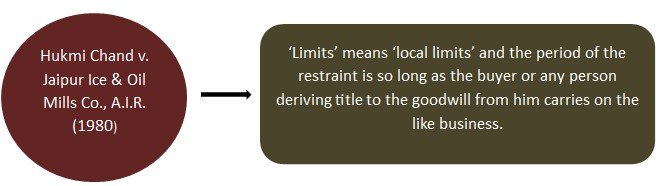
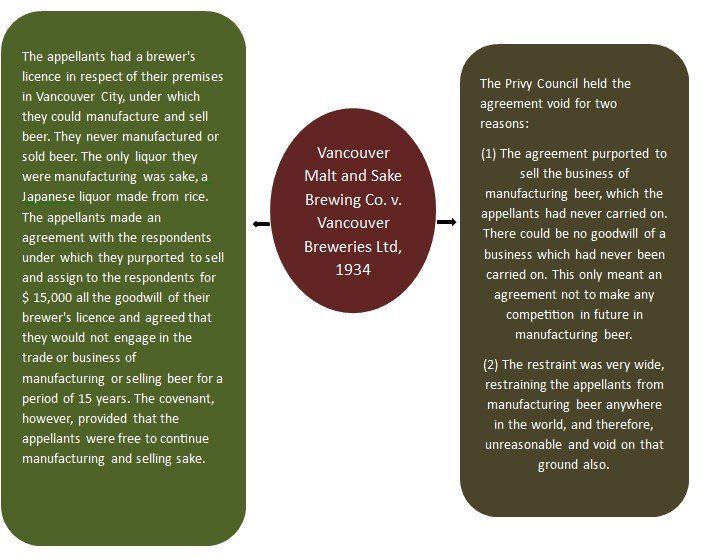
A seller of goodwill of a business may be restrained from carrying on (i) a similar business, (ii) within specified local limits, (iii) so long as the buyer or any person deriving title to the goodwill from him carries on a like business: provided (iv) that such limits appear to the Court reasonable regard being had to the nature of the business (Exception to Sec. 27).
(a) A partner shall not carry on any business other than that of the like while he is a partner [Sec. 11(2) of The Indian Partnership Act, 1932].
(b) An outgoing partner may agree with his partners not to carry on a business similar to that of the firm within a specified period or within specified local limits [Sec. 36(2) of the Indian Partnership Act, 1932].
(c) Partners may, upon or in anticipation of the dissolution of the firm, make an agreement that some or all of them will not carry on a business similar to that of the firm within a specified period or within specified local limits [Sec. 54 of the Indian Partnership Act, 1932].
(d) Where the goodwill of a firm is sold after dissolution, a partner may carry on a business competing with that of the buyer and he may advertise such business. But, subject to agreement between him and the buyer, he may not (a) use the firm name, (b) represent himself as carrying on the business of the firm, or (c) solicit custom of persons who were dealing with the firm before its dissolution [Sec. 55(2) of the Indian Partnership Act, 1932].
(e) Any partner may, upon the sale of goodwill of a firm, make an agreement with the buyer that such partner will not carry on any business similar to that of the firm within a specified period or within specified local limits [Sec. 55(3) of the Indian Partnership Act, 1932].
In cases (b), (c), (e), the Court will enforce such agreements only if the restrictions imposed are reasonable.
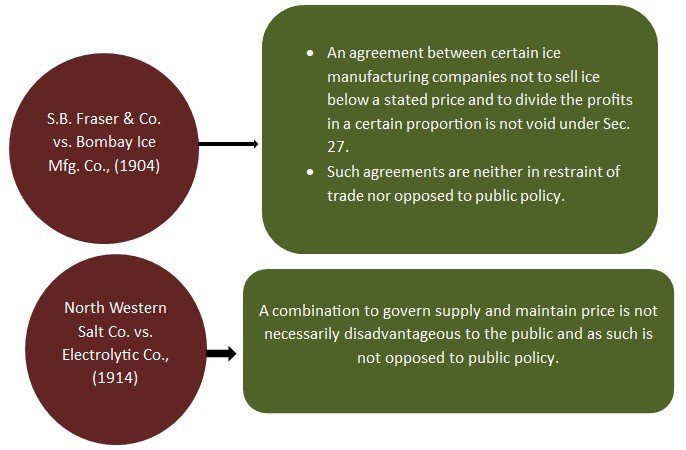
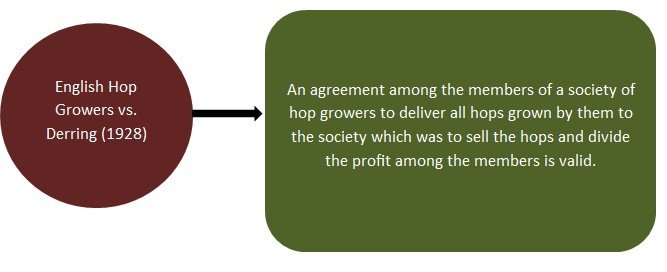
Traders and manufacturers in the same line of business normally form associations to regulate business or to fix prices. The regulations as to the opening and closing of business in a market, licensing of traders, supervision and control of dealers and the mode of dealing are not unlawful even if they are in restraint of trade.
Examples-
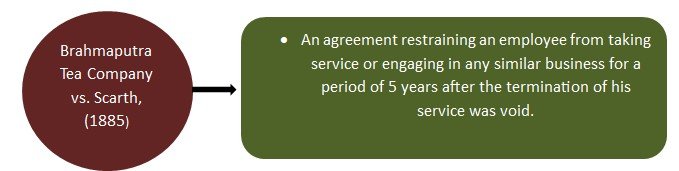
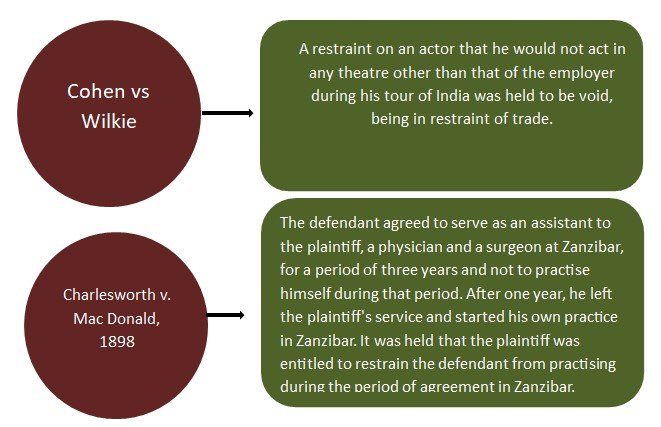
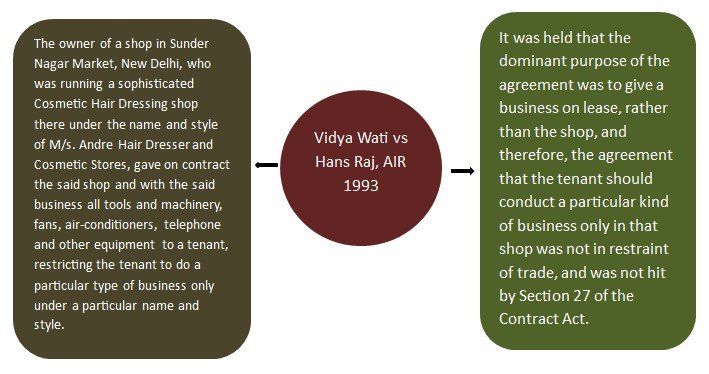
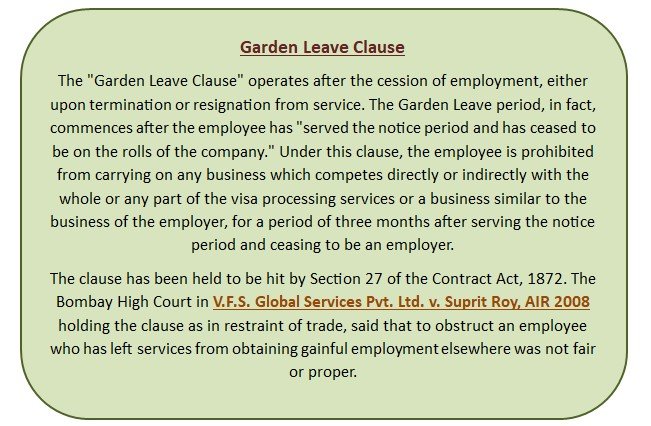
Sometimes an employee, by the terms of his service agreement, is prevented from accepting –
???????
Examples:
(a)A was chiefly engaged in making glass bottles. B, his works manager, was instructed in certain confidential methods concerning correct mixture of gas and air in the furnaces. B agreed that during the five years after the termination of his service, he would not carry on in the United Kingdom or to be interested in, glass bottle manufacture. Held, A was entitled to protection and that the restraint was reasonable [Foster & Sons Ltd. v Suggett, (1918)]
(b) A servant copied the names and addresses of his employer’s customers for use after he left his employment. Held, he could be restrained from using the list [Robb v. Green, (1895) 2 Q.B. 315].
Example:
A, a tailor, employed as his assistant L under a contract by which L agreed on the termination of his employment not to carry on business as a tailor within sixteen kilometres of A’s establishment. Held, the agreement was void [Attwood v. Lamont, (1920)].
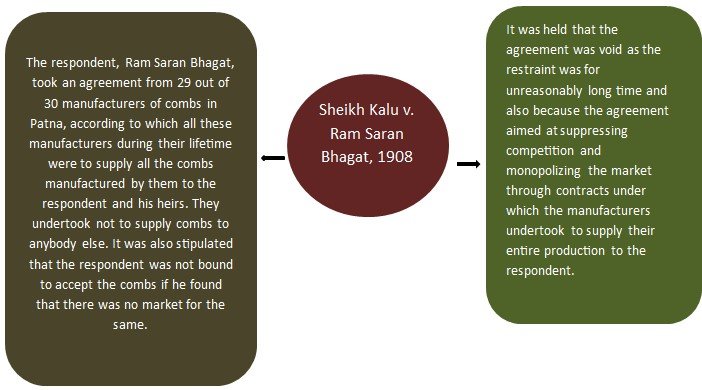
Sometimes the seller or the manufacturer of the certain product may agree that he will supply the whole of his product to a particular single buyer only ,or, similarly a buyer may agree that he will purchase all his requirements of a certain commodity from a particular seller or manufacturer only and non-else. Such agreements are called solus agreements.
-In the following exceptional cases solus agreements and not valid-
1. When the buyer does not agree to purchase the whole quantity, he cannot restrain the seller from selling his surplus to others. Thus, an agreement to sell a certain quantity of silica sand to the plaintiff every month, and not to sell any sand to four specified factories, was in restraint of trade so far as it related to restriction on sale of sand to other factories.

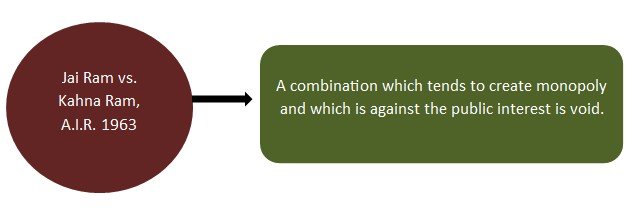
2. When the object of the agreement is to corner goods or to monopolize trade, or the restraint is for an unduly long time, for example, binding a party with such agreement from generation to generation, the agreement cannot be considered to be lawful.
Agreement void only to the extent of restraint-
An agreement in restraint of trade is void only to the extent it imposes restraint. If a part of the agreement does not impose restraint and the other part does so, the agreement may be void as regards the second part of it.
In Har Bilas v. Mahadeo Prasad, AIR 1931 the defendant agreed to supply a certain quantity of silica sand to the plaintiff every month. He also agreed not to sell silica sand to four specified factories. It was held that the whole of the agreement was not void, it was void only to the extent it restrained the defendant from selling his surplus silica sand to four specified factories.

we believe in a holistic approach to legal education building not just lawyers, but socially conscious leaders of tomorrow.
