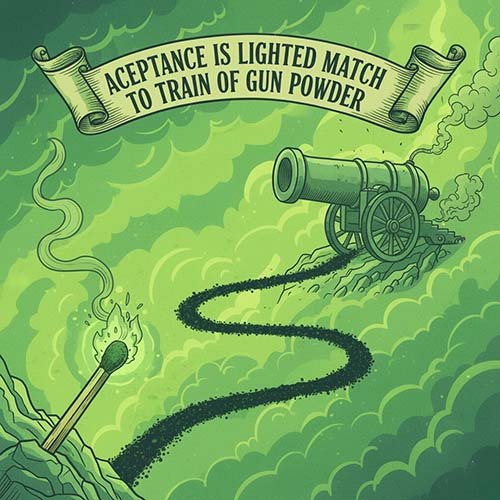
ACCEPTANCE IS LIGHTED MATCH TO TRAIN OF GUN POWDER/ ESSENTIALS OF ACCEPTANCE
Indian Contract Act, 1872
TANMOY MUKHERJI INSTITUTE OF JURIDICAL SCIENCE
Dr. Tanmoy Mukherji
Advocate
ACCEPTANCE IS LIGHTED MATCH TO TRAIN OF GUN POWDER/ ESSENTIALS OF ACCEPTANCE –
Tanmoy Mukherji
Advocate
According to Section 2(b) of the Indian Contract Act, 1872- When the person to whom the proposal is made signifies his assent thereto, the proposal is said to be accepted. A proposal, when accepted, becomes a "promise".
According to Section 7 of the Indian Contract Act, 1872- In order to convert a proposal into a promise, the acceptance must—
(1) be absolute and unqualified;
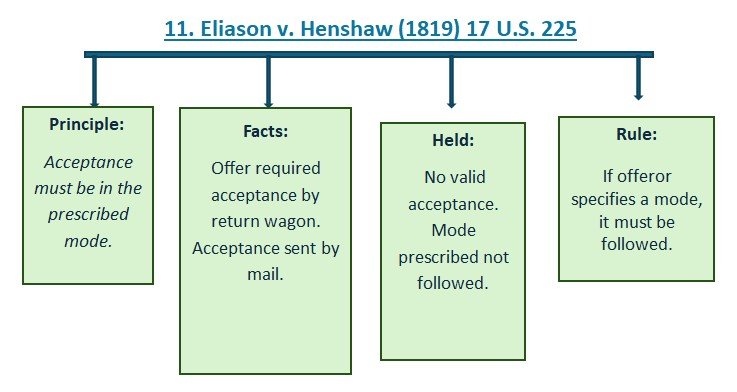
(2) be expressed in some usual and reasonable manner, unless the proposal prescribes the manner in which it is to be accepted. If the proposal prescribes a manner in which it is to be accepted, and the acceptance is not made in such manner, the proposer may, within a reasonable time after the acceptance is communicated to him, insist that his proposal shall be accepted in the prescribed manner, and not otherwise; but if he fails to do so, he accepts the acceptance.
According to Section 8 of the Indian Contract Act, 1872- Performance of the conditions of a proposal, or the acceptance of any consideration for a reciprocal promise which may be offered with a proposal, is an acceptance of the proposal.
In Contract Law, a valid acceptance is essential for forming a binding agreement.
Acceptance must be absolute and unqualified-
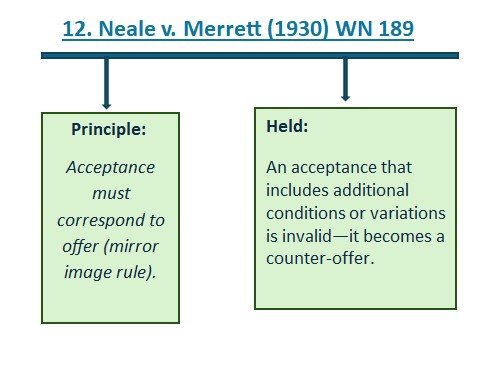
-The acceptance must correspond exactly to the terms of the offer.
-If it adds new conditions or changes any term, it becomes a counter-offer, not an acceptance.
Example: If A offers to sell a car for ?5, 00,000 and B says, “I accept, but I’ll pay ?4, 50, 000,” it’s not acceptance—it’s a counter-offer.
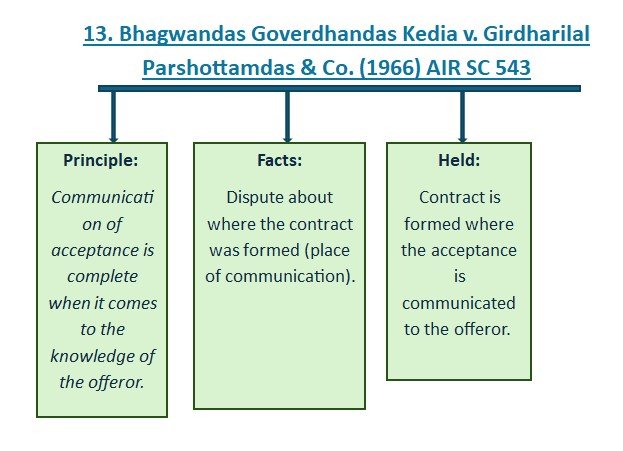
-The acceptance must be communicated to the offeror—silence or mental acceptance is not enough.
-Case: Felthouse v. Bindley (1862) – Silence cannot amount to acceptance.
-If the offeror prescribes a specific mode of acceptance (e.g., “Reply by email”), it must be followed.
-If no mode is prescribed, it should be by a reasonable and usual mode.
-The acceptance must be made while the offer is still valid.
Once an offer is revoked, rejected, or expired, acceptance is ineffective.
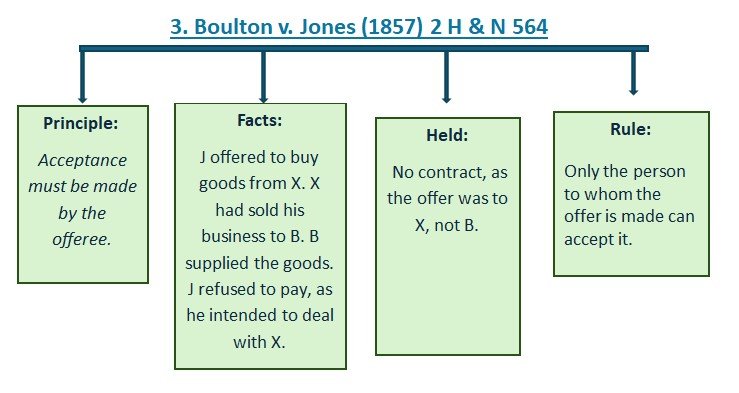
-Only the person (or persons) to whom the offer is made can accept it.
Case: Boulton v. Jones (1857) – An offer made to a specific person cannot be accepted by another.
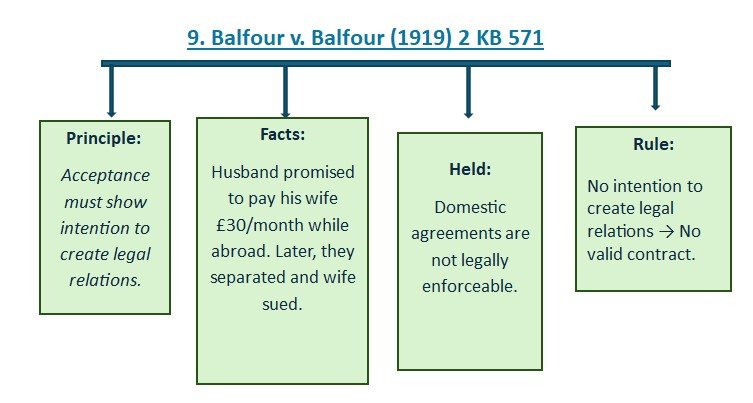
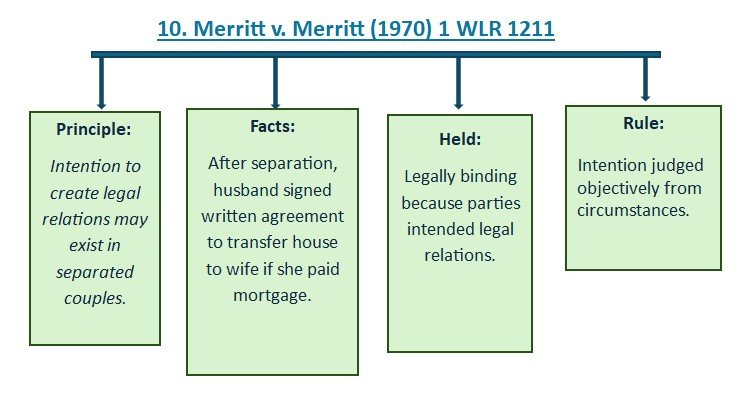
-The offeree must intend to enter into a legally binding relationship.
Social or domestic agreements (like between family members) are generally not legally enforceable.
-Acceptance must mirror the terms of the offer (the “mirror image rule”).
Any variation = counter-offer.
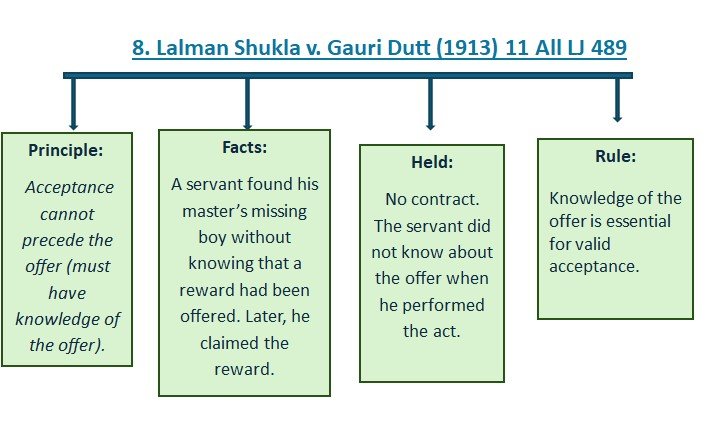
-One cannot accept an offer before it is made.
Example: You cannot accept an offer you don’t yet know about (as in reward cases).
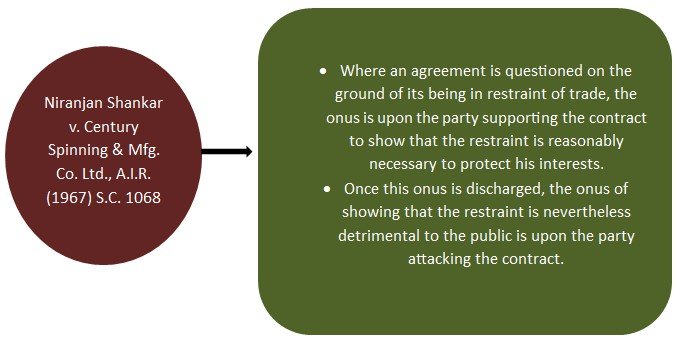
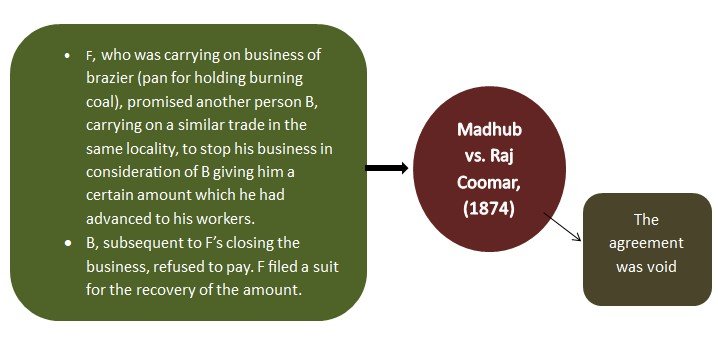
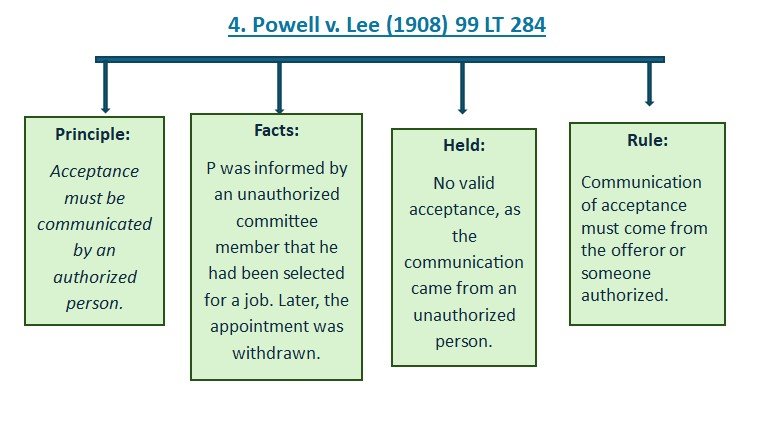
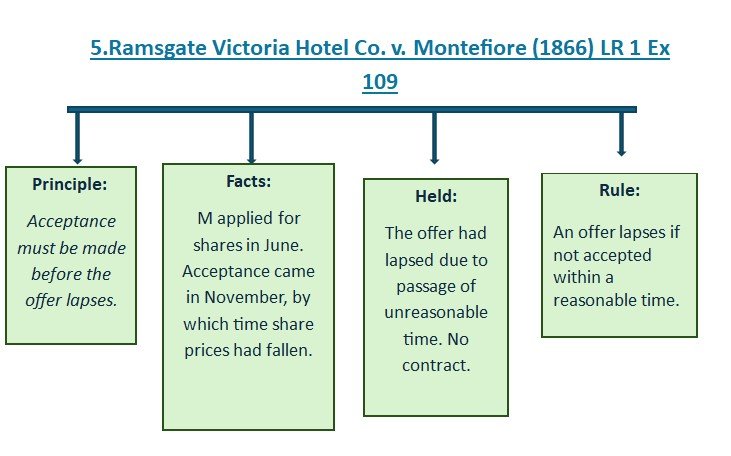
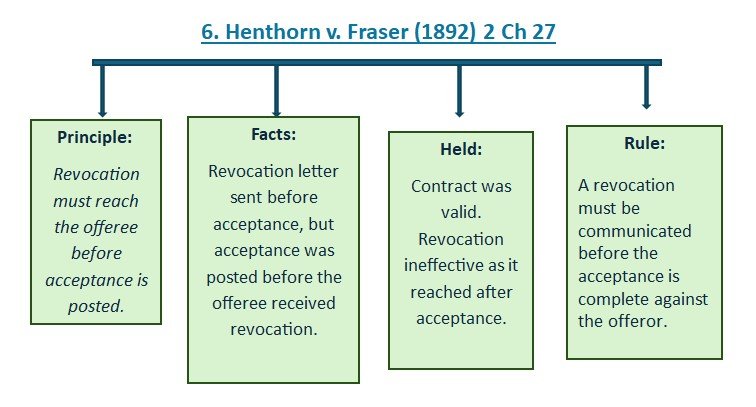
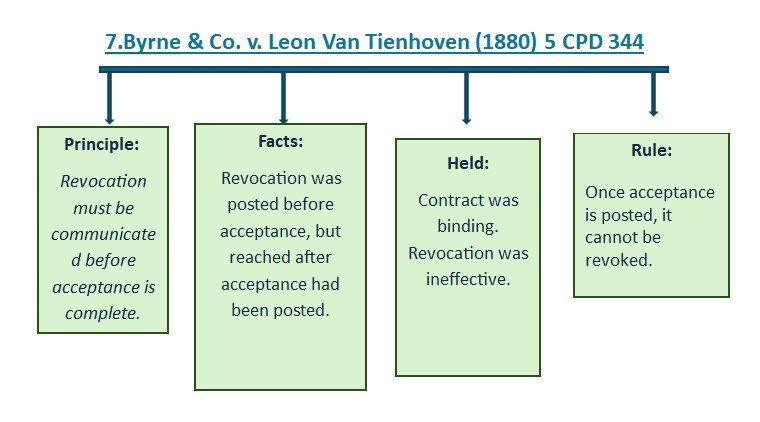
|
Principle |
Leading Case |
Rule Established |
|
Absolute & Unqualified Acceptance |
Hyde v. Wrench (1840) |
Counter-offer destroys original offer |
|
Communication Required |
Felthouse v. Bindley (1862) |
Silence ≠ Acceptance |
|
Acceptance by Offeree Only |
Boulton v. Jones (1857) |
Offer can be accepted only by offeree |
|
Authorized Communication |
Powell v. Lee (1908) |
Must come from authorized source |
|
Offer Must Be Alive |
Ramsgate Victoria Hotel v. Montefiore (1866) |
Offer lapses after reasonable time |
|
Revocation Before Acceptance |
Henthorn v. Fraser (1892) |
Revocation valid only if communicated before acceptance |
|
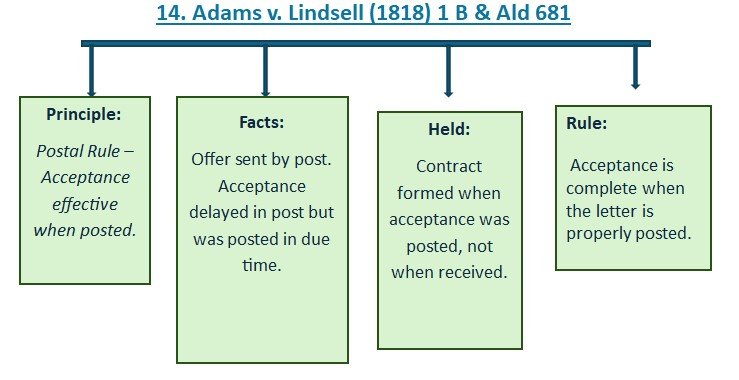
Postal Acceptance Rule |
Adams v. Lindsell (1818) |
Acceptance complete when posted |
|
No Prior Knowledge |
Lalman Shukla v. Gauri Dutt (1913) |
Must know of offer before accepting |
|
Legal Relations Required |
Balfour v. Balfour (1919) |
No legal intent in domestic agreements |
|
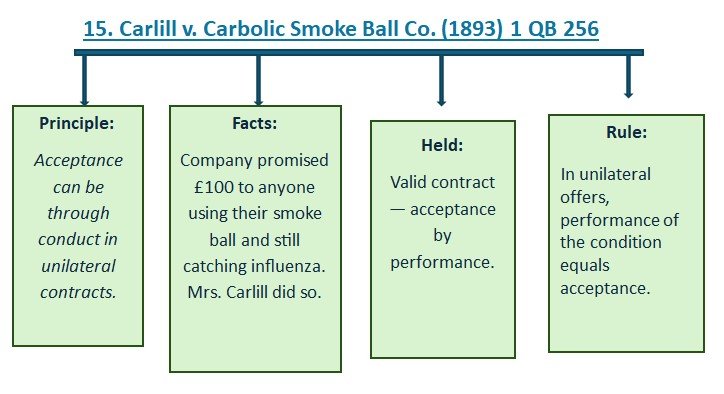
Acceptance by Conduct |
Carlill v. Carbolic Smoke Ball (1893) |
Unilateral contract accepted by performance |

we believe in a holistic approach to legal education building not just lawyers, but socially conscious leaders of tomorrow.
